

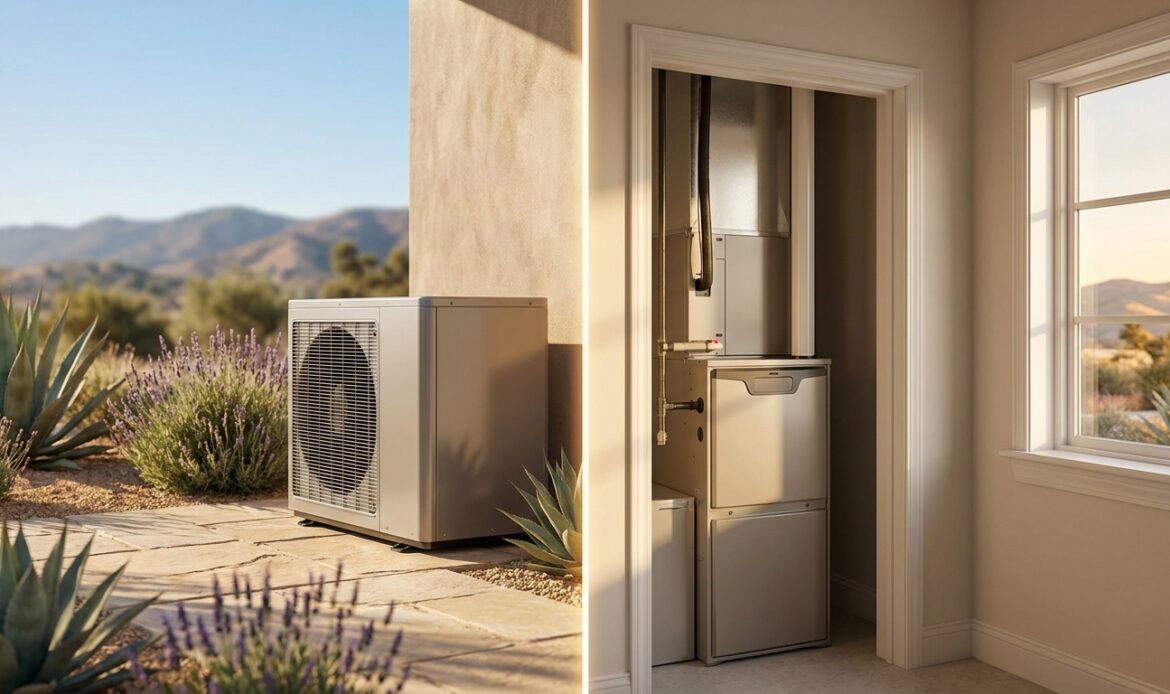
How to Choose Between a Heat Pump and a Furnace in California
When it's time to replace a heating system, California homeowners increasingly face a real choice: stick with a traditional gas furnace, or switch to a heat pump. The right answer depends on your climate, your home's electrical capacity, your budget, and how you weigh long-term efficiency against upfront cost. Here's how to think through the decision.
How Each System Actually Works
A furnace burns natural gas (or occasionally propane) to generate heat directly, then distributes it through ductwork via a blower fan. It's a mature, well-understood technology with a long service life and straightforward repairs.
A heat pump doesn't generate heat — it moves it, extracting warmth from outside air (even cold air contains usable heat energy) and concentrating it indoors. The same system reverses in summer to provide cooling, which is the key structural difference: a furnace only heats, while a heat pump heats and cools from one piece of equipment.
Climate Fit: Where Each System Performs Best
In California's coastal and Bay Area climates — including Sonoma, Marin, Napa, Solano, and Contra Costa counties — winters are mild by national standards, rarely holding below freezing for extended periods. This is close to ideal heat pump territory: modern cold-climate heat pumps maintain strong efficiency well below freezing, and our region's winters are milder than that threshold in most years.
Furnaces remain the more efficient choice in genuinely cold climates where heat pump efficiency drops significantly — but that's a smaller concern for most homes in our service area than it would be in, say, the Sierra foothills or higher elevations.
Efficiency and Operating Cost
Heat pump efficiency is measured differently than a furnace's — a well-installed heat pump typically moves more heat energy than the electrical energy it consumes, versus a furnace converting gas directly to heat at a fixed efficiency rate. In practice, this usually means lower combined heating-and-cooling energy costs with a heat pump, especially when it's replacing two separate systems (furnace + AC) with one.
The caveat: actual savings depend on your local electricity and gas rates, and on correct installation — an oversized or poorly installed heat pump won't deliver the efficiency numbers on the spec sheet.
Upfront Cost Comparison
A heat pump installation is often comparable to or somewhat higher than a furnace-only replacement, but that comparison isn't quite fair — a heat pump replaces both your furnace and your AC in one system, while a furnace-only replacement leaves you still needing a separate AC system (or without cooling at all). When comparing total cost, factor in what you'd otherwise spend replacing an aging AC unit separately.
Electrical Capacity — The Often-Overlooked Factor
Heat pumps draw more electrical power than a gas furnace's blower motor alone. Older homes, particularly those with 100-amp electrical panels, sometimes need a panel upgrade to support a heat pump — a cost worth identifying during your quote rather than discovering mid-install. Newer homes with 200-amp panels typically have no issue.
Current Rebates Favor Heat Pumps
Rebate programs across our service counties are currently structured to incentivize heat pump adoption specifically, not furnace replacement:
- Sonoma Clean Power (SCP) offers active rebates for heat pump systems and heat pump water heaters.
- MCE (Marin Clean Energy) offers up to $6,000 per unit for qualifying heat pump installations.
- BayREN Home+ offers $300–$5,000 for qualifying whole-home electrification upgrades on homes built before 2001.
Worth knowing plainly: the federal Section 25C tax credit for heat pumps expired December 31, 2025, and is not currently available. California's HEEHRA/TECH Clean California program has been fully reserved statewide since February 2026, so new applicants are waitlisted rather than funded. Furnace replacements generally don't qualify for these electrification-focused programs at all — another point in the heat pump column if incentive value matters to your decision, but confirm current eligibility and amounts with your installer since these change throughout the year.
When a Furnace Still Makes Sense
- Your home's electrical panel can't support a heat pump without a costly upgrade, and budget doesn't allow for both
- You're doing a quick like-for-like replacement on a tight timeline and already have a functioning AC system
- Local gas rates remain low enough that the operating cost math doesn't favor switching, in your specific situation
When a Heat Pump Is the Clear Choice
- Your furnace and AC are both aging and due for replacement around the same time
- You want to reduce gas appliance reliance
- You're eligible for meaningful rebates that offset the cost difference
- Your home already has, or can reasonably support, adequate electrical capacity
Why Choose Comfort Factor
Comfort Factor installs both heat pumps and furnaces across Sonoma, Marin, Napa, Solano, and Contra Costa counties, and we'll give you an honest comparison based on your specific home — not a one-size-fits-all recommendation. We run the load calculation, check your electrical capacity, and walk you through which current rebates apply before you decide.
Get a Straight Comparison for Your Home
Contact Comfort Factor for an in-home visit and a clear, numbers-based comparison between a heat pump and furnace replacement for your specific property.
Frequently Asked Questions
Can a heat pump fully replace a furnace in California?
In most of our service area's mild winter climate, yes — modern heat pumps handle heating loads effectively without needing a backup furnace.
Is a heat pump more expensive to install than a furnace?
Often comparable when you account for the fact a heat pump also replaces your AC — a furnace-only quote doesn't include cooling.
Do heat pumps work well in cold weather?
Modern heat pumps maintain strong efficiency well below freezing, and our region's mild winters rarely test that limit.