

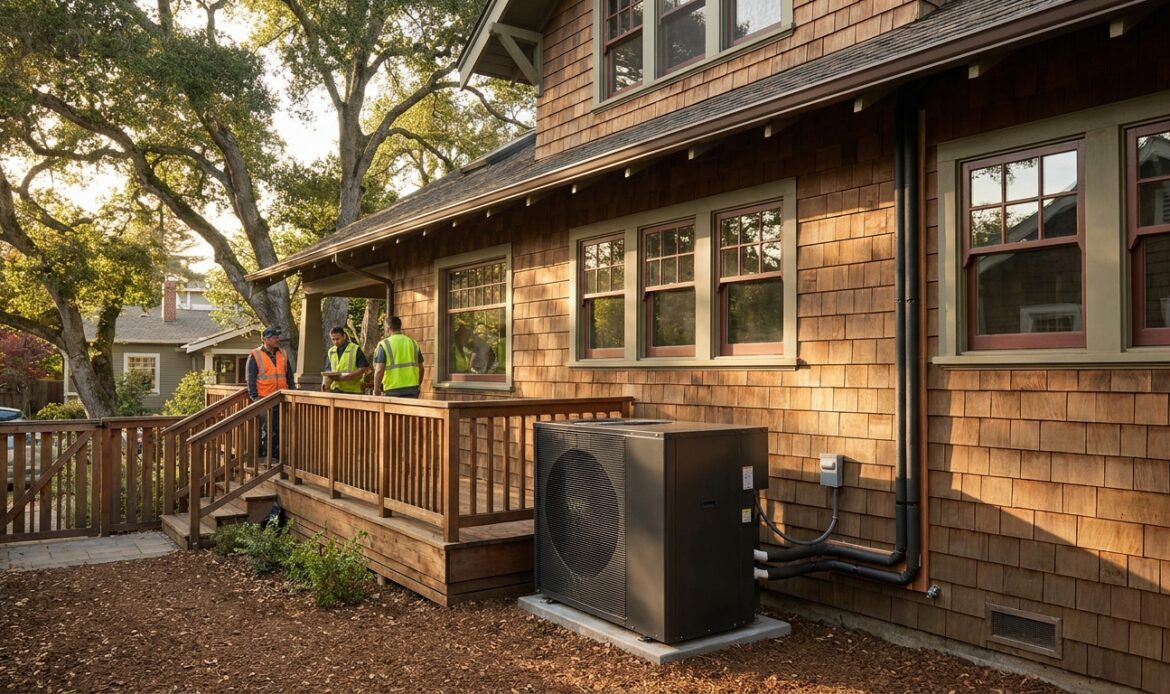
Heat Pump Installation for Older Bay Area Homes
Older homes across Sonoma, Marin, Napa, Solano, and Contra Costa counties — many built well before central air conditioning was standard — present specific challenges when it comes to heat pump installation: aging or absent ductwork, limited electrical panel capacity, and construction details that weren't designed with modern HVAC equipment in mind. None of these are dealbreakers, but they do change how the job should be approached.
The Ductwork Question
Many older Bay Area homes have one of three duct situations:
- No ductwork at all — common in homes built before forced-air heating was standard, or that historically relied on wall furnaces or radiant heat.
- Undersized or leaky ductwork — sized decades ago for a furnace's airflow needs, often not adequate for a heat pump's different airflow characteristics.
- Ductwork routed through unconditioned spaces (uninsulated attics, crawl spaces) that loses significant conditioned air before it reaches the room.
For homes with no ductwork, a ductless mini-split system is usually the more practical and cost-effective path — no need to retrofit ductwork through finished walls and ceilings. For homes with existing but undersized ductwork, a duct evaluation and partial repair or replacement may be the better investment than forcing a new system through inadequate infrastructure.
Electrical Panel Capacity
Heat pumps draw more power than the blower motor in a gas furnace, and older homes — particularly those with original 100-amp electrical panels — sometimes need a panel upgrade to support one. This is worth identifying at the quote stage, not discovering mid-install. A licensed technician should assess your panel's existing capacity and any other major electrical loads (electric range, EV charger, etc.) before finalizing equipment selection.
Structural and Placement Considerations
Older homes often have less flexible outdoor unit placement options — smaller lots, closer setbacks to property lines, or structural limitations on where refrigerant lines can be run. This is especially relevant on Marin's hillside lots and in dense older neighborhoods across Sonoma and Napa. A proper site visit accounts for these constraints before quoting, rather than assuming a standard placement will work.
What the Installation Process Looks Like
- Home assessment, covering ductwork condition (or absence), electrical panel capacity, and outdoor unit placement options specific to the property's age and layout.
- Load calculation, accounting for older homes' typically lower insulation levels and single-pane windows, which affect heating and cooling load differently than newer construction.
- Equipment and system type selection — ducted, ductless, or a hybrid approach for homes with partial ductwork.
- Installation, including any necessary electrical panel work, before equipment goes in.
- Commissioning and testing across both heating and cooling modes.
What It Costs
Older-home installations vary more in cost than newer construction because of the added variables:
- Ductless mini-split conversions (no existing ductwork) are often more cost-effective than adding new ductwork from scratch.
- Ducted retrofits with usable existing ductwork fall in the mid-range.
- Electrical panel upgrades, when needed, add to the total project cost but are a one-time investment that also benefits other home electrification projects down the line (EV charging, induction cooking, etc.).
Rebates Worth Checking
Older homes are frequently the specific target of electrification rebate programs:
- BayREN Home+ rebates ($300–$5,000) are generally limited to homes built before 2001 — meaning many older Bay Area homes are squarely within the eligible range.
- MCE offers up to $6,000 per unit for qualifying installations.
- Sonoma Clean Power offers active rebates for Sonoma County homeowners specifically.
Confirm current eligibility and dollar amounts with your installer, since programs and figures shift throughout the year — and note the federal 25C tax credit expired December 31, 2025 and California's HEEHRA program is currently waitlist-only.
Why Choose Comfort Factor
Comfort Factor has installed heat pumps in older homes throughout Sonoma, Marin, Napa, Solano, and Contra Costa counties, and we know the specific challenges that come with pre-1980s construction — from limited electrical capacity to ductwork that was never designed for modern equipment. We assess these factors upfront, not as surprise change orders mid-project.
Get an Assessment for Your Older Home
Contact Comfort Factor to schedule a visit — we'll evaluate your home's specific ductwork, electrical, and structural situation and give you an honest, itemized plan.
Frequently Asked Questions
Do I need new ductwork if my old home doesn't have any?
Not necessarily — a ductless mini-split system is often the more cost-effective and less invasive option for homes without existing ducts.
Will I need an electrical panel upgrade?
It depends on your panel's current capacity and other electrical loads in your home — we assess this during the quote visit.
Are older homes eligible for more rebates?
Often yes — several regional programs, including BayREN Home+, specifically target homes built before 2001.