

How to Tell If Your AC Refrigerant Is Low
Low refrigerant is one of the most common reasons an AC system stops cooling effectively — and one of the most misunderstood. Refrigerant doesn't get "used up" during normal operation the way fuel does; if your system is low, it's because refrigerant is leaking out somewhere. Here's how to recognize the signs and what actually needs to happen next.
Signs Your AC Refrigerant May Be Low
- Warm air blowing from vents, even though the system is running and the thermostat is calling for cooling.
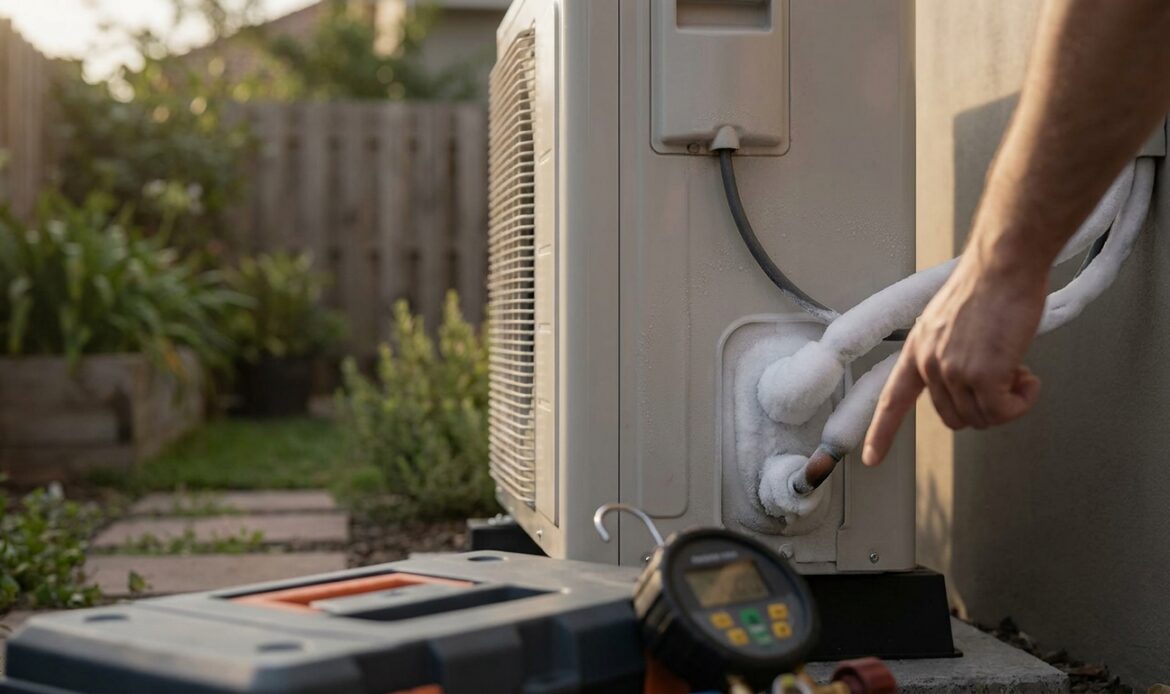
- Ice forming on the refrigerant lines or evaporator coil, counterintuitively — low refrigerant causes the coil to get too cold and freeze rather than absorb heat efficiently.
- Longer cooling cycles that never quite reach the set temperature, as the system struggles to move enough heat with reduced refrigerant.
- A hissing or bubbling sound near the indoor unit or line set, sometimes audible at the leak point itself.
- Higher-than-normal energy bills as the system runs longer to try to compensate for reduced cooling capacity.
Why Refrigerant Gets Low in the First Place
AC systems are sealed, closed-loop systems — refrigerant should last the life of the equipment without needing to be added, barring a leak. Common leak points include:
- Line set connections that weren't properly brazed or have loosened over time
- Evaporator or condenser coil corrosion, particularly in older systems or units near coastal air
- Schrader valve issues, the small valve used to access the refrigerant system for service, which can develop slow leaks over time
If a system needed a refrigerant recharge previously and is low again, that's a strong sign the original leak wasn't actually found and repaired — just topped off.
Why "Just Adding More Refrigerant" Isn't a Real Fix
Recharging a system without finding and repairing the leak means the new refrigerant will leak out too, on a timeline that depends on the leak's size — sometimes weeks, sometimes over a year. A proper repair includes:
- Leak detection, using specialized equipment (electronic leak detectors, UV dye, or pressure decay testing) to pinpoint the exact leak location.
- Repair of the leak point, whether that's re-brazing a connection, replacing a valve, or in some cases replacing a corroded coil.
- System evacuation, removing all remaining refrigerant and moisture from the system before recharging.
- Recharge to manufacturer specification, using the correct refrigerant type and amount for your specific system — overcharging is just as harmful as undercharging.
Why Refrigerant Type Matters
Older systems (typically installed before 2010) often use R-22 refrigerant, which has been phased out of production under federal regulations. R-22 is now significantly more expensive and harder to source, meaning a leak repair and recharge on an R-22 system can cost considerably more than the same repair on a newer R-410A system — and is often the point where replacing the system with a newer, currently supported refrigerant type makes better financial sense than repeatedly repairing an aging R-22 system.
What Happens If Low Refrigerant Goes Unaddressed
Running a system with low refrigerant for an extended period doesn't just mean poor cooling — it can cause the compressor to overheat and fail, since refrigerant also helps cool and lubricate the compressor during operation. A refrigerant leak that goes unaddressed can turn what would have been an affordable leak repair into an expensive compressor replacement.
Why Choose Comfort Factor
Comfort Factor diagnoses refrigerant issues properly across Sonoma, Marin, Napa, Solano, and Contra Costa counties — finding and repairing the actual leak rather than simply topping off refrigerant and leaving the underlying problem to recur.
Get Your Refrigerant Level Checked
If your AC isn't cooling the way it should, contact Comfort Factor for an accurate diagnosis rather than guessing at a recharge.
Frequently Asked Questions
Is it normal for AC systems to need refrigerant added periodically?
No — a properly functioning, sealed system shouldn't need refrigerant added under normal operation. Needing a recharge means there's a leak somewhere.
How much does refrigerant leak repair cost?
It depends on the leak location and refrigerant type — R-22 systems cost meaningfully more to recharge than newer R-410A systems due to R-22's phase-out.
Can I add refrigerant myself?
This requires EPA certification and specialized equipment to do safely and correctly — it's not a homeowner DIY task.