

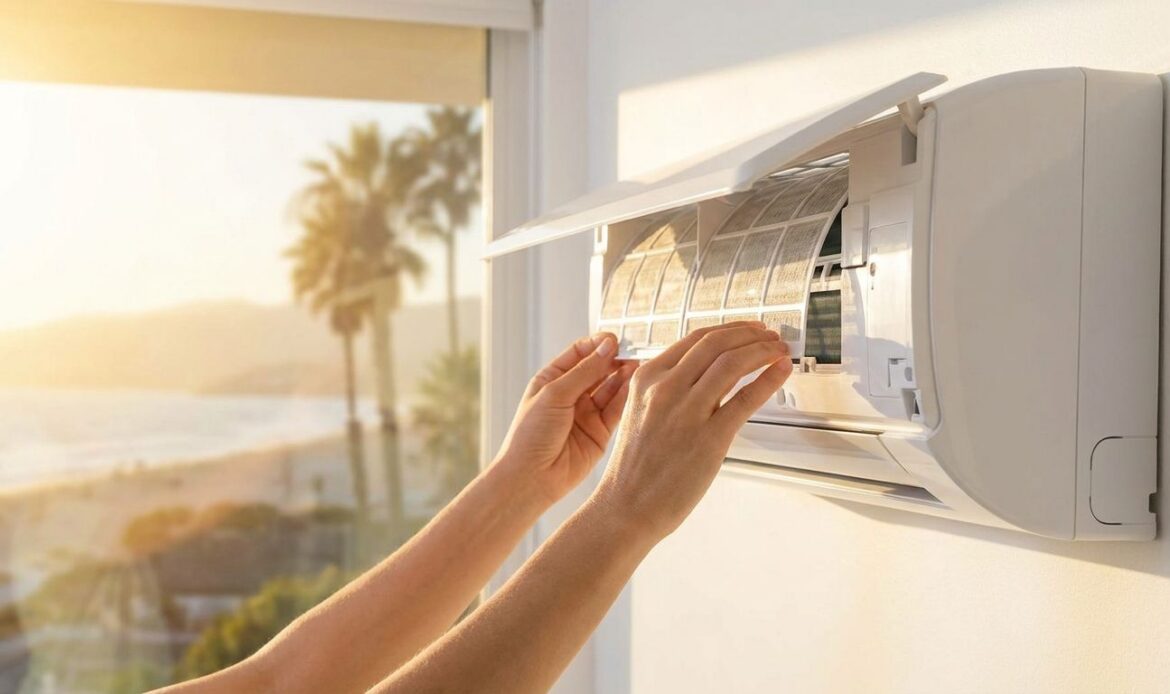
A ductless mini-split in California works through three distinct stress seasons — smoky summers, damp winters, and long dry stretches — and the maintenance routine that protects it looks different in each one. This guide breaks down exactly what to do, month by month, so the system keeps running efficiently through 2026 and beyond.
- Clean mini-split filters every 2-4 weeks in normal months, every 2 weeks during wildfire season (roughly August through October).
- Schedule one professional tune-up per year — coil cleaning and refrigerant checks catch problems before they become no-cool emergencies.
- Clear a 12-inch clearance around the outdoor condenser year-round; leaf litter and ash buildup are the top cause of reduced airflow in Bay Area installs.
- A well-maintained ductless mini-split lasts 12-15 years; neglect can cut that lifespan by years.
- Verdict: DIY filter cleaning plus one annual professional visit is the routine that keeps a California mini-split efficient in 2026.
Why this matters
California's climate is not one climate. Sonoma and Napa swing from foggy mornings to 95-degree afternoons in the same week. Marin gets coastal salt air. Contra Costa and Solano counties see inland heat that pushes mini-splits into near-constant runtime for months. Add wildfire smoke season and you've got a system working harder, in dirtier air, than almost anywhere else in the country.
A ductless mini-split that gets ignored doesn't fail all at once — it loses 5-10% efficiency at a time as filters clog and coils cake with dust, until one August afternoon it just can't keep up. Comfort Factor sees this pattern every year across Sonoma, Marin, Napa, Solano, and Contra Costa counties: the mini-splits that make it to 15 years are the ones on a maintenance schedule, not the ones that get a service call only after they stop cooling. If you're weighing whether ductless is even the right fit for your house, how ductless mini-splits work in older Bay Area homes covers the retrofit basics before you get to upkeep.
What you'll need
- A soft-bristle brush or vacuum with a brush attachment (for filters and fins)
- Mild dish soap and warm water
- A fin comb (only if you see bent coil fins — most homeowners won't need this)
- A garden hose with low-pressure nozzle for the outdoor unit
- A ladder if your indoor head is mounted high
- N95 mask, if cleaning during or right after wildfire smoke events
- One professional tune-up appointment per year, ideally scheduled in spring before cooling season ramps up
The steps
1. Pull and inspect the filters every 2-4 weeks
Mini-split filters trap dust, pollen, and pet hair before they reach the coil, and in California's dry, dusty summers they clog faster than most homeowners expect. Slide the front panel up, remove the mesh filters, and hold them up to light — if you can't see through them clearly, they need cleaning. Rinse with warm water and mild soap, shake dry, and never reinstall a wet filter. Common mistake: running the unit with a still-damp filter, which breeds mold inside the head.
2. Wipe down the indoor unit housing and coil face
Dust settling on the coil face restricts airflow and forces the compressor to work harder to hit the same temperature. Once a month, use a soft brush to clear visible dust from the coil fins behind the filter, working in the direction of the fins rather than across them. This takes five minutes and directly protects the compressor from strain. Common mistake: pressing too hard and bending the fins, which then restricts airflow permanently until they're combed straight.
3. Clear the outdoor condenser unit monthly
The outdoor unit needs a minimum 12-inch clearance on all sides to breathe properly, and California's dry landscaping — bark, dead leaves, eucalyptus debris — collects around units fast. Clear vegetation, cobwebs, and leaf litter by hand, then rinse the fins gently with a garden hose on low pressure, spraying from the inside out if the panel allows it. Expect a noticeable difference in fan noise once debris is cleared — a straining, rattling fan usually means blocked airflow. Common mistake: pressure-washing the fins, which bends them and voids some manufacturer warranties.
4. Check and clear the condensate drain line quarterly
A clogged drain line is one of the most common reasons a ductless mini-split leaks water indoors, especially in humid coastal areas like Marin. Locate the drain line where it exits near the outdoor unit and check that water flows freely when the system is running in cooling mode. If it's slow or dry when it should be dripping, a wet/dry vacuum on the outdoor end usually clears the clog. Common mistake: ignoring a small drip until it becomes water damage on drywall or flooring.
5. Prep for wildfire smoke season by August
Bay Area wildfire season typically runs August through October, and mini-splits pull that smoke-heavy outdoor air straight through the filter. Switch to the tighter 2-week filter-cleaning schedule as soon as air quality alerts start, and confirm your system's filtration rating can handle fine particulates. For homes near fire-prone hillsides in Sonoma or Napa counties, how to prepare your HVAC for Sonoma County wildfire season walks through the full pre-season checklist, and the best HVAC systems for wildfire smoke filtration in California covers filtration upgrades worth considering before the next bad air season hits.
6. Check refrigerant lines and insulation before summer
Exposed or degraded refrigerant line insulation loses cooling efficiency fast, especially on units installed more than 5 years ago. Walk the line set from indoor to outdoor unit and look for cracked, sun-damaged, or missing foam insulation — this is a quick visual check, not a refrigerant-level test. Common mistake: assuming a system is low on refrigerant when the real issue is a dirty filter or blocked coil; refrigerant systems are sealed and shouldn't need topping off unless there's a leak, which is a professional-only fix.
7. Book one professional tune-up per year
DIY cleaning handles maybe 70% of what a mini-split needs — the rest is coil-depth cleaning, electrical connection checks, and refrigerant pressure testing that require the panel fully off and proper gauges. Spring, before peak cooling season, is the ideal time to book this. Common mistake: skipping the annual visit because the system "seems fine," which is exactly how small inefficiencies turn into a mid-August compressor failure.
Troubleshooting
- Unit blows air but doesn't cool: Check the filter first — a clogged filter is the single most common cause. If clean filters don't fix it, the coil likely needs professional cleaning.
- Water dripping from the indoor head: Almost always a clogged condensate drain line. Clear it per step 4; if water continues, the drain pan may need professional inspection.
- Outdoor unit is loud or rattling: Debris caught in the fan blades or bent fins from pressure-washing. Clear debris by hand and check fin alignment.
- System short-cycles (turns on and off rapidly): Often a dirty outdoor coil restricting airflow, or a thermostat sensor issue. Clean the outdoor unit first before assuming a control-board problem.
- Musty smell when the system starts: Mold growth on a filter or coil that's stayed damp too long. Deep-clean the filter and coil face; recurring smell after cleaning means it's time for a professional coil flush.
- Remote or wall control unresponsive: Usually a battery or Wi-Fi module issue, not a mechanical fault — check batteries before calling for service.
Skip the guesswork on upkeep
Get on a Comfort Factor maintenance plan built for Bay Area climate swings.
Tools and resources
- Soft brush or vacuum attachment, mild soap, garden hose with low-pressure nozzle
- A maintenance plan that bundles the annual professional visit — see HVAC maintenance plans for Bay Area homeowners
- If your current installer isn't responsive for the annual tune-up, the best ductless AC installers in the Bay Area is worth a look before next summer
- A basic filter gauge or flashlight to check filter clarity between cleanings
What to do next
Once the routine maintenance is dialed in, the next question most homeowners ask is whether their current mini-split is sized right for the space, especially in older homes with uneven insulation. That's a separate diagnostic from maintenance — a well-maintained but undersized unit will still struggle on the hottest days of 2026's cooling season regardless of how clean the filters are.
FAQ
How often should I clean my ductless mini-split filter in California?
Clean the filter every 2-4 weeks during normal months and every 2 weeks during wildfire smoke season, roughly August through October. Dry, dusty summers and smoke events clog filters faster than in more humid climates.
Can I maintain a mini-split myself or do I need a professional?
Filter cleaning, coil dusting, and clearing the outdoor unit are safe DIY tasks. Refrigerant checks, deep coil cleaning, and electrical inspections need a licensed technician once a year.
Why is my mini-split leaking water indoors?
A clogged condensate drain line is the most common cause. Clear it with a wet/dry vacuum at the outdoor end, and check quarterly to prevent recurrence.
How long does a ductless mini-split last in the Bay Area?
A properly maintained ductless mini-split lasts 12-15 years. Systems that skip annual tune-ups and filter cleaning often lose years off that lifespan due to compressor strain.
Does wildfire smoke damage mini-split systems?
Smoke particulates clog filters faster and can coat the coil if filters aren’t cleaned often enough. It doesn’t damage the compressor directly, but neglected filtration during smoke season forces the system to work harder.
How much clearance does an outdoor mini-split unit need?
Keep a minimum 12-inch clearance on all sides of the outdoor condenser. Leaf litter, bark, and debris common in California landscaping restrict airflow if they build up against the unit.
What’s the biggest mistake homeowners make maintaining a mini-split?
Skipping the annual professional tune-up because the system still seems to work. Small inefficiencies from a dirty coil or refrigerant issue compound quietly until the system fails on the hottest day of the year.
Should I run my mini-split differently during rainy winter months?
Check the outdoor unit’s drainage path stays clear of standing water and debris, since heavy Bay Area rains can wash leaves and mud against the base. Otherwise the same filter-cleaning schedule applies year-round.
One last thing
The outdoor condenser fin count matters more than most homeowners realize — bent fins from an aggressive garden-hose cleaning or an accidental bump can quietly cut airflow by a noticeable margin without ever showing an error code. If your unit's fan sounds strained even after clearing debris, check the fins for bends before assuming it's a compressor issue; a fin comb fixes this in minutes and costs far less than a service call.
Related guides
- How ductless mini-splits work in older Bay Area homes
- Best ductless AC installers in the Bay Area
- How to prepare your HVAC for Sonoma County wildfire season
- Best HVAC systems for wildfire smoke filtration in California