

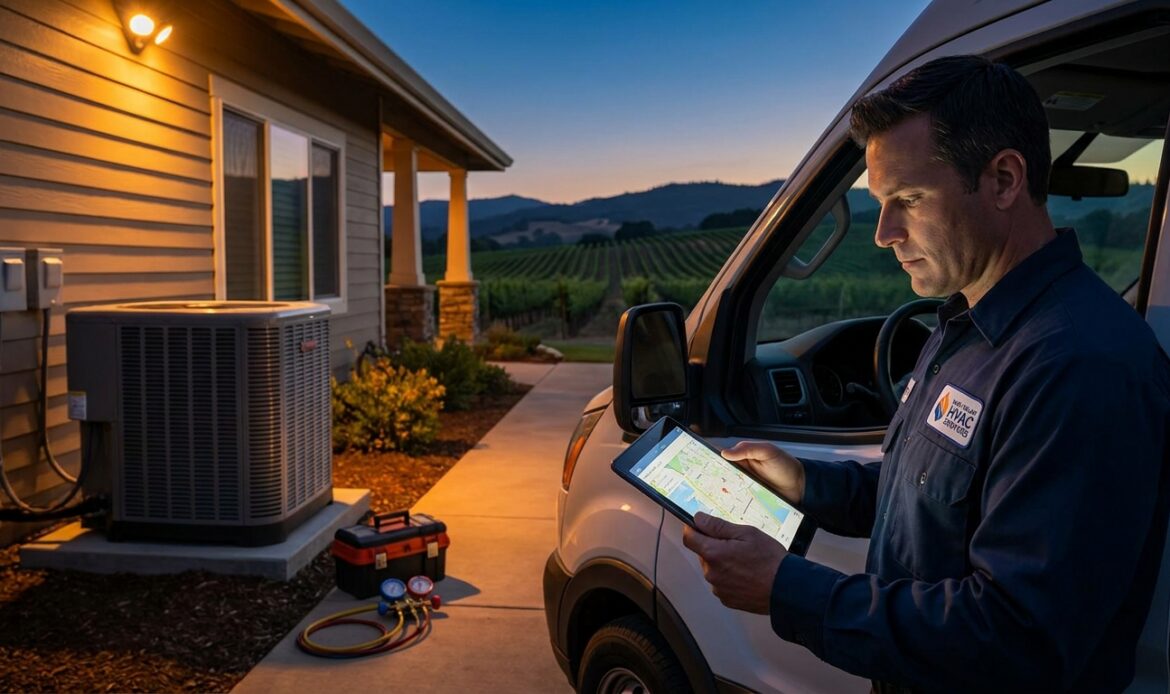
Emergency HVAC repair in Napa, CA means getting a furnace or AC system back online within hours, not days — and knowing the difference between "call now" and "schedule for Tuesday" saves money and stops a bad situation from getting worse.
TL;DR: Emergency HVAC repair in Napa covers no-heat, no-cooling, gas odors, water leaks, and total heat pump failure — anything that turns a house unsafe or unlivable. Napa's climate swings from high-90s summer afternoons to near-freezing overnight lows in winter, so a dead system stops being an inconvenience fast. Comfort Factor is the verdict for Napa homeowners who need a technician dispatched same-day, not sometime next week, with crews covering furnaces, AC, and heat pumps across the county through 2026.
Why This Matters
A broken HVAC system in Napa isn't the same problem it is in a mild coastal town. Summer afternoons regularly push past 95°F in the valley, and winter cold snaps drop overnight temperatures into the high 30s. Add wildfire smoke season, when sealed-up homes lean hard on filtration and airflow, and a failed system becomes a health issue, not just a comfort one.
Many Napa homes were built decades before current insulation and ducting standards, which means older furnaces and AC units carry more strain per degree of temperature swing. A 15-year-old furnace that limps through most winters can fail outright the first time it's asked to run nonstop during a cold week. Knowing what actually qualifies as an emergency — versus what can wait for a scheduled visit — is the first decision a homeowner has to get right.
Comfort Factor works across Napa and the surrounding Bay Area counties, and this guide walks through what to check before you call, what a real HVAC emergency looks like, and which fixes are worth doing right instead of doing fast.
Who This Is For
This guide is for Napa County homeowners dealing with a system that's stopped working outright — no heat during a cold snap, no cooling during a heat spike, a burning smell, a gas odor, or water pooling near the furnace or air handler. It's built for people who need a decision tree, not a sales pitch: is this a true emergency, or can it wait until morning.
What to Look for in Emergency HVAC Repair for Napa Homeowners
Same-Day Local Dispatch
An HVAC emergency doesn't respect business hours, and a contractor based outside the county adds drive time you don't have during a 95°F afternoon or a hard freeze. Ask directly whether a technician can be on-site the same day, and confirm they actually service Napa rather than routing calls through a dispatcher two counties away.
Licensing Specific to California HVAC Work
California requires a C-20 contractor license for HVAC work, and gas furnace repairs carry extra risk if handled by an unlicensed installer. Ask for the license number before anyone touches a gas line or refrigerant system — this isn't optional paperwork, it's the difference between a fixable mistake and a house fire.
Transparent Diagnostic Pricing Before Work Starts
Emergency calls are exactly when pricing tends to get vague, because the homeowner is stressed and just wants heat or cooling back. A legitimate contractor quotes the diagnostic fee and gives you a real number before starting repairs, not after the parts are already installed.
Experience With Older Napa Housing Stock
Many homes in Napa, Yountville, and St. Helena were built with duct systems and electrical panels that predate modern heat pump and high-efficiency AC installs. A technician who hasn't worked on 1970s-era Bay Area homes will miss issues that a locally experienced crew catches in minutes — undersized returns, knob-and-tube wiring near the furnace, or duct runs that were never sized for today's equipment.
Ability to Handle Furnaces, AC, and Heat Pumps in One Visit
A lot of Napa homes run split systems, some with gas furnaces paired to AC, others fully converted to heat pumps. A contractor who only knows one system type will diagnose half the problem and leave the rest unresolved — you want one visit that covers the whole system, not three separate callbacks.
Common Napa Emergency Scenarios — And What Each One Actually Needs
No Cooling During a Heat Spike — the classic July call
When the AC quits during a 95°F+ stretch, the risk isn't comfort — it's heat exposure for kids, pets, or anyone with a health condition. A capacitor failure or a frozen coil can often be fixed same-day; a compressor that's seized usually means the unit is done. If your system is over 12 years old and the compressor failed, replacing it makes more sense than repairing it — ductless AC installation in Napa is worth a look if central AC repair keeps recurring. Verdict: Call Now.
No Heat During a Cold Snap — the January call
A furnace that won't ignite during a cold night isn't a wait-and-see problem, especially in homes with older insulation where indoor temperatures drop fast. Common causes are a failed igniter, a clogged flame sensor, or a tripped high-limit switch — most are same-day fixes. If the heat exchanger itself has cracked, that's a safety issue, not a repair candidate. Verdict: Call Now.
Gas Smell or Carbon Monoxide Alarm — never a scheduling decision
A gas odor near the furnace or a triggered CO alarm means you leave the house, ventilate if you can do it safely on the way out, and call from outside. This isn't a repair scenario to troubleshoot yourself under any circumstance — gas leaks and CO buildup are the two HVAC emergencies where minutes matter more than money. Verdict: Evacuate, Then Call Now.
Heat Pump Total Failure — the year-round call
Heat pumps that stop producing heat or cooling entirely often point to a refrigerant leak, a failed reversing valve, or a dead compressor. Since a heat pump handles both heating and cooling for the household, losing it is effectively losing the whole HVAC system at once. If the unit is past the 10-12 year mark and the failure is compressor-related, heat pump installation in Napa usually costs less over the next five years than a major repair on an aging unit. Verdict: Consider Replacement.
Water Leaking Near the Furnace or Air Handler
A puddle near the unit is almost always a clogged condensate drain or a cracked drain pan — not dangerous immediately, but it can damage flooring and drywall fast if ignored. This one can typically wait a day if the system is otherwise running, as long as you shut off the unit to stop the leak from spreading. Verdict: Schedule Today.
What to Avoid When You're Panicking About HVAC in Napa
- Skipping the diagnostic call. Some homeowners try to guess the fix from a YouTube video during a heat spike — a wrong DIY move on a gas furnace or a refrigerant line can turn a $200 repair into a $2,000 one.
- Assuming any "24-hour" contractor is local. National lead-gen sites route Napa calls to whoever's available in the region, which can mean a two-hour wait disguised as "emergency service."
- Ignoring maintenance until the system fails outright. A system on a regular maintenance schedule rarely fails during the worst week of the year — AC maintenance in Napa catches the capacitor or coil issue before it becomes a 2 a.m. emergency.
Verdict Comparison: Napa HVAC Emergency Scenarios
| Scenario | Urgency | Typical Cause | Verdict |
|---|---|---|---|
| No cooling, 95°F+ day | High | Capacitor, frozen coil, dead compressor | Call Now |
| No heat, cold snap | High | Igniter, flame sensor, cracked exchanger | Call Now |
| Gas smell / CO alarm | Critical | Gas leak, blocked flue | Evacuate, Then Call Now |
| Heat pump total failure | High | Refrigerant leak, dead compressor | Consider Replacement |
| Water near furnace/air handler | Moderate | Clogged condensate drain | Schedule Today |
FAQ
What counts as an actual HVAC emergency in Napa?
No heat during a cold snap, no cooling during a heat spike, a gas odor, a carbon monoxide alarm, or a water leak that's actively damaging the home all count as emergencies. A system running less efficiently than usual, or a thermostat acting slightly off, can typically wait for a scheduled visit.
How fast can emergency HVAC repair happen in Napa?
Response time depends on the contractor's current schedule and how far Napa sits from their nearest crew — a Napa-based technician gets there faster than one dispatched from outside the county. Confirm same-day availability directly when you call rather than assuming it.
Is it cheaper to repair or replace a failed AC unit in Napa?
If the unit is under 10 years old and the failure is a part like a capacitor or contactor, repair almost always wins. Past 12 years, especially with a compressor failure, replacement usually costs less over the following five years than repeated repairs on an aging system.
Should I smell gas near my furnace and try to fix it myself?
No — leave the house immediately and call from outside. Gas leaks and carbon monoxide are the two HVAC problems where any delay for troubleshooting is the wrong move.
Do heat pumps fail more often than furnaces in Napa?
Not inherently, but a heat pump failure knocks out both heating and cooling at once since it's a single system for both, which raises the stakes compared to a furnace-only failure in a home that still has separate AC.
Can a clogged condensate drain really cause water damage?
Yes — a clogged drain line backs up into the drain pan and overflows onto flooring or ceiling below, and it's one of the more common "looks scary, isn't dangerous, still needs same-day attention" calls in older Napa homes.
How often should HVAC maintenance happen to avoid emergency calls in Napa?
Twice a year — once before summer, once before winter — catches most of the failures that turn into emergency calls, particularly capacitor wear and refrigerant leaks that get worse under heavy summer or winter load.
Does homeowners insurance cover emergency HVAC repair?
Rarely for normal wear and mechanical failure — insurance typically only applies if the damage stems from a covered event like a fire or burst pipe, not routine equipment breakdown. Check your specific policy, since coverage varies by carrier.
One Last Thing
Carbon monoxide detectors expire — most have a 5-to-7-year sensor lifespan printed on the back, and a lot of Napa homeowners never check the date. If yours is older than that, replace it before your next furnace emergency, not after.