

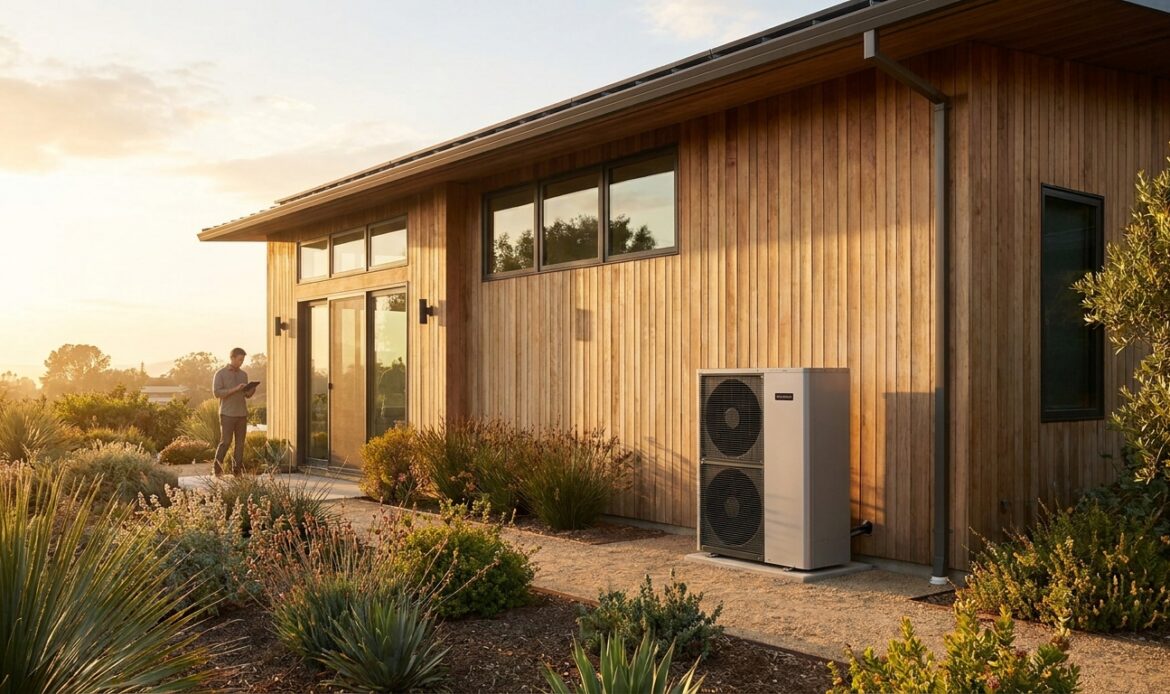
Qualifying for California heat pump rebates in 2026 comes down to three things: what you install, who installs it, and how fast you file the paperwork. Miss any one of those and you leave money on the table.
TL;DR
California heat pump rebates in 2026 stack across three layers: the federal 25C tax credit (up to $2,000 for qualifying heat pumps), state-level incentives through programs like TECH Clean California, and utility rebates from providers such as PG&E. To qualify, you generally need ENERGY STAR-certified equipment, installation by a licensed contractor, and proof of proper permitting. Verdict: pair a licensed installer with pre-approval paperwork before the unit goes in, not after — post-installation rebate applications get rejected far more often than pre-approved ones.
Why this matters
A heat pump swap in the Bay Area typically runs several thousand dollars more than a like-for-like furnace or AC replacement, and rebate money is what closes that gap for most homeowners. The programs exist because California's building decarbonization targets depend on getting gas furnaces out of homes, so the state and utilities have real budget behind this — but that budget is finite and processed on a first-come basis in most cycles. Homeowners who wait until after installation to look into rebates in 2026 routinely find the pre-approval window already closed. The fastest way to lose a rebate isn't ineligible equipment — it's paperwork filed in the wrong order.
If you're weighing heat pump installation in Contra Costa County or a similar project elsewhere in the North Bay, the rebate math should factor into your equipment choice before you sign a contract, not after.
What you'll need
- Your utility account number (PG&E, Marin Clean Energy, Sonoma Clean Power, or your local provider) — most rebate portals require it to check territory eligibility
- A licensed HVAC contractor — DIY installs and unlicensed labor disqualify you from nearly every program
- ENERGY STAR-certified heat pump model — check the specific AHRI certificate number before you buy, not the marketing label
- Home ownership or landlord authorization documents if you rent
- Recent utility bills (12 months, if requested) to establish baseline energy use
- Time: 2-4 weeks for pre-approval processing in most 2026 program cycles, plus 4-8 weeks post-install for reimbursement
- A copy of your building permit once the job is scheduled
The steps
1. Confirm your utility territory and current program status
Rebate availability depends entirely on which utility serves your address, and funding pools reset annually. Sonoma, Marin, Napa, Solano, and Contra Costa counties fall under different combinations of PG&E and community choice aggregators, and each runs its own incentive calendar. Check your utility's current program status before you talk to a contractor — a program that was open in January 2026 may already be capped by summer.
Common mistake: assuming the rebate that a neighbor got last year is still open. Program funding is cyclical, not permanent.
2. Get pre-approval before signing an installation contract
Most 2026 rebate programs, including TECH Clean California-aligned incentives, require pre-approval submitted before work begins. This step accomplishes two things: it locks your reservation against that year's funding pool, and it confirms your specific equipment model qualifies before you spend money on it.
Submit the manufacturer spec sheet and AHRI certificate number for the exact heat pump model, not a general product family. Approval typically takes 5-10 business days.
Common mistake: signing the installation contract first and applying for pre-approval afterward. Some programs will deny retroactive applications outright.
3. Select equipment that meets minimum efficiency thresholds
Rebate tiers usually key off SEER2 and HSPF2 ratings, and higher-efficiency units unlock larger rebate amounts in most 2026 programs. A base ENERGY STAR heat pump clears the minimum bar for federal 25C credit eligibility, but state and utility programs often require a step above that for full rebate value.
This is where a licensed installer earns their fee — matching your home's square footage and insulation profile to a unit that clears the higher efficiency tier without oversizing. For homes in the North Bay, heat pump installation in Marin County projects often qualify for a wider rebate stack because Marin Clean Energy runs incentives on top of state programs.
Common mistake: buying the cheapest ENERGY STAR-labeled unit assuming all ENERGY STAR equipment qualifies for every rebate tier. It doesn't.
4. Confirm your contractor is licensed and program-registered
California requires a C-20 HVAC contractor license for legal installation, and many rebate programs additionally require the contractor to be registered with the specific incentive program (TECH Clean California maintains its own participating contractor list). An unregistered contractor can still be licensed and still do good work, but you won't get the rebate without program registration.
Ask for the contractor's program registration number directly and verify it against the program's public contractor lookup before signing anything.
Common mistake: trusting a verbal claim of doing rebates all the time without checking the registration number yourself.
5. Schedule installation and pull the permit
A building permit isn't optional paperwork here — most rebate programs require the final permit sign-off as proof of proper installation before releasing reimbursement funds. Permit timelines vary by county; Napa and Sonoma County permitting can take 1-3 weeks depending on inspector availability in 2026.
Factor permit lead time into your installation schedule, especially if you're racing a program's funding deadline.
Common mistake: skipping the permit to save time, then having the completed rebate application rejected for missing inspection documentation.
6. Submit final documentation within the program window
After installation and inspection pass, submit your final rebate application with the signed invoice, AHRI certificate, permit sign-off, and any required utility account verification. Most 2026 programs give you 60-90 days post-installation to file — miss that window and the pre-approval expires.
Common mistake: letting the final paperwork sit for months. Reimbursement processing times don't start until the application is complete.
7. Track the federal tax credit separately from state and utility rebates
The federal 25C credit is claimed on your tax return the year following installation — it isn't processed through the same portal as your state or utility rebate. Keep your invoice and AHRI documentation for tax filing; a qualifying heat pump can claim up to $2,000 under 25C for the 2026 tax year, independent of whatever your utility rebate delivers.
Common mistake: assuming the utility rebate check already includes the federal credit. It doesn't — you have to claim that separately.
Troubleshooting
- My rebate application got rejected after installation. Check whether pre-approval was filed before the contract was signed — this is the single most common rejection reason in 2026 program cycles.
- The contractor says they'll handle the rebate for me. Get their program registration number in writing before work starts; verbal assurance isn't proof of eligibility.
- My unit qualifies for ENERGY STAR but not the higher rebate tier. Ask your installer to model a step-up unit against the incremental rebate value — sometimes the efficiency upgrade pays for itself through the rebate difference alone.
- Funding for my utility's program is capped for the year. Ask about waitlist status or check whether a neighboring program (state-level TECH Clean California incentives, for example) is still open.
- The permit is delaying my rebate deadline. Call the county permitting office directly — inspection backlogs are common in peak installation season (spring and early summer in most Bay Area counties).
- I'm a renter and can't apply in my own name. Landlord authorization documentation is required by nearly every program; get that signed before starting the pre-approval process.
Tools and resources
- Your utility's rebate portal (PG&E, Marin Clean Energy, Sonoma Clean Power) for current program status and funding caps
- TECH Clean California's participating contractor lookup
- AHRI Directory of Certified Product Performance for equipment verification
- Best heat pump installers in Sonoma County for a shortlist of licensed, program-registered contractors in the North Bay
- Comfort Factor's HVAC maintenance plans page for keeping a new system running at rebate-qualifying efficiency after install
What to do next
Once pre-approval paperwork is filed, the actual installation timeline usually runs faster than the rebate process itself. Get a written quote from Comfort Factor at comfort-factor.com that separates equipment cost, labor, and estimated rebate value line by line — that breakdown is what most program portals ask for anyway.
FAQ
What's the fastest way to qualify for California heat pump rebates in 2026?
File pre-approval paperwork before signing an installation contract, using a licensed, program-registered contractor and an ENERGY STAR-certified unit with a documented AHRI number. Skipping pre-approval is the top reason applications get denied.
Is the federal tax credit the same as a state heat pump rebate?
No. The federal 25C credit (up to $2,000 for a qualifying heat pump) is claimed on your tax return; state and utility rebates are separate cash-back or point-of-sale programs processed through different portals.
How much do California heat pump rebates cover in 2026?
Amounts vary by utility territory and equipment efficiency tier — check your specific utility's current program page, since funding levels and caps reset annually and differ across PG&E, Marin Clean Energy, and Sonoma Clean Power.
Do I need a licensed contractor to qualify for rebates?
Yes. A C-20 licensed HVAC contractor is required for legal installation in California, and most rebate programs additionally require the contractor to be registered with that specific program.
Can renters apply for heat pump rebates?
Yes, with landlord authorization documentation submitted alongside the application — check the specific program's renter eligibility rules before starting the process.
Does a ductless mini-split qualify for the same rebates as a central heat pump?
Often yes, provided it meets the same ENERGY STAR and efficiency tier requirements — verify the specific model's AHRI certificate against the program's minimum thresholds.
What happens if I install the heat pump before applying for rebates?
Many 2026 programs will deny retroactive applications outright, since pre-approval locks your spot in that year's funding pool before work begins.
How long does rebate reimbursement take after installation?
Most 2026 programs process reimbursement within 4-8 weeks of receiving complete final documentation, including permit sign-off and signed invoice.
One last thing
The rebate stack in 2026 rewards homeowners who treat the paperwork like part of the installation project, not an afterthought — pre-approval, licensed contractor verification, and permit timing all have to line up before the crew shows up with the unit. Homeowners who plan that sequence backward from their target install date consistently capture more of the available rebate money than those who call a contractor first and ask about rebates second.