

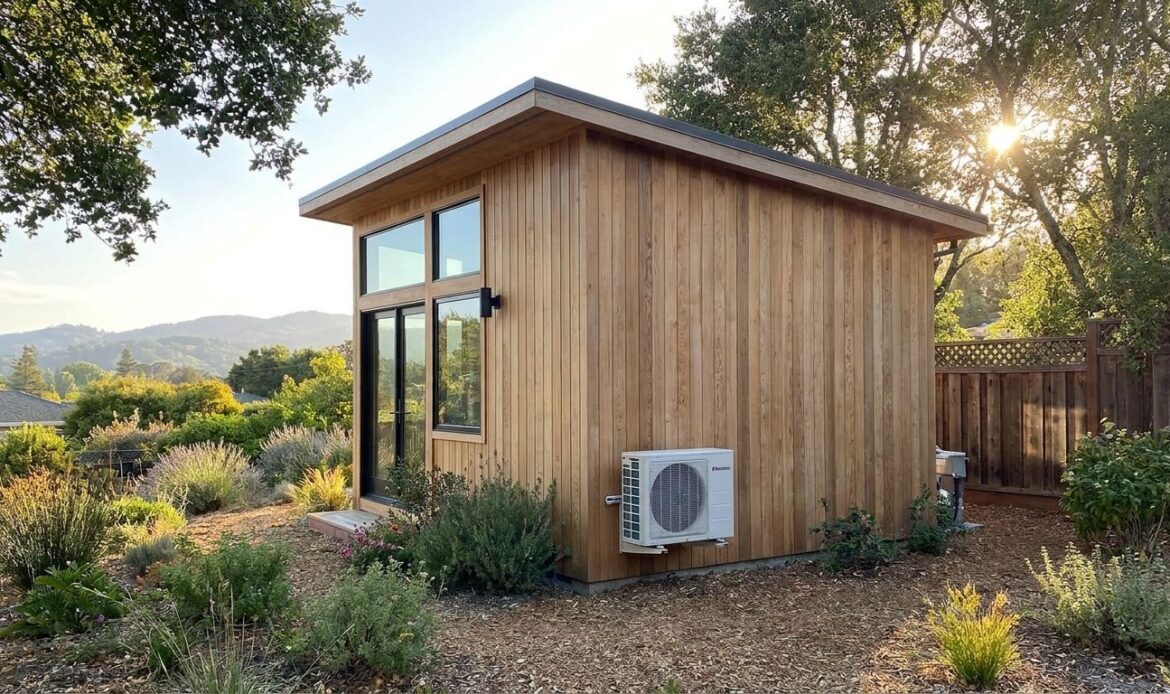
Picking the best heat pump for ADU Bay Area projects isn't about chasing a brand name — it's about matching unit type to a 400 to 1,200 square foot space that often has no existing ductwork, tight clearances, and its own electric meter.
- The best heat pump for ADU Bay Area units under 600 sq ft is a wall-mounted single-zone mini-split — Buy.
- Ducted mini-splits hide the equipment in a dropped ceiling but add real install cost — Consider.
- Skip multi-zone systems tied to the main house; standalone units matter for 2026 rebate and metering rules.
- Cold-climate hyper-heat mini-splits hold capacity down to 5 degrees F, worth it for hillside ADUs in Sonoma and Marin.
- Packaged terminal heat pumps cost less upfront but run louder and less efficient for full-time living — Skip.
Why this matters
Bay Area counties added thousands of accessory dwelling units after state ADU laws loosened permitting, and most of those units now go up under 2026 Title 24 rules that push new construction toward all-electric heating. That means the heat pump isn't a nice-to-have anymore — it's the default system, and getting the type wrong costs you comfort and rebate money on a unit that's already small enough that mistakes show up fast.
A dedicated heat pump installation for an ADU in the Bay Area looks different from swapping a furnace in the main house. ADUs run on separate meters in most Sonoma, Marin, Napa, Solano, and Contra Costa county permits, so the system you pick affects a standalone utility bill and, in many cases, standalone rebate eligibility.
How this list is ranked
Each system type below is scored against four things that actually change outcomes in a Bay Area ADU: fit for typical square footage (400 to 1,200 sq ft), rated performance at outdoor temperatures common to hillside and inland areas, install complexity in converted garages and detached structures, and how cleanly it clears 2026 code and rebate paperwork as a standalone system.
Sizing drives most of the list order. A unit oversized for a 500 sq ft studio short-cycles and never dehumidifies properly; a unit undersized for an 1,100 sq ft two-bedroom ADU runs constantly and still can't hold temperature on a cold January morning. Before you shop by type, run an actual load calculation — see how to size a heat pump for a California home for the inputs a contractor needs.
The ranked list
1. Wall-mounted single-zone ductless mini-split — "the default pick"
No ductwork, no dropped ceiling, an indoor head mounted high on one wall and an outdoor condenser sized to match. For a studio or one-bedroom ADU in the 400 to 600 sq ft range, a 9,000 to 12,000 BTU/h unit covers the load in nearly every Bay Area microclimate.
This is the system installers reach for first because it's the fastest to permit and the cheapest to service later. Cold-climate rated models hold their heating capacity down to 5 degrees F outdoor, which covers even a cold January night in Sonoma County. For homes without existing ducts anywhere on the property, this is also the entry point into heat pump options for homes without existing ductwork in the Bay Area.
Verdict: Buy for any ADU under 700 sq ft with one open living area.
2. Ducted (concealed) mini-split — "the invisible option"
The air handler sits in a ceiling cavity or small mechanical closet, and only a slim linear grille shows in the room. It's the pick when the ADU has a finished look the owner doesn't want interrupted by a wall-mounted head.
It needs 8 to 10 inches of clearance above the ceiling, which rules it out in a lot of converted garages with exposed rafters. Bay Area installers typically quote it several hundred to a couple thousand dollars above a comparable wall-mounted unit because of the extra ductwork and framing work.
Verdict: Consider when ceiling height allows it and the owner is renting the ADU out — tenants tend to like the cleaner look.
3. Floor-mounted or low-wall ductless unit — "the retrofit-friendly one"
Same refrigerant-based system as the wall-mounted head, just relocated near the floor. It solves the problem of a converted garage or basement ADU with low ceilings or exposed beams where a standard wall unit has nowhere clean to sit.
Performance is nearly identical to the wall-mounted version at the same BTU rating, so this is a placement decision, not a performance downgrade.
Verdict: Consider for garage and basement conversions with under 7 feet of usable wall height.
4. Cold-climate hyper-heat mini-split — "the one for hillside ADUs"
Standard mini-splits lose capacity as outdoor temperature drops; hyper-heat rated units are built to hold rated output down to roughly 5 degrees F and keep running efficiently well below freezing. That matters in the hill towns and higher elevations across Marin, Sonoma, and Napa counties, where valley-floor forecasts don't reflect what the ADU actually experiences overnight.
The premium over a standard single-zone unit is real, but so is the difference in comfort on the coldest nights of the year — a standard unit can lose 30 to 40 percent of rated capacity at low temperatures, a hyper-heat unit far less.
Verdict: Buy for any ADU above 800 feet elevation or in a known cold pocket.
5. Packaged terminal heat pump (PTHP) — "the budget wildcard"
This is the same box-in-the-wall unit you've seen in hotel rooms, and it shows up in ADU conversions because the equipment itself is cheap. It heats and cools through a single wall sleeve with no separate outdoor condenser.
The tradeoff is real: PTHPs run louder indoors, hold lower efficiency ratings than mini-splits, and struggle in a full-time living space the way they don't in a hotel room used a few nights a month.
Verdict: Skip for any ADU used as a full-time residence; it's a stopgap, not a system.
6. Multi-zone system extended from the main house — "the one to skip"
Running a zone off the main house's existing multi-zone heat pump looks efficient on paper — one outdoor unit, one more indoor head. In practice it complicates metering, and most 2026 rebate programs and ADU permit paths want the accessory unit on its own standalone electric heating system tied to its own meter.
It also means an ADU tenant's comfort depends on how the main house is running its zones that day.
Verdict: Skip for any ADU that's separately metered or intended for long-term rental.
Comparison table
| System type | Best ADU size | Cold-weather rating | Install complexity | Verdict |
|---|---|---|---|---|
| Wall-mounted single-zone | Under 700 sq ft | Standard to 17°F, cold-climate to 5°F | Low | Buy |
| Ducted (concealed) mini-split | 500-900 sq ft | Standard to 17°F | Medium-high | Consider |
| Floor/low-wall unit | 400-700 sq ft, low ceilings | Standard to 17°F | Low-medium | Consider |
| Cold-climate hyper-heat | Any, elevation/cold pockets | Rated to 5°F | Low-medium | Buy |
| Packaged terminal (PTHP) | Any, budget-constrained | Limited | Low | Skip |
| Multi-zone off main house | N/A for separately metered ADUs | Depends on main system | Medium | Skip |
What to avoid
- Sizing off square footage alone. A converted garage with a metal roof and no insulation behind the walls carries a very different load than a new-build ADU with 2026-code insulation, even at the same square footage.
- Skipping the permit step to save time. Unpermitted ADU heat pump installs can block a rebate claim and complicate a future sale disclosure.
- Buying based on the lowest BTU price per unit. A cheaper 9,000 BTU condenser that's undersized for an 1,100 sq ft two-bedroom runs nonstop and ages faster than a correctly sized 18,000 BTU system.
Where to source the install
- Get a load calculation before any quote — not a square-footage guess — so the BTU number on the contract matches the actual ADU envelope.
- Confirm the contractor pulls a permit and documents Title 24 compliance for 2026; unpermitted work is the single most common reason ADU rebate claims get denied.
- Ask for the rebate paperwork upfront rather than after installation — programs like TECH Clean California have documentation requirements that are far easier to satisfy before the unit goes on the wall. Full eligibility steps are covered in how to qualify for Bay Area heat pump rebates in 2026.
A smart thermostat paired to the unit also matters more in an ADU than in a main house, since tenants or short-term guests rarely know how to run an unfamiliar system efficiently — see best smart thermostats for heat pump systems in California for compatible options.
Get your ADU heat pump sized right
A load calc and written quote before you commit to a unit type.
FAQ
What size heat pump does a Bay Area ADU need?
Most 400 to 700 sq ft ADUs need a 9,000 to 12,000 BTU/h single-zone system, while 800 to 1,200 sq ft units typically need 15,000 to 18,000 BTU/h. Exact sizing depends on insulation, windows, and orientation, so a load calculation beats a square-footage guess.
Is a ducted or ductless heat pump better for an ADU?
Ductless wins for most ADUs because it skips the framing and ceiling clearance a ducted system needs. Ducted concealed units make sense only when the ceiling has 8 to 10 inches of clearance and the owner wants no visible indoor unit.
Do ADUs need their own heat pump or can they share the main house system?
A standalone heat pump is the better choice for any separately metered ADU. Sharing a zone off the main house system complicates rebate eligibility and ties the ADU’s comfort to how the main house runs that day.
How much does heat pump installation cost for an ADU in the Bay Area in 2026?
Costs vary by unit type, capacity, and site conditions, so get a written quote rather than relying on a general estimate. Wall-mounted single-zone systems generally cost less to install than ducted concealed systems because they skip ceiling framing work.
Are heat pumps required for new ADUs under California code?
2026 Title 24 pushes new construction toward all-electric heating, which makes a heat pump the practical default for most new ADU permits. Check current code requirements with your permitting jurisdiction before finalizing a system choice.
What heat pump rebates apply to ADUs in 2026?
Programs like TECH Clean California offer incentives for qualifying heat pump installations, with documentation requirements that need to be handled before the unit is installed. Rebate amounts and eligibility change, so confirm current terms before signing a contract.
How cold does it get before a heat pump stops working?
Standard mini-splits lose meaningful capacity below 17 degrees F, while cold-climate hyper-heat rated units hold rated output down to around 5 degrees F. Hillside ADUs in Marin, Sonoma, and Napa counties that see cold pockets overnight benefit from the hyper-heat rating.
Can a mini-split heat pump handle Bay Area heat waves too?
Yes, the same system that heats in winter cools in summer, which is why mini-splits dominate ADU installs over separate heating-only equipment. Sizing for the cooling load matters just as much as sizing for winter heating.
One last thing
Most Bay Area ADUs run smaller than owners plan for on paper — a lot of permitted units land under 500 sq ft once hallways and closets are subtracted — which means the 9,000 BTU wall-mounted single-zone unit at the bottom of the capacity range is usually the right call, not the 18,000 BTU unit that feels like the safer bet on paper. Oversizing costs more upfront and short-cycles worse than a correctly sized unit ever will.
Related guides
- Best heat pump installers in the Bay Area
- How to choose between a heat pump and a furnace in California
- Best ductless AC installers in the Bay Area
- How ductless mini-splits work in older Bay Area homes