

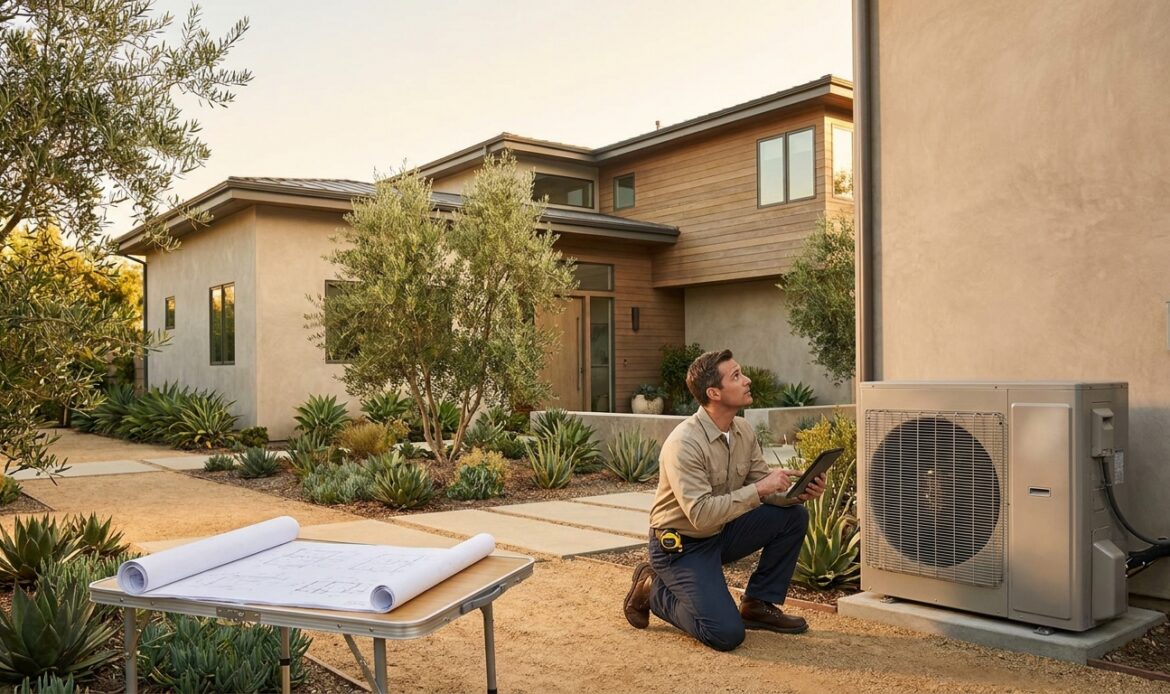
Sizing a heat pump wrong costs you twice: once on the utility bill, once on comfort. This guide walks through the actual steps to size a heat pump for a California home in 2026, from load calculations to contractor red flags.
TL;DR
Sizing a heat pump for a California home means running a Manual J load calculation, not guessing from square footage or copying your old furnace's tonnage. A correctly sized heat pump for a 2,000 square foot Bay Area home typically lands between 2.5 and 4 tons, depending on insulation, window count, and orientation. Oversizing by even one ton causes short-cycling and humidity problems; undersizing leaves you cold on the 15 nights a year that actually dip below 40 degrees. Verdict: get a Manual J calculation before you get a quote, not after.
Why this matters
Most contractors size heat pumps using a rule of thumb: 400 to 600 square feet per ton. That shortcut ignores insulation quality, window orientation, ceiling height, and how many people actually live in the house. In California's mixed climate zones, from foggy Sonoma coastline to inland Napa heat, that rule of thumb produces oversized systems more often than undersized ones.
An oversized heat pump reaches setpoint fast, shuts off, then cycles back on ten minutes later. That short-cycling wears out compressors early and leaves indoor humidity high because the system never runs long enough to dehumidify properly. Undersized units run constantly during heat waves and cold snaps, spiking your electric bill and still not hitting the thermostat setpoint. Right-sizing gets you quieter operation, lower bills, and a unit that lasts its full 15 to 20 year lifespan instead of failing at year eight.
California's Title 24 energy code and the state's heat pump rebate programs both require load calculations for new installations, so this isn't optional paperwork you can skip to save time.
What you'll need
- Your home's square footage, broken out by floor if it's a two-story house
- Window count, size, and orientation (south-facing glass changes the math significantly)
- Insulation details: attic R-value, wall type, whether it's been upgraded since the home was built
- Ceiling height in each room, especially vaulted or open-plan spaces
- Number of occupants and any heat-generating equipment (home office servers, wine fridges, workshop tools)
- A contractor willing to run Manual J, not just eyeball the job
- 45 to 90 minutes for the on-site assessment, longer for larger or older homes
The steps
1. Pull your home's baseline numbers
Start with total conditioned square footage, year built, and current HVAC equipment tonnage if you have it. This gives your contractor a starting point and flags obvious mismatches, like a 5-ton furnace serving a 1,400 square foot ranch house. Expect to spend 15 minutes gathering permit records or the equipment nameplate in the attic or closet.
Common mistake: using the county assessor's square footage, which often includes garages or unfinished basements that aren't conditioned space.
2. Run a room-by-room Manual J load calculation
Manual J is the ACCA-standard method that calculates heating and cooling load room by room, accounting for insulation, glazing, orientation, infiltration, and internal heat gains. It replaces guesswork with a BTU-per-hour number for the whole house and for each zone. This step typically takes 30 to 45 minutes on-site plus calculation time.
Expected outcome: a load report showing total BTU/h for heating and cooling separately, since California's mixed climate means those two numbers often differ by 20% or more.
Common mistake: accepting a calculation based only on square footage input into software without an actual site visit to check windows and insulation.
3. Match the load to equipment capacity, not nameplate tonnage
Heat pump capacity drops as outdoor temperature drops, so the nameplate rating at 47 degrees isn't what you get at 30 degrees on a January morning in Napa or Petaluma. Look at the manufacturer's performance data at your region's 99% design temperature, which for most Bay Area counties sits between 28 and 36 degrees depending on elevation and distance from the coast. This step is where a contractor's technical depth actually matters.
Expected outcome: a heat pump model selection where capacity at your design temperature meets or slightly exceeds your calculated heating load, typically within 10 to 15%.
Common mistake: sizing off the cooling load alone. Coastal Marin and Sonoma homes often have low cooling loads but real heating loads on winter mornings, so a system sized only for AC undersizes the heat.
4. Decide between single-zone, multi-zone, or ducted central
A single-family home with existing ductwork usually goes ducted central heat pump. Additions, converted garages, or homes without ducts often do better with a ductless mini-split sized per zone. Getting this decision wrong means oversizing one zone to compensate for a room that never gets warm enough.
Expected outcome: a zoning plan matching each room's actual load, not a single number applied to the whole house.
Common mistake: installing one oversized ductless head to cover an open floor plan instead of two properly sized heads.
5. Check the rebate and code requirements before finalizing
California's heat pump incentive programs and Title 24 compliance both reference the load calculation directly, and some rebate paperwork requires the Manual J documentation as proof of proper sizing. Confirm your contractor is submitting this alongside the permit application. This step takes 10 to 15 minutes of paperwork review but can delay your rebate by weeks if skipped.
Expected outcome: a permit and rebate application that references your actual load numbers, not a generic tonnage estimate.
Common mistake: signing a contract before confirming the equipment tonnage matches the load report, then discovering a mismatch after installation when it's expensive to fix.
6. Get a second opinion on the final tonnage
Before signing, ask a second contractor to review the load calculation and proposed equipment size. A 30-minute phone consult costs little and catches oversizing before it's bolted to your roof or side yard. This is standard practice for any installation over $8,000, which most whole-home heat pump systems in California hit in 2026.
Expected outcome: confirmation that the proposed tonnage falls within 0.5 tons of the load calculation, or a flagged discrepancy worth investigating.
Common mistake: skipping this because the first quote sounds confident. Confidence isn't the same as an accurate load calculation.
Troubleshooting
- System short-cycles, turning on and off every 10-15 minutes: Usually oversizing. Get a load recalculation before assuming it's a refrigerant or thermostat issue.
- House feels humid even with AC running: Oversized cooling capacity means short run times that don't dehumidify. This is common in coastal fog-belt homes with low cooling loads paired with an oversized unit.
- Heat pump runs constantly but house stays cold on winter mornings: Check the manufacturer's capacity curve at your local design temperature; the unit may be undersized for actual winter lows, not just its 47-degree rated capacity.
- Utility bill spiked after a smaller, more efficient system replaced an older one: Smaller doesn't always mean efficient if it's now undersized and running at max output constantly to compensate.
- Contractor quoted tonnage based on a phone conversation, no site visit: This is a red flag on its own. A real Manual J calculation requires an in-person or detailed remote assessment of windows, insulation, and orientation.
- Rebate application got rejected for missing documentation: Request the Manual J report and equipment spec sheet from your contractor and resubmit; most 2026 California rebate programs require both.
Tools and resources
- ACCA Manual J calculation software (contractors use this; ask to see the output report)
- Your utility's design temperature data for your specific county or city
- How much does heat pump installation cost in California to budget against the tonnage your load calc returns
- How to choose an HVAC contractor in the Bay Area for vetting questions to ask before signing
What to do next
Once you have a load calculation and a confirmed tonnage, the next decision is ducted versus ductless and which contractor actually installs to that spec. Comfort Factor runs Manual J calculations as part of every heat pump quote across Sonoma, Marin, Napa, Solano, and Contra Costa counties, and offers a free second opinion if you already have a quote in hand from another contractor. Visit Comfort Factor to get a load-based quote rather than a square-footage guess.
FAQ
What size heat pump do I need for a 2,000 square foot house in California?
Most 2,000 square foot homes in the Bay Area need between 2.5 and 4 tons, but the exact number depends on insulation, window area, and orientation, not square footage alone. A Manual J calculation is the only reliable way to confirm the number for your specific house.
Is it better to oversize or undersize a heat pump?
Neither. Oversizing causes short-cycling and humidity problems; undersizing leaves the house cold during the coldest mornings of the year. The goal is matching capacity to the calculated load within about 10%.
Does square footage determine heat pump size?
No, square footage is only a starting point. Insulation quality, window count and orientation, ceiling height, and occupancy all change the actual load significantly, sometimes by a full ton in either direction.
How much does a properly sized heat pump installation cost in California in 2026?
Costs vary by tonnage, zoning, and whether ductwork already exists. Check current installation cost ranges for your situation before committing to a quote.
Can I use my old furnace's tonnage as a guide for heat pump sizing?
Not reliably. Furnaces and heat pumps are sized differently, and older systems were often oversized to begin with using outdated rules of thumb.
Do I need a Manual J calculation to qualify for California heat pump rebates?
Most 2026 rebate programs require load calculation documentation as part of the application, so skipping this step can delay or disqualify your rebate.
How does coastal fog affect heat pump sizing in Marin and Sonoma counties?
Coastal homes often have lower cooling loads than inland homes but similar or higher heating loads due to persistent morning chill, so sizing off cooling data alone can leave the system undersized for heat.
Should I get a second opinion on heat pump sizing before installation?
Yes. A 30-minute second opinion catches sizing mismatches before equipment is installed, when they're far cheaper to fix than after.
One last thing
The detail most homeowners skip: ask your contractor for the capacity curve at your area's 99% design temperature, not just the 47-degree rated capacity on the spec sheet. That single number is the difference between a heat pump that keeps up on the coldest morning of 2026 and one that runs flat out and still falls short.