

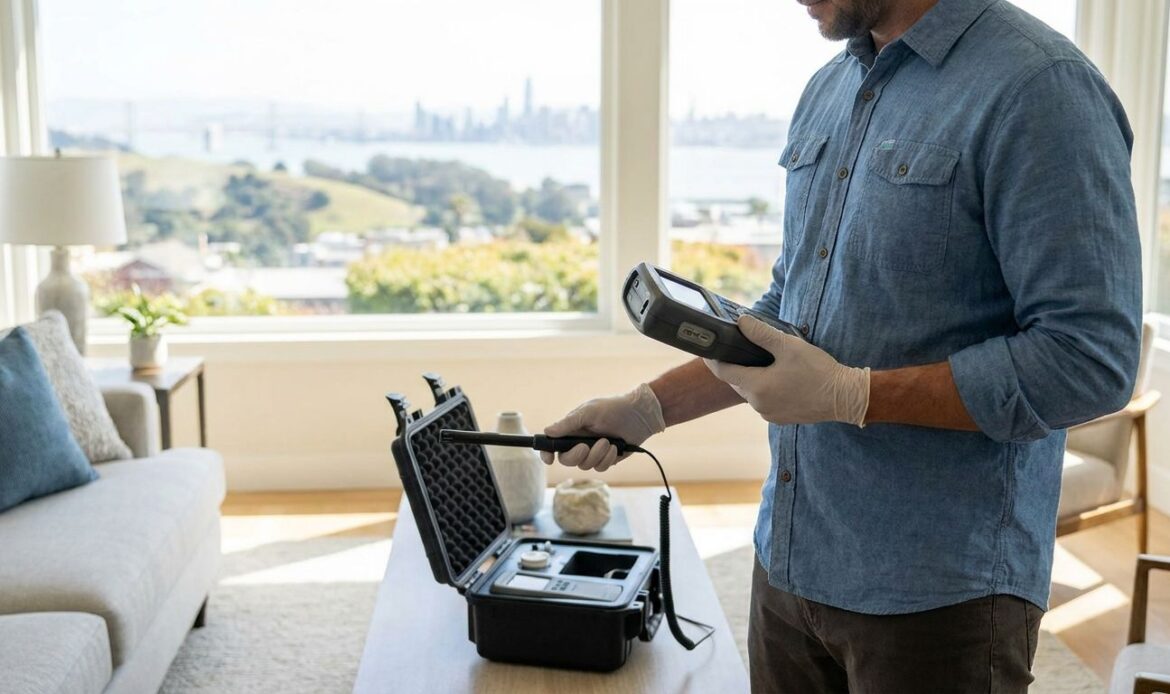
Wildfire smoke, foggy humidity, and older leaky ductwork make indoor air quality testing in the Bay Area a different problem than it is in drier, newer-build regions. This guide breaks down what a real test should check, which fixes actually move the needle, and which sales pitches to skip.
- MERV 13 filtration is the 2026 baseline for homes exposed to wildfire smoke in Sonoma, Napa, and Marin counties.
- Duct leakage wastes 20-30% of conditioned air in older Bay Area homes and skews indoor air quality testing results.
- DIY sensor pucks catch PM2.5 spikes but miss combustion gas and duct leak problems a licensed HVAC contractor tests for.
- Comfort Factor recommends pairing indoor air quality testing with a duct inspection before buying any filtration upgrade.
Why This Matters
EPA data puts indoor pollutant concentrations at two to five times outdoor levels in a typical home, and that gap widens every wildfire season when smoke seeps through window gaps, attic vents, and return air leaks. Sonoma, Napa, Marin, Solano, and Contra Costa counties all sit inside the annual smoke corridor, which means indoor air quality testing isn't a luxury add-on here the way it might be in a drier inland market.
A licensed Bay Area HVAC contractor checks more than a $30 sensor puck ever will: combustion safety on gas furnaces, duct integrity, static pressure, and filtration capacity all factor into a real indoor air quality testing visit. Skipping that step means you're guessing at the fix instead of testing for the actual problem.
Older homes across the region lose 20 to 30 percent of conditioned air through leaky ductwork, according to widely cited Energy Star field data, and that same leak path pulls in attic dust, insulation fibers, and smoke during fire season. Newer, tightly sealed builds have the opposite problem: not enough fresh air exchange, which lets VOCs from paint, furniture, and cleaning products build up indoors.
Who This Is For
This guide is for Bay Area homeowners who've noticed smoke smell indoors during fire season, allergy symptoms that spike at home, visible dust around vents, or a musty smell in a foggy-belt property near Marin or coastal Sonoma. It's also for anyone buying or selling a home in 2026 who wants a clean air quality baseline before listing or closing.
What to Look for in Indoor Air Quality Testing for Bay Area Homes
Particulate Matter (PM2.5) Monitoring
Wildfire season typically runs September through November across Sonoma and Napa counties, and PM2.5 is the pollutant that spikes hardest during those events. A test that only checks dust and pollen misses the exact problem that sends Bay Area AQI readings past 150 several times a year.
VOC and Off-Gassing Detection
New flooring, fresh paint, and recent renovations off-gas volatile organic compounds for weeks or months after the work is done. This matters more in newer, tightly sealed Bay Area construction where there's less natural air exchange to dilute the buildup.
Humidity and Mold Risk Screening
Coastal fog belt homes in Marin and western Sonoma County run higher ambient humidity than inland Napa or Solano properties, which raises mold risk in crawl spaces and attics. A humidity reading alone doesn't confirm mold, but it flags where to look next.
Duct Leakage and Return Air Testing
A duct system pulling air from an attic or crawl space brings in whatever's up there: insulation particles, dust, and smoke during fire season. This is the single most overlooked variable in indoor air quality testing because the symptoms (dust, odor, uneven comfort) get blamed on the HVAC unit instead of the ducts.
Combustion Safety and Carbon Monoxide Checks
Any home with a gas furnace needs a combustion safety check as part of indoor air quality testing, not as a separate service. A cracked heat exchanger or backdrafting flue is a life-safety issue, not a comfort issue.
Top Picks: What to Do With Your Test Results
The Wildfire Season Fix. If PM2.5 spikes indoors every time regional AQI climbs, the fix starts with system prep before smoke season hits, not during it. Prepping your HVAC for Sonoma County wildfire season means sealing obvious gaps and confirming your system can run in recirculation mode. Verdict: Buy for any home in the Sonoma-Napa smoke corridor.
The Whole-Home Filtration Upgrade. MERV 13 is the practical ceiling for most residential air handlers without a blower motor upgrade, and it catches the fine particulate that lighter filters pass straight through. Wildfire smoke filtration systems built for California homes pair filtration with the airflow capacity to actually move air through a denser filter. Verdict: Buy if anyone in the household has asthma or a respiratory condition; Consider for everyone else in a smoke-affected county.
The Sneaky Fix: Duct Sealing. This one gets skipped because it's invisible, but a leaky supply or return duct undoes any filtration upgrade you buy. Duct sealing for Bay Area homes addresses the 20-30% air loss problem directly instead of masking it with a better filter. Verdict: Buy for any home built before major duct system replacement, Skip only if a recent duct inspection already confirmed a sealed system.
The Overkill Option: Continuous Air Quality Monitors. A permanently installed indoor sensor tracks PM2.5 and VOC trends over time, which is useful data but doesn't fix anything on its own. Verdict: Consider for households already managing a respiratory condition; Skip if you just want a one-time answer on whether your home has a problem.
The Baseline: Annual System Maintenance. Filters lose capacity, coils collect dust, and duct connections loosen over a year of daily cycling. Annual maintenance keeps whatever filtration or sealing work you've already paid for actually performing at spec. Verdict: Buy as the maintenance floor for every home in the region.
Get an HVAC system inspection
Have a technician check ducts, filtration, and combustion safety in one visit.
What to Avoid
- Sub-$50 DIY sensor kits as your only data source. They catch PM2.5 trends reasonably well but say nothing about duct leakage, combustion safety, or static pressure, the things that actually cause chronic indoor air problems.
- Contractors who diagnose over the phone and quote a filtration system same-day. A real indoor air quality testing visit involves an in-home inspection; a phone-only quote skips the step that tells you what's actually wrong.
- One-time duct cleaning sold as a fix for smoke infiltration. Cleaning removes existing dust but doesn't seal the leak that let smoke and attic air in during the last fire event. Sealing and cleaning solve different problems.
Verdict Comparison
| Method | Catches | Misses | Best For | Verdict |
|---|---|---|---|---|
| DIY sensor puck | PM2.5, humidity trends | Duct leaks, combustion gas | Ongoing monitoring | Consider |
| Professional inspection | Duct leaks, combustion safety, static pressure | Long-term trend data | One-time diagnosis | Buy |
| Continuous monitor + pro inspection | Both trend data and root cause | Nothing significant | Households with respiratory conditions | Buy |
| Duct cleaning alone | Existing dust and debris | The leak that let it in | Visible contamination only | Consider |
FAQ
What does indoor air quality testing check for in a Bay Area home?
Indoor air quality testing checks particulate matter (PM2.5), VOCs, humidity, duct leakage, and combustion safety on gas appliances. In the Bay Area, PM2.5 and duct leakage matter most because of wildfire smoke infiltration and older, leaky ductwork.
How often should Bay Area homeowners test indoor air quality?
Test before and after wildfire season each year, and any time you notice new odors, dust, or allergy symptoms indoors. A duct and combustion safety check every year during routine maintenance covers most of the year-round risk.
Are DIY air quality monitors accurate enough for a Bay Area home?
DIY monitors track PM2.5 and humidity trends reasonably well but miss duct leaks and combustion gas issues entirely. Use one for ongoing tracking, not as a substitute for a professional inspection.
Does wildfire smoke actually get inside a sealed home?
Yes, smoke enters through duct leaks, attic vents, and gaps around windows and doors even in newer, tightly built homes. A duct system pulling air from an attic space is one of the most common infiltration paths in the Bay Area.
What MERV filter rating handles wildfire smoke best?
MERV 13 is the practical standard for residential systems during wildfire season in 2026. Going higher can restrict airflow on systems not designed for it, so confirm blower capacity before upgrading.
Can duct leaks affect indoor air quality?
Yes, leaky ducts pull in attic dust, insulation particles, and smoke, and typical uninsulated systems lose 20 to 30 percent of conditioned air through those leaks. Sealing ducts is often a bigger air quality fix than upgrading a filter.
Is indoor air quality testing worth it for older Bay Area homes?
Yes, older homes carry higher duct leakage rates and more combustion safety risk from aging furnaces. Testing identifies which problem is actually driving symptoms before you spend money on a filtration upgrade that won’t fix a duct leak.
Is professional indoor air quality testing better than a DIY kit?
Professional testing catches duct leaks and combustion safety issues a DIY sensor can’t detect, making it the better first step for a full diagnosis. A DIY monitor is a reasonable follow-up tool once the underlying problem is fixed.
One Last Thing
The most overlooked variable in indoor air quality testing isn't the filter, it's the duct system feeding it. A brand-new MERV 13 filter mounted on a leaky return still pulls unfiltered attic air straight into the living space, which is why duct sealing and testing need to happen together, not as separate purchases years apart.
Related Guides