

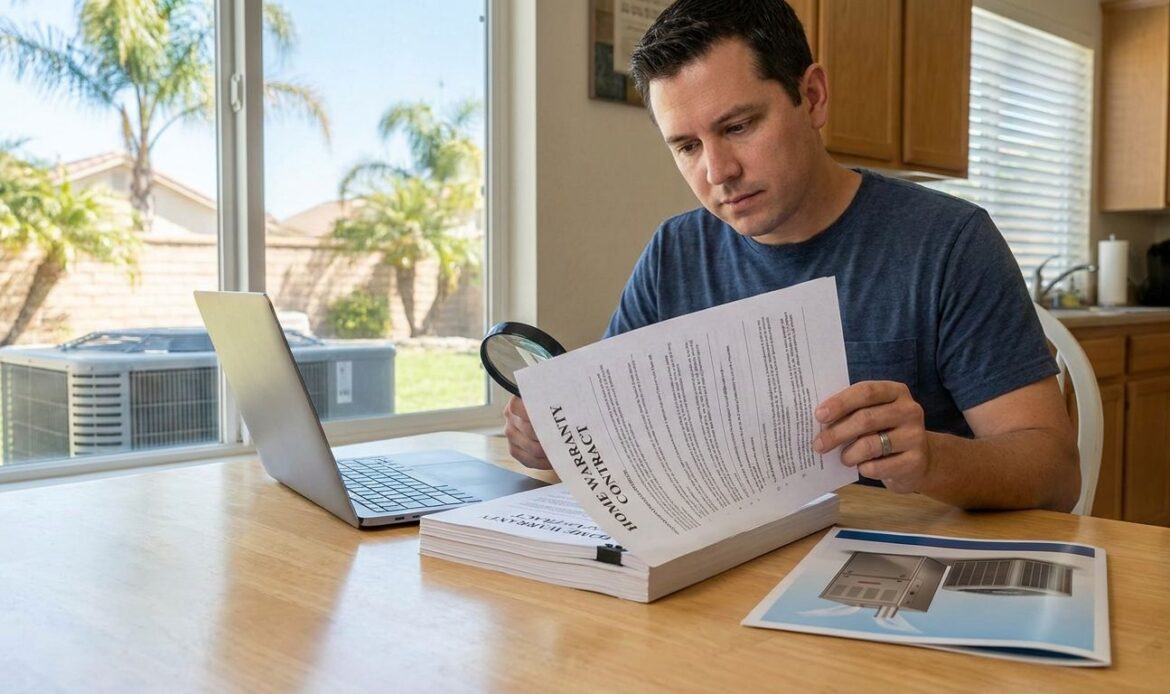
A home warranty policy in California often promises HVAC coverage on the sales page, then denies the claim once your furnace or heat pump actually fails — the fix is reading the contract's fine print before you call, not after.
- Most California home warranty plans exclude HVAC repair for units over 10-15 years old or without documented maintenance — check your contract’s age and upkeep clauses first.
- Home warranty hvac repair california claims get denied most often for ‘pre-existing condition’ and ‘lack of maintenance’ reasons, not the actual failure.
- A licensed, factory-authorized HVAC contractor strengthens your claim; an unlicensed one can void it entirely in 2026.
- Service call trade fees typically run $75 to $125 per visit even when the repair itself is approved.
- If a claim is denied, a written second opinion from a Comfort Factor technician gives you the documentation to appeal.
Why this matters
HVAC systems fail on the hottest or coldest day of the year, and that's exactly when homeowners discover their warranty doesn't cover what they thought it did. California's climate swings — Central Valley heat, Bay Area fog belts, wildfire smoke seasons — put real strain on compressors, coils, and furnaces every year, and 2026 policy renewals are seeing tighter exclusion language around "lack of maintenance" than plans sold five years ago.
A denied claim isn't always final. It's usually a documentation problem: no maintenance records, no proof the failure wasn't pre-existing, or a repair technician who wasn't licensed under California contractor law. Knowing exactly what your policy requires before you call for repair saves you a service fee, a denial letter, and a second round of phone calls with the warranty company.
What you'll need
- Your full home warranty contract (not just the summary page) — the exclusions section matters most
- Maintenance records or receipts for your HVAC system going back at least 12 months
- The make, model, and install date of your furnace, AC, or heat pump
- A phone or email to reach the warranty company's claims line
- Contact information for a licensed HVAC contractor in case the warranty company requires an independent diagnosis
The steps
1. Pull your contract and find the HVAC section
Don't rely on the marketing brochure or app summary — the actual contract has the exclusions. Search for terms like "pre-existing condition," "code violation," "improper installation," and "lack of maintenance." Most California home warranty plans list HVAC as a covered system but carve out compressors, coils, or ductwork as separate line items with their own caps. Common mistake: assuming "HVAC covered" means every component is covered — it rarely does.
2. Check the age and maintenance requirements
Many contracts cap coverage or reduce payout on systems older than 10 to 15 years, and nearly all require proof of annual maintenance. If your furnace or heat pump hasn't had a tune-up in the last year, gather whatever records you do have before filing. A maintenance plan on file with a local contractor makes this step painless going forward — homeowners across the Bay Area use one specifically so this documentation exists when a warranty claim comes up.
3. Confirm the contractor requirement
Some warranty companies dispatch their own network technician; others let you choose your own and reimburse you. Read which model your contract uses — filing with the wrong assumption is the fastest way to get a claim denied on a technicality. If you're allowed to pick your own contractor, verify the technician holds an active California C-20 license before the appointment, since an unlicensed repair can void the warranty outright.
4. File the claim with specific symptoms, not guesses
Warranty adjusters approve or deny based on the described failure. "AC not cooling" is vague; "outdoor compressor unit not cycling on, thermostat reads 78°F after 45 minutes" gives the adjuster something concrete. Include the date symptoms started and whether this is the first occurrence. Common mistake: filing after the unit has already failed completely, when an earlier partial-failure report would have supported the claim better.
5. Get the diagnosis in writing
When the technician arrives — warranty network or your own choice — request a written diagnosis stating the cause of failure, not just the fix. "Compressor failure due to normal wear" supports a claim; "failure due to lack of refrigerant charge, likely unaddressed leak" can trigger a maintenance-related denial. Keep a copy for your own records regardless of outcome.
6. Watch for the trade service fee
Nearly every California home warranty plan charges a trade service fee per visit, commonly in the $75 to $125 range, whether or not the repair ends up covered. Confirm this fee upfront so a denial doesn't come as a double surprise — you'll have paid the fee and still be facing a full repair bill.
7. Escalate a denial with a second opinion
If the claim is denied and you believe the diagnosis was wrong or incomplete, a second, independent diagnosis carries weight in an appeal. Knowing when it's worth paying for a second opinion on the repair itself can be the difference between eating the cost and getting the warranty company to reverse course.
Need a second opinion on a denied claim?
Comfort Factor documents the diagnosis in writing for your appeal.
Troubleshooting
Claim denied for "lack of maintenance" with no records on file. Ask the warranty company what documentation would satisfy the requirement going forward, and start a maintenance log immediately — even a single dated service receipt strengthens future claims.
Warranty company's dispatched technician gives a vague diagnosis. Request the diagnosis in writing with the specific failed component named. A vague verbal explanation is easy for an adjuster to dismiss and hard for you to appeal.
Contract says "pre-existing condition" but the unit worked fine last week. Pre-existing condition denials are common and often disputed successfully with a timestamped second opinion showing the failure is new, not gradual.
Technician isn't licensed and you didn't know. Stop the repair before it's completed if possible. Unlicensed contractor work is one of the fastest ways to void both your warranty and any manufacturer coverage on the equipment.
System is 12+ years old and warranty caps the payout low. At that age, the math often favors replacement over repair. Comparing repair cost against replacement before you spend the warranty payout on a patch job saves money long-term.
Warranty company won't approve emergency repair scheduling. Ask directly whether your plan has an emergency service tier — some California contracts have a 24-48 hour standard response window that isn't advertised upfront.
Tools and resources
- Your home warranty contract (physical or PDF, full version)
- California Contractors State License Board lookup for verifying technician licenses
- A dated maintenance log or folder of HVAC service receipts
- A licensed local HVAC contractor for independent diagnosis when needed
What to do next
If your HVAC system is nearing the age where warranty payouts shrink or exclusions kick in, it's worth running the numbers on repair versus replacement before the next breakdown forces the decision. Comfort Factor has covered exactly that math for Bay Area homes in a separate breakdown of when repair no longer makes sense.
FAQ
Does a home warranty cover HVAC repair in California?
Most California home warranty plans cover HVAC repair, but with exclusions for pre-existing conditions, code violations, and systems without documented maintenance. Read the exclusions section of your specific contract, since coverage varies widely by provider and plan tier in 2026.
Why do home warranty companies deny HVAC claims?
The two most common denial reasons are lack of maintenance records and pre-existing condition determinations. A written diagnosis from a licensed technician that clearly states the failure is new and unrelated to neglect improves approval odds.
How much does a home warranty service call cost?
Trade service fees for HVAC claims typically run $75 to $125 per visit in California, charged whether or not the repair is ultimately approved. Confirm the exact fee in your contract before scheduling.
Can I choose my own HVAC contractor for a warranty repair?
Some contracts let you pick your own licensed contractor and submit for reimbursement, while others require using the warranty company’s dispatch network. Check your contract’s service model before filing, since using the wrong process can delay or void the claim.
What voids a home warranty on an HVAC system?
Unlicensed contractor repairs, undocumented modifications, and skipped annual maintenance are the most common ways a California home warranty gets voided on HVAC coverage. Keeping maintenance records and verifying contractor licenses before repair work protects the claim.
Is an old HVAC system still covered by a home warranty?
Coverage often continues on older systems, but many California plans cap payouts or exclude major components once a unit passes 10 to 15 years old. Read your plan’s age-related caps before assuming full coverage applies.
What should I do if my HVAC warranty claim is denied?
Request the written diagnosis from the warranty company, then get an independent second opinion from a licensed HVAC contractor to support an appeal. Many denials get reversed when a documented, dated diagnosis contradicts the original claim reason.
Does home insurance cover HVAC repair instead of a home warranty?
Home insurance generally covers HVAC damage from a sudden event like a fire or storm, while a home warranty covers mechanical breakdown from normal wear. The two serve different failure types, and neither typically covers both in the same claim.
One last thing
The single biggest predictor of an approved HVAC warranty claim in California isn't the size of the plan or the provider's reputation — it's whether you have a dated maintenance record from the last 12 months. Homeowners who skip annual tune-ups are the ones most often stuck with a "lack of maintenance" denial letter in 2026, even on a unit that failed for reasons that had nothing to do with upkeep.
Related guides