

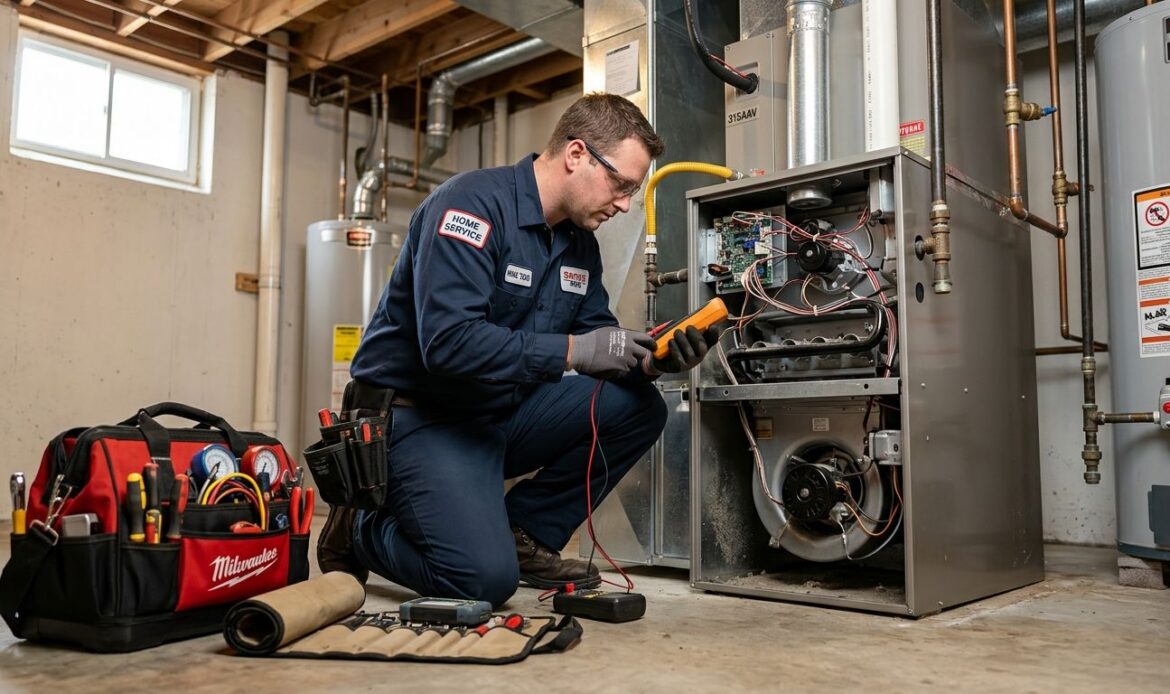
Most furnace repairs take 1 to 3 hours once a technician is on-site, with the typical Bay Area service call landing around 2 hours in 2026. That number only covers the wrench-turning part — a diagnostic visit, a parts run, or a permit-pulling replacement can stretch the timeline to a full day or longer.
- Furnace repair takes 1 to 3 hours on average once a technician is diagnosing and fixing the problem on-site.
- Simple fixes like a bad thermostat or dirty flame sensor often finish in under an hour.
- Repairs needing a special-order part (heat exchanger, control board) can take 2026 backorder queues into multi-day territory.
- Comfort Factor handles furnace repair across Napa, Sonoma, Marin, Solano, and Contra Costa counties.
Why this matters
A furnace that quits in a Bay Area cold snap doesn't leave much room for guessing. Knowing whether you're looking at a 45-minute fix or a two-day wait changes whether you rent a space heater, book a hotel room, or just wait it out.
Homeowners searching "how long does furnace repair take" usually have one of two problems: a furnace that's dead right now, or a quote in hand and a question about scheduling around it. Either way, the answer depends on what's broken more than anything else.
How long does furnace repair take?
The honest answer is "it depends on the part," but the ranges are consistent enough to plan around. Here's how a typical furnace repair in Napa, CA or anywhere else in the region tends to break down by job type.
| Repair type | Typical time on-site | Same-day possible? |
|---|---|---|
| Thermostat or wiring issue | 30–60 minutes | Yes |
| Ignitor or flame sensor replacement | 45–90 minutes | Yes |
| Blower motor or capacitor swap | 1–2 hours | Usually |
| Heat exchanger or control board | 3+ hours, often 1–2 return visits | Sometimes |
| Full diagnostic only (cause unclear) | 30–45 minutes | N/A — separate repair visit follows |
The diagnostic itself is usually quick. A technician checks the thermostat call, the igniter or pilot, the flame sensor, the blower, and the gas valve in roughly the order that catches the most common failures first. What eats time isn't the troubleshooting — it's whether the part needed is sitting in the truck or has to be ordered.
Simple repairs: under 1 hour
A dirty flame sensor, a tripped high-limit switch, a dead thermostat battery, or a reset breaker are the fastest calls a furnace technician makes. These fixes typically wrap in 30 to 60 minutes because the part is either already in the truck or nothing needs replacing at all — just cleaning, resetting, or reconnecting.
If your furnace is blowing cold air or short-cycling and you want to rule out the easy stuff before booking a visit, troubleshooting a furnace that won't turn on walks through the checks a technician runs first anyway. Verdict: expect same-day, often same-visit, resolution.
Common repairs: 1 to 3 hours
Ignitor replacement, capacitor swaps, blower motor issues, and flue or venting problems make up the bulk of furnace service calls. These jobs run 1 to 3 hours because the technician has to pull the panel, isolate power, swap the component, and run the system through a full heat cycle to confirm the fix holds.
Most stocked parts for common furnace brands ride in a well-equipped service van, so a same-day fix is realistic for this tier. Verdict: plan for a morning or afternoon, not a full day.
Complex repairs: 3+ hours or multiple visits
A cracked heat exchanger, a failed control board, or a gas valve replacement pushes into a different category. These parts are less commonly stocked, safety inspection requirements are stricter (a cracked heat exchanger is a carbon monoxide risk and gets flagged immediately), and ordering a specific control board can add a day or two to the timeline in 2026 depending on manufacturer lead times.
Verdict: budget for 3+ hours of labor and the possibility of a return visit once the part arrives. If a technician tells you the furnace needs a heat exchanger replaced, get a second read before committing — when to get a second opinion on HVAC repair covers what's worth double-checking versus what's a straightforward call.
Why furnace repair time varies
- Part availability — stocked components finish same-day; special-order parts (specific control boards, discontinued models) add days
- Furnace age and brand — older or less common units sometimes need parts sourced from a specialty supplier instead of a local distributor
- Access to the unit — a furnace crammed into a tight attic or crawlspace slows down even a simple repair
- Diagnostic complexity — intermittent faults that don't reproduce on command take longer to isolate than a furnace that's flat-out dead
- Permit requirements — a repair that crosses into partial system replacement may require a permit inspection, which adds scheduling time outside the technician's control
- Time of year — during a cold snap, a straightforward repair can still mean a longer wait for the appointment itself, even if the on-site work is fast
“The repair itself is rarely the bottleneck — the wait for the right part is.”
How much does furnace repair cost?
Cost tracks with time: a quick fix like a flame sensor or capacitor swap runs at the lower end of most furnace repair quotes, while a heat exchanger or control board replacement sits at the higher end because of both labor hours and part cost. If cost is the main question driving your search, best furnace repair companies in the Bay Area breaks down what separates a fair quote from an inflated one.
Is it worth repairing an old furnace or replacing it?
Repair usually wins when the furnace is under 15 years old and the fix is a single component, not a systemic failure. Once a furnace needs its second major repair in a short window, or the unit is past the 15-to-20-year mark most manufacturers design for, replacement starts making more financial sense than another repair bill.
Can I fix a furnace myself to save time?
Basic checks like the thermostat, breaker, and air filter are safe for a homeowner to handle in a few minutes, and often solve the problem without a service call at all. Anything involving the gas line, flame sensor, or internal wiring should go to a licensed technician — furnaces run on combustion, and a DIY mistake there is a safety issue, not just a warranty one.
Should I get a second opinion before a major furnace repair?
Yes, especially for any quote involving a heat exchanger or full control board replacement, since those are the two repairs most often flagged for unnecessary upsells. A second opinion typically takes another 30-to-60-minute diagnostic visit and can save a significant chunk of an otherwise large repair bill.
Get a furnace repair quote today
Same-day diagnostics available across Napa, Sonoma, Marin, Solano, and Contra Costa counties.
FAQ
How long does furnace repair take?
Furnace repair takes 1 to 3 hours on average once a technician is on-site, though simple fixes finish in under an hour and parts-dependent repairs can stretch into multiple visits.
How long does a furnace diagnostic take?
A furnace diagnostic typically takes 30 to 45 minutes and covers the thermostat, ignitor, flame sensor, blower, and gas valve in sequence.
Can furnace repair be done same-day?
Yes, most common furnace repairs — ignitor, flame sensor, capacitor, blower motor — are same-day because the parts are typically stocked in the service van.
Why is my furnace repair taking so long?
A furnace repair that stretches past a day usually means a special-order part, like a specific control board or heat exchanger, needs to arrive before the job can finish.
What’s the most common reason a furnace stops working?
A dirty flame sensor or failed ignitor causes a large share of furnace no-heat calls, and both are among the fastest repairs to complete.
How often should a furnace be serviced to avoid long repair waits?
An annual furnace tune-up before the heating season catches wear on the ignitor, flame sensor, and blower before they fail outright, which cuts down on emergency repair calls.
Is a furnace repair or a full replacement faster?
A repair is almost always faster than a replacement, since installation of a new furnace typically takes a full day or more, compared to 1 to 3 hours for most repairs.
One last thing
The fastest furnace repairs aren't the ones handled well mid-breakdown — they're the ones prevented with a fall tune-up. A technician who's already seen your furnace once has a head start diagnosing it the next time something goes wrong, which is the real reason repeat customers tend to get faster service calls than first-timers in 2026.
Related guides
- Furnace repair in Napa, CA
- How to troubleshoot a furnace that won't turn on
- Best furnace repair companies in the Bay Area
- How to know when to get a second opinion on HVAC repair
- How to choose an HVAC contractor in the Bay Area