

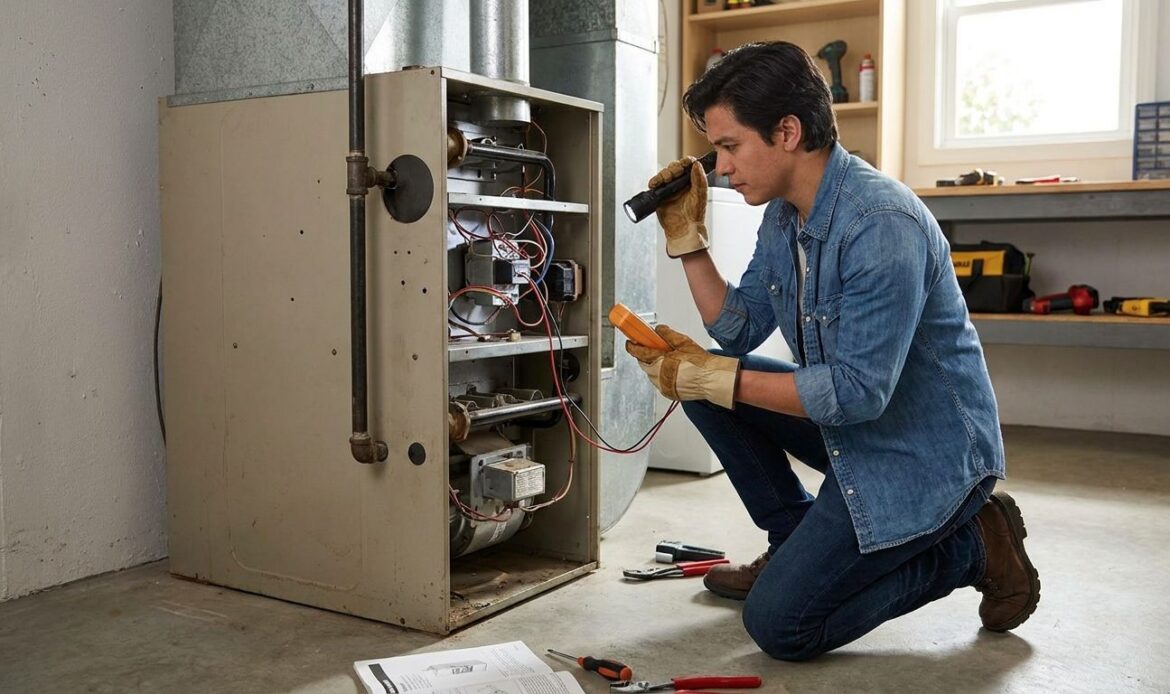
A furnace that won't turn on usually comes down to one of six causes: thermostat settings, power supply, a tripped safety switch, filter airflow, ignition failure, or a condensate blockage — and you can rule out most of them yourself in under 30 minutes.
- Furnace wont turn on troubleshooting starts with thermostat batteries and the furnace door safety switch — both cause silent shutdowns.
- A tripped breaker or blown fuse stops roughly a third of no-heat calls Comfort Factor sees across Sonoma and Napa counties each winter.
- Dirty filters overheat the limit switch and shut the furnace down as a safety measure — replace filters every 60-90 days.
- High-efficiency furnaces stop cold when the condensate float switch trips, even with power and gas flowing fine.
- If the furnace clicks but won’t ignite after two resets, stop troubleshooting and call a licensed technician.
Why this matters
A dead furnace in January in Napa or Solano County isn't a minor inconvenience — overnight lows in the Bay Area regularly drop into the high 30s, and a furnace that sat unused all summer is exactly when ignition components and safety switches tend to fail. Most no-heat calls trace back to something simple: a dead thermostat battery, a tripped breaker, or a filter so clogged it triggered the furnace's own safety shutdown. Working through the checklist below in order saves you a same-day furnace repair in Napa visit for a problem you can fix with a screwdriver and five minutes.
The goal here isn't to turn you into an HVAC tech. It's to separate the fixes you can do safely from the ones that need a gas-certified professional, so you don't waste a cold night guessing.
What you'll need
- A flathead and Phillips screwdriver
- A flashlight
- Fresh AA or AAA batteries for the thermostat (if battery-powered)
- A replacement furnace filter (correct size, check the old one's frame)
- 15-30 minutes, longer if the breaker panel is outdoors or hard to access
- Your breaker panel location and furnace switch location (usually a wall switch near the furnace, styled like a light switch)
Skip anything involving the gas valve, ignitor wiring, or the heat exchanger. Those repairs require a license in California and touching them yourself can void your furnace's warranty.
The steps
1. Check the thermostat first
This sounds obvious, but it's the single most common false alarm. Confirm the thermostat is set to "Heat," not "Auto" or "Cool," and the target temperature is set at least 3 degrees above the room's current reading. Smart thermostats installed in 2026 sometimes default to a schedule that overrides manual settings — check for a scheduling icon on the display.
If the screen is blank or dim, replace the batteries even if they're only a year old; cold weather drains them faster. Common mistake: people assume a blank thermostat means the furnace is broken, when it's a $4 battery problem 9 times out of 10.
2. Verify power at the switch and breaker
Furnaces run on standard electrical power even when they burn gas for heat. Locate the furnace's dedicated wall switch — it looks like a light switch, often red, usually mounted near the unit or at the top of the basement stairs — and confirm it's in the "on" position.
Next, check your breaker panel for a tripped breaker labeled "furnace" or "HVAC." A tripped breaker sits in the middle, not fully in either direction; flip it fully off, then fully on. Expected outcome: if this was the issue, you'll hear the blower motor start within 30-60 seconds.
3. Inspect the furnace door safety switch
Every modern furnace has a small switch pressed by the access panel — if the panel isn't seated correctly, the furnace won't fire at all, as a safety measure against running with the cover off. Remove the panel, check that the switch plunger isn't bent or stuck, then reseat the panel firmly until you hear it click or feel it seat flush.
This single step resolves a surprising share of no-heat calls after someone changes a filter and doesn't reseat the panel tightly. Common mistake: leaving one screw loose so the panel looks closed but doesn't fully depress the switch.
4. Check the pilot light or hot surface ignitor
Older gas furnaces use a standing pilot light — look through the small window near the gas valve for a small blue flame. If it's out, most furnaces have a reset button and lighting instructions printed on the access panel; follow them exactly, and if it won't stay lit after three tries, stop and call a professional.
Newer furnaces use an electronic hot surface ignitor instead of a pilot. You'll hear a click, then a brief glow, then gas ignition — if you hear clicking with no ignition, the ignitor itself has likely failed and needs replacement, which is not a DIY repair.
5. Replace or clean the air filter
A filter clogged with dust and pet hair restricts airflow so badly that the furnace overheats internally and trips its high-limit safety switch, shutting the whole system down. Pull the filter and hold it up to a light — if you can't see light through it, replace it immediately.
Comfort Factor recommends swapping filters every 60-90 days for Bay Area homes, and closer to every 45 days if you're running the system hard during wildfire season with windows sealed. Expected outcome: a fresh filter restores airflow and the furnace should cycle normally within one heating cycle.
6. Check the condensate drain and float switch
High-efficiency furnaces (90%+ AFUE, common in installs since 2015) produce condensate that drains through a small hose to a drain or pump. If that line clogs, a float switch trips and shuts the furnace down completely — even with power, gas, and a good filter, it simply won't start.
Locate the drain line near the furnace base, check for a kink or visible blockage, and if you find standing water in the drain pan, that confirms the clog. Clearing it yourself with a wet/dry vac is reasonable; if water keeps backing up, the trap likely needs professional cleaning.
7. Reset the system
Once you've checked switches, filter, and drain, do a full reset: flip the furnace switch off, flip the breaker off, wait 60 seconds, then restore power in that order — breaker first, then switch. This clears most control-board lockouts that happen after a failed ignition attempt.
If your area had a recent outage, this reset step matters even more, since furnaces often need a manual restart sequence afterward — see the reset your HVAC system after a power outage guide if the furnace still won't respond.
Troubleshooting
Furnace runs but blows cold air. Usually a gas supply issue or a failed ignitor that's letting the blower run on a delay timer without ignition ever succeeding — this needs a technician, not a DIY fix.
Furnace short-cycles (runs 1-2 minutes, shuts off, repeats). Almost always a dirty filter or a failing flame sensor; replace the filter first since it's free to check.
Blower runs constantly, even with the thermostat satisfied. Check the thermostat fan setting — if it's set to "On" instead of "Auto," the blower runs 24/7 by design, not by malfunction.
Control board is blinking an error code. Count the blinks and check the code chart printed inside the access panel door — most manufacturers use a 2-9 blink pattern tied to a specific fault, and that chart is faster than guessing.
Furnace was fine yesterday, dead today, no obvious cause. This is the pattern that most often points to an ignitor or flame sensor near end of life, especially on furnaces installed before 2015 — that's a repair call, not a reset.
Thermostat shows the right temperature but furnace never kicks on. Check thermostat wiring at the furnace control board for a loose connection; a wire that's slipped out of its terminal produces exactly this symptom.
Furnace still not turning on?
Same-day diagnostics across Napa County when the checklist doesn’t fix it.
Tools and resources
- Multimeter, if you're comfortable testing for voltage at the furnace switch
- Manufacturer's manual (usually printed inside the access panel or available by model number online)
- A note of your furnace's age and last service date — a technician will ask
- If the furnace is over 15 years old and this is a repeat call, it's worth reading how to know when to replace your HVAC system before paying for another repair
What to do next
If you've worked through every step above and the furnace still won't start, the problem is inside the control board, gas valve, or ignition assembly — none of which are safe or legal for a homeowner to open in California without HVAC certification. Book a diagnostic rather than keep resetting the breaker, since repeated reset attempts on a failed ignitor can trip a hard lockout that takes longer to clear.
Homeowners in Solano County weighing a repair against a full swap, especially on furnaces original to the house, can compare costs against a new unit through the furnace installation in Solano County page before committing to another repair bill.
FAQ
Why won’t my furnace turn on at all?
The most common causes are a tripped breaker, a thermostat set incorrectly or with dead batteries, or the furnace door safety switch not fully engaged. Check power and the panel switch before assuming a mechanical failure.
Is it normal for a furnace to click but not ignite?
Clicking with no ignition usually means the hot surface ignitor has failed or the flame sensor is dirty. This is not a DIY fix and needs a technician, since it involves the gas ignition system.
How much does furnace repair cost in the Bay Area in 2026?
Simple repairs like a switch reset or filter-related fix run far less than ignitor or control board replacement, which involves parts and labor. Get a written diagnostic quote before authorizing repair work.
Can a dirty filter really stop a furnace from turning on?
Yes. A severely clogged filter restricts airflow enough to overheat the furnace internally, tripping the high-limit safety switch and shutting the unit down completely as a protective measure.
Should I reset my furnace breaker more than once if it won’t start?
Reset it once and wait 60 seconds before restoring power. Repeated resets on a furnace that’s failing to ignite can trigger a hard lockout on the control board that requires a technician to clear.
Why does my furnace shut off after running for a minute?
Short-cycling like this points to a dirty filter restricting airflow or a failing flame sensor that’s losing the flame signal. Check and replace the filter first since it’s the free fix.
Does a power outage affect furnace startup afterward?
Yes, some furnaces need a manual restart sequence after an outage and won’t resume automatically. Check the furnace switch and breaker, then follow the reset order: breaker first, switch second.
When should I stop troubleshooting and call a professional?
Call a technician if the furnace clicks without igniting, blows cold air continuously, or won’t stay running after two full resets. Anything involving the gas valve or ignitor is outside safe DIY territory.
One last thing
The furnace door safety switch is the single most overlooked cause of a "dead" furnace — Comfort Factor techs across Sonoma and Marin counties find an un-seated access panel behind a no-heat call often enough that it's worth checking before anything else, including the breaker. Push the panel flush, listen for the click, and try the thermostat again before you assume the worst.
Related guides