


Cozy HVAC is a sensible benchmark if you already have a contractor who knows your home and explains the work clearly. That relationship stops being enough when your next project needs a different service scope or an independent assessment. The best Cozy HVAC alternative in 2026 is Comfort Factor for homeowners seeking heating, cooling, or heat pump services across Sonoma, Marin, Napa, Solano, and Contra Costa counties; a specialist is the better fit when your project requires narrowly defined expertise.
- For cozy hvac alternatives, shortlist Comfort Factor for Bay Area HVAC repair, maintenance, and installation.
- Choose a heat pump specialist when equipment selection and home modifications need focused attention.
- Consider a manufacturer-referred contractor when equipment-specific service is your priority.
- Stay with Cozy HVAC when its documented scope meets your needs and the existing relationship works.
Why this matters
Choosing an HVAC contractor is different from choosing equipment. The contractor must identify the problem, explain the proposed work, and account for how your home distributes heated or cooled air. A different company name does not automatically produce a better result.
Comfort Factor provides residential HVAC installation, repair, and maintenance across the five counties named above. That makes it a relevant alternative to evaluate for a Bay Area home, without treating service coverage as proof of workmanship or project suitability.
For your 2026 shortlist, start with the job rather than the ranking. Write down 3 priorities: the problem you need solved, the outcome you want, and any constraints on the work. Examples include a furnace that will not start, an upstairs room that stays warm, or a planned switch to a heat pump.
Use the guide to choosing an HVAC contractor in the Bay Area to organize your questions. Apply the same questions to every candidate, including your current contractor.
Cozy HVAC alternatives at a glance
The alternatives below represent different ways to choose a service provider. The specialist and referral options are contractor-selection routes, not named companies or promises about individual providers.
| Provider or route | Best for | Main reason to consider it | How it compares with staying with Cozy HVAC |
|---|---|---|---|
| Cozy HVAC | Keeping an existing relationship that meets your needs | Continuity, if the contractor already knows your system | Remains the benchmark; evaluate the actual diagnosis and written scope |
| Comfort Factor | Bay Area residential heating, cooling, and heat pump work | Installation, repair, and maintenance within its stated service area | A named local alternative covering several HVAC service needs |
| Heat pump specialist | A project centered on heat pump selection or conversion | A focused search around your planned equipment and home modifications | Compare project-specific experience rather than general familiarity |
| Manufacturer-referred contractor | Equipment-specific diagnosis or service | A referral route tied to your equipment manufacturer | Confirm the individual contractor's suitability for the complete job |
| Warranty-assigned contractor | Work that must follow an existing coverage process | A provider selected through the applicable warranty procedure | Check the required process before authorizing work elsewhere |
Choose the service route that matches the problem, then compare the written scope. A broad-service contractor, a focused specialist, and a warranty-assigned provider are not interchangeable simply because each works on HVAC equipment.
1. Comfort Factor: best for broad residential HVAC needs
Comfort Factor is a Bay Area HVAC contractor offering heating, cooling, heat pump installation, repair, and maintenance. Its stated coverage includes Sonoma, Marin, Napa, Solano, and Contra Costa counties. It belongs on your shortlist when you want to evaluate one provider for several types of residential HVAC work.
The strongest reason to consider this option is service fit. You can assess repair, ongoing maintenance, and installation needs against the contractor's stated offering instead of starting with a company whose offering does not match your project.
Where this option shines
- Offers both repair and installation services, relevant when you need to evaluate those separate paths.
- Includes heat pump work alongside heating and cooling services.
- Serves the five named Bay Area counties, making location a clear first screening step.
Where this option falls short
- The stated regional coverage does not establish suitability for a home outside those counties.
- A broad service offering does not, by itself, demonstrate experience with your exact equipment or installation constraints.
- Choosing another contractor means explaining your system history and reviewing a new scope rather than relying on an existing relationship.
Head-to-head: local alternative versus existing provider
| Decision point | Comfort Factor | Cozy HVAC |
|---|---|---|
| Service fit | Offers heating, cooling, heat pump installation, repair, and maintenance | Match the proposed service to your specific job |
| Location fit | Stated coverage includes Sonoma, Marin, Napa, Solano, and Contra Costa | Confirm service at your address |
| System history | Provide previous repair records and equipment details | Existing records are useful if you have worked together before |
| Selection basis | Evaluate the diagnosis and written scope | Apply the same standard before deciding to stay |
Best for: Homeowners in the stated service area comparing residential HVAC repair, maintenance, or installation providers.
Verdict: Buy the service only after the diagnosis and written scope match your home's needs.
2. Heat pump specialist: best for a focused conversion project
A heat pump specialist is a useful search route when your main decision is how to install a heat pump in an existing home. A heat pump transfers heat and can provide both heating and cooling. The installation decision also involves equipment sizing, air distribution, controls, and the home's electrical setup.
Ask candidates to explain those connections. A proposal that names equipment but ignores the home is not enough to evaluate the project.
Where this route shines
- Keeps your contractor search focused on heat pump installation rather than an unrelated repair specialty.
- Gives you a clear reason to ask about similar homes and comparable conversion projects.
- Encourages a discussion of ducted and ductless approaches where relevant to your layout.
Where this route falls short
- The word specialist does not establish qualifications or installation quality.
- A narrow search can exclude a broad-service contractor that has relevant project experience.
- You still need clarity about maintenance, future repairs, and responsibility for associated work.
For a 2026 conversion, ask each candidate to explain the proposed system size and what information supports it. Do not treat the size of the old furnace as a complete answer to the new installation question.
Best for: Homeowners whose main project is selecting and installing a heat pump, especially when the existing setup needs changes.
Verdict: Buy on demonstrated project fit, not the specialist label alone.
3. Manufacturer-referred contractor: best for equipment-specific work
A manufacturer referral is a search route when you want a contractor familiar with a particular equipment line. Ask the manufacturer whether it offers a contractor directory or service referral, then verify the individual contractor's scope before booking.
This route helps organize your search. It does not replace your own assessment of the diagnosis, proposed repair, or installation plan.
Where this route shines
- Starts the search with the equipment you already own.
- Gives you a reason to ask about relevant training and experience.
- Suits a focused discussion about controls, components, and equipment-specific troubleshooting.
Where this route falls short
- A referral alone does not establish that the contractor can handle every part of your project.
- Equipment familiarity does not replace an assessment of ducts, airflow, or the home's heating and cooling needs.
- You still need to check location, qualifications, and the written work description.
Best for: Homeowners seeking equipment-specific service rather than starting a broad replacement search.
Verdict: Hold until the referred contractor confirms the complete job scope.
4. Warranty-assigned contractor: best for following existing coverage
If an existing warranty specifies how service must be requested or authorized, follow that process before arranging work independently. Read the applicable terms and ask who is authorized to diagnose the problem.
This route is about preserving the required procedure. It is not a general recommendation to choose warranty-assigned service over an independently selected contractor.
Where this route shines
- Aligns your service request with the procedure in the applicable agreement.
- Identifies who should receive the initial claim or service request.
Where this route falls short
- The agreement can restrict your choice of contractor.
- A coverage decision and a complete technical diagnosis answer different questions.
- Work outside the agreement still needs its own written authorization and scope.
Best for: Homeowners with an applicable warranty that controls contractor selection or repair authorization.
Verdict: Hold independent authorization until you understand the required process.
Why people switch from Cozy HVAC
Switch when the proposed work no longer matches what you need. Apply that rule to Cozy HVAC or any other contractor; a competitor's name alone is not a reason to change providers.
Use these decision triggers to evaluate your own experience:
- Unclear diagnosis: You cannot identify what failed or how the proposed work addresses it.
- Different project: Your immediate repair has become a larger installation or heat pump conversion decision.
- Incomplete scope: The proposal leaves associated work or responsibilities unresolved.
- Need for comparison: You want an independent assessment before approving replacement.
These are reasons to seek another assessment, not allegations about Cozy HVAC. Compare what contractors explain and document rather than assuming a difference in quality from their names.
For a meaningful 2026 comparison, request 2 written estimates covering the same intended outcome. If one proposal repairs an existing system and another replaces it, ask each contractor to explain why that path is appropriate. You are comparing recommendations as well as the work itself.
Check the scope before choosing an alternative
Use 4 scope checks before authorizing work. They help separate a clear recommendation from a proposal that leaves you to fill in the gaps.
Diagnosis
Ask what the contractor observed and which problem the work will solve. For uneven temperatures, ask whether the assessment considered airflow and air distribution rather than only the thermostat setting.
Equipment
For installation, request the proposed equipment details and the basis for sizing. For repair, ask which component or condition requires attention and how the repair will be checked afterward.
Included work
Ask what installation or repair tasks the proposal includes. Clarify whether any electrical, duct, control, or permit-related work needs separate coordination.
Handover
Ask how you will learn to operate the system and what documentation you will receive. For ongoing care, request maintenance instructions appropriate to the installed equipment.
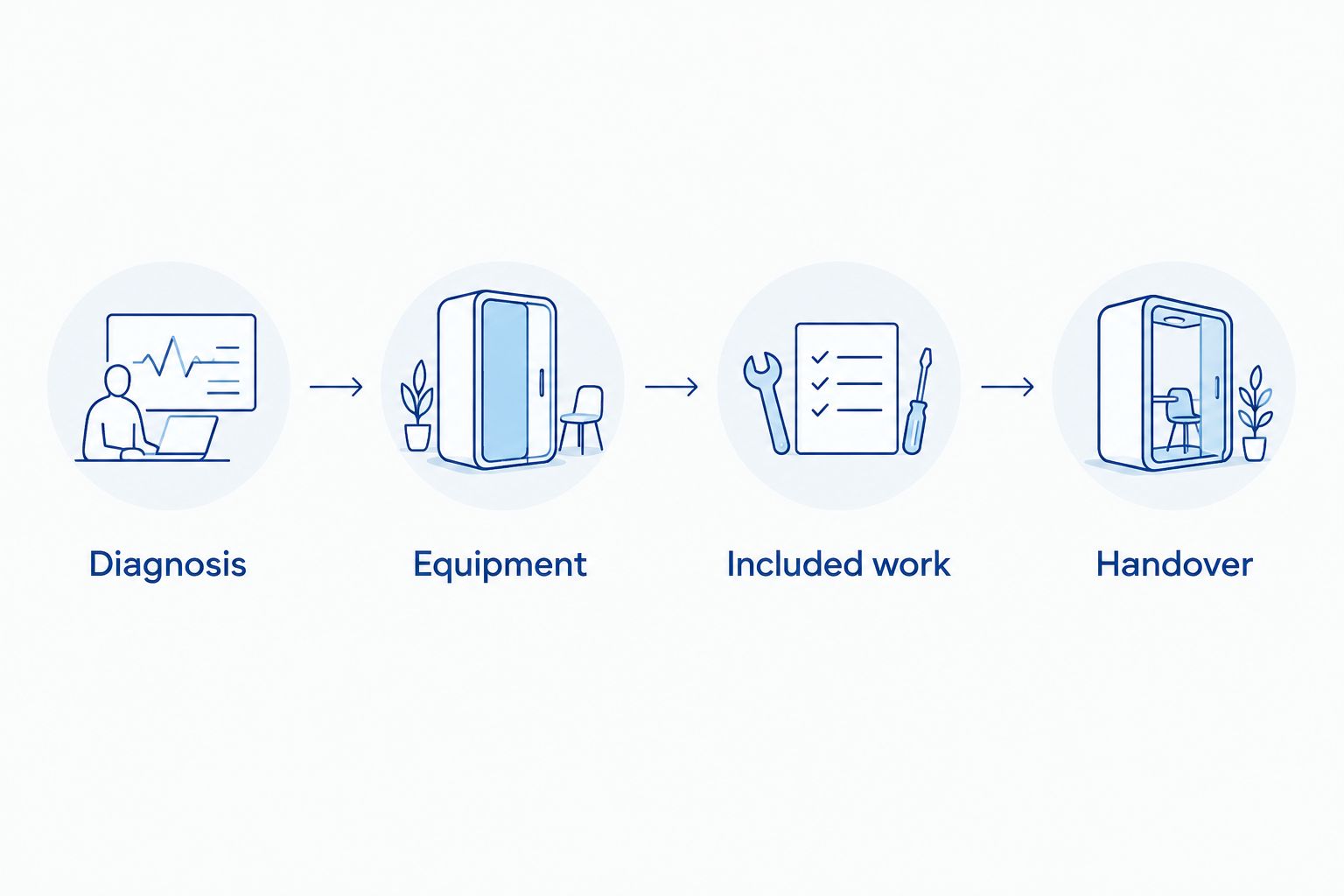
Keep these checks together when reviewing proposals. A clearly named unit is not a substitute for a clear installation scope, and a repair recommendation should explain more than which part will be replaced.
Discuss your home’s HVAC needs
Review heating, cooling, heat pump installation, repair, or maintenance needs in the stated Bay Area service area.
When staying with Cozy HVAC is the right call
Stay with Cozy HVAC when the contractor meets your location and service needs, explains the diagnosis, and provides a clear scope. An established relationship is useful when it includes reliable records and an understanding of your system.
Do not switch merely because an alternatives page places another provider first. Your 2026 decision should follow the documented fit of the work, not the order of a list. If the existing contractor answers your questions and the independent assessment supports the same recommendation, staying is a reasonable choice.
FAQ
What’s the best Cozy HVAC alternative for a Bay Area home?
Comfort Factor is a relevant local alternative for residential heating, cooling, and heat pump installation, repair, and maintenance. Its stated service area includes Sonoma, Marin, Napa, Solano, and Contra Costa counties. Choose based on your address, equipment, and written project scope.
Is an alternative contractor automatically better than Cozy HVAC?
No. A different contractor is not automatically better than Cozy HVAC. Compare the diagnosis, proposed work, relevant experience, and responsibilities before deciding to switch.
Should I choose a heat pump specialist or a general HVAC contractor?
Choose the contractor that demonstrates experience with your specific heat pump project. A specialist label alone does not establish quality, and a broad-service HVAC contractor can also be a suitable candidate. Ask how the proposal addresses sizing, air distribution, and associated work.
What should I ask before switching HVAC companies?
Ask what problem the proposed work solves, what is included, and who handles associated tasks. Give each candidate the same equipment details and repair history so the comparison addresses the same home and intended outcome.
Can I use another contractor if my HVAC system has a warranty?
Check the applicable warranty terms before authorizing another contractor. Some agreements specify a service request or authorization procedure. Follow the requirements that apply to your equipment or coverage.
How do I compare repair and replacement recommendations?
Ask each contractor to explain the diagnosis and why repair or replacement addresses it. Compare the intended outcome and complete scope, not just the equipment listed. An independent assessment helps you evaluate conflicting recommendations.
When should I stay with my current HVAC contractor?
Stay when the contractor meets your service needs, explains the problem, and documents the work clearly. An existing relationship is useful when the records and recommendations support your next decision. Switching names alone does not improve an HVAC project.
One last thing
Before booking another assessment in 2026, gather your equipment model details, previous repair records, and a short description of when the problem occurs. Give the same information to every candidate. That small preparation step keeps the conversation focused on your home instead of forcing each contractor to start with a different account of the problem.
Ask every contractor the same final question: what will this work solve, and what will it leave unchanged? The answer helps you distinguish a targeted repair from an installation proposal that does not address your original complaint.
Related guides
- When to get a second opinion on HVAC repair
- How to size a heat pump for a California home
- How to know when to replace your HVAC system