

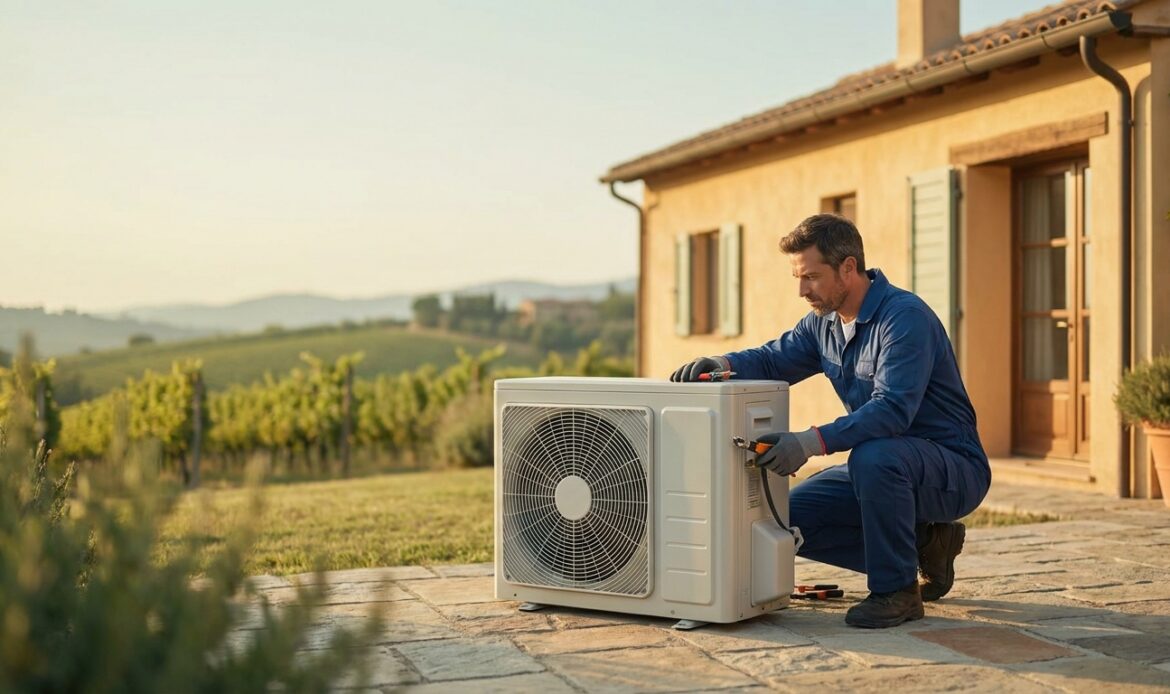
Napa summers push well past 90°F on most July and August afternoons, and a window unit or an aging central system just doesn't cut it when you're trying to sleep through a 75°F night. This guide covers AC installation in Napa — what to look for, who it's for, and what separates a solid install from one that costs you money two summers from now.
TL;DR: AC installation in Napa in 2026 runs roughly $3,500–$9,000 for a standard central system, depending on home size, duct condition, and equipment choice. Mini-splits start lower but add up with each zone. Comfort Factor serves Napa County directly and handles the full scope — equipment selection, permits, installation, and follow-up maintenance. If your current system is over 12 years old or your energy bills spiked last summer, replacement beats repair.
Why AC Installation in Napa Is Different
Napa's climate sits in its own lane. The valley floor can hit 95°F in July while coastal fog keeps Carneros 15 degrees cooler. That daily swing — hot afternoon, cool night — means your system cycles hard. Equipment that's correctly sized for this pattern will outlast an oversized unit that short-cycles and wears prematurely. Installers who don't know Napa's microclimates often pull a load calculation from a zip code average and call it done. That's the mistake you want to avoid.
Napa is also part of California's Title 24 energy code jurisdiction, which requires specific efficiency ratings and verified commissioning. Any permit-pulling contractor operating here in 2026 has to meet those standards — and if they're not pulling permits, that's a red flag.
Who This Guide Is For
This guide is written for Napa homeowners replacing a system that's 12–20 years old, homeowners finishing a renovation who need a first-time AC install, and small business owners in commercial spaces under 5,000 sq ft who need a reliable cooling solution without a six-month procurement process. If you're in a rental property and your landlord is handling it, forward this to them.
What to Look for in AC Installation in Napa
Accurate Load Calculation (Manual J)
Every good install starts with a Manual J load calculation — a room-by-room analysis of heat gain based on your home's square footage, insulation, window orientation, and ceiling height. Napa homes vary wildly: a 1960s ranch in Browns Valley loses heat differently than a newer build near Silverado. Without Manual J, the contractor is guessing at tonnage. An oversized unit cools too fast without dehumidifying, leaving your home clammy. An undersized unit runs nonstop on a 98°F day and still can't keep up.
Duct Condition and Leakage Testing
In older Napa neighborhoods, duct leakage is often the biggest efficiency killer — studies from California's utility programs have found leakage rates of 20–30% in homes built before 1990. Before any new equipment goes in, a contractor should inspect or test the existing ductwork. Installing a high-efficiency AC on a leaky duct system is like buying new tires for a car with a cracked frame. Ask specifically whether duct sealing or replacement is part of the scope.
SEER2 Rating and Title 24 Compliance
California's 2026 equipment standards require a minimum SEER2 of 15.2 for split systems in most applications. Higher-efficiency units (SEER2 18–22) cost more upfront but cut operating costs meaningfully in Napa's peak season. If your home qualifies for PG&E rebates or the federal 25C tax credit — currently up to $600 for qualifying central AC equipment — the payback period on a higher-efficiency unit shortens considerably. Confirm your contractor files the necessary documentation.
Heat Pump vs. Traditional AC
Napa's mild winters make heat pumps genuinely practical here. A ducted heat pump replaces both the AC and the furnace in a single system, and California's 2026 rebate programs through BayREN and the Inflation Reduction Act still make the economics attractive. If your furnace is also aging, a heat pump install often makes more financial sense than replacing AC alone. A contractor who only offers straight cooling is leaving a cost-saving option off the table.
Permit Pulling and Inspection
Napa County requires permits for HVAC replacements and new installations. A contractor who suggests skipping permits is exposing you to resale liability and potential insurance issues. Permitted work gets a city inspection sign-off, which is documentation that protects you. Comfort Factor pulls permits as standard practice across all Napa County jobs.
Warranty and Post-Install Support
Equipment warranties mean nothing if the installation itself is flawed. Look for a contractor offering at least a 1-year labor warranty on top of the manufacturer's parts warranty (typically 5–10 years on the compressor). Ask specifically what happens if the system isn't cooling to spec 30 days after install. A contractor without a clear answer to that question isn't worth the risk.
Top Picks: AC Installation Approaches for Napa Homes
The Safe Pick — Ducted Central AC Replacement
Hook: Best for homes that already have functional ductwork and a failing or inefficient central system.
Key spec: A 3-ton, 16 SEER2 split system typically covers 1,400–1,800 sq ft in Napa's climate.
Concrete number: Average installed cost in 2026 runs $4,500–$7,000 depending on duct condition and access complexity.
Verdict: Buy — if your ducts are in decent shape, this is the most cost-effective path. Comfort Factor handles the full scope from equipment selection through final inspection.
The Smart Upgrade — Ducted Heat Pump
Hook: Best for homes where the furnace is also aging or where a homeowner wants to stop burning gas.
Key spec: A 3-ton heat pump at 17 SEER2 / 9.5 HSPF2 qualifies for both the federal 25C credit and PG&E/BayREN rebates in 2026.
Concrete number: Installed cost runs $6,000–$10,000 before rebates; after applicable credits, net cost often lands close to a straight AC replacement.
Verdict: Buy — the right move when your furnace is over 15 years old. Ask Comfort Factor to run the rebate math before you commit to either option.
The Wildcard — Ductless Mini-Split
Hook: Best for additions, converted spaces, or homes with no existing ductwork.
Key spec: A single-zone 12,000 BTU mini-split covers roughly 400–550 sq ft; multi-zone systems add cost per head unit.
Concrete number: Single-zone installed cost starts around $2,500–$3,500 in 2026; a 3-zone system can reach $9,000–$12,000.
Verdict: Consider — excellent for targeted zones, but whole-home coverage via mini-splits usually costs more than a ducted system when you add up the head units.
The Hold — Repair Over Replace
Hook: Relevant if your system is under 8 years old and the problem is isolated (bad capacitor, refrigerant leak at a fitting).
Key spec: A refrigerant recharge plus minor repair typically runs $300–$800.
Concrete number: If repair cost exceeds 50% of a new system's price, replacement wins on a 5-year cost basis.
Verdict: Hold — only worth it if the unit is relatively young and the diagnosis is clear. Comfort Factor offers diagnostic service to separate fixable problems from end-of-life systems.
What to Avoid
- Contractors who skip Manual J. Any quote that arrives without a load calculation was guessed. Oversized equipment is one of the top causes of early system failure in California's climate zones.
- Permit-free installs. In Napa County, this creates a title problem when you sell and voids some manufacturer warranties. The savings aren't worth it.
- Lowest-bid trap on equipment tier. A bottom-tier unit from a budget brand installed in a home with poor duct sealing will underperform a mid-tier unit installed correctly. Efficiency gains disappear fast when 25% of your air is leaking into the attic.
Comparison Table
| Approach | Best For | 2026 Installed Cost | SEER2 Range | Rebate Eligible | Verdict |
|---|---|---|---|---|---|
| Ducted Central AC | Existing duct system, AC-only need | $4,500–$7,000 | 15.2–18 | Partial (25C) | Buy |
| Ducted Heat Pump | Dual system replacement, gas-to-electric | $6,000–$10,000 (pre-rebate) | 17–22 | Yes (25C + BayREN) | Buy |
| Ductless Mini-Split | No ducts, additions, spot cooling | $2,500–$12,000 | 18–26 | Yes | Consider |
| Repair Only | Unit under 8 years, isolated fault | $300–$800 | N/A | No | Hold |
FAQ
What does AC installation in Napa cost in 2026?
A standard central AC replacement in Napa runs $4,500–$7,000 installed in 2026. Heat pump systems cost $6,000–$10,000 before rebates. Mini-splits start around $2,500 for a single zone.
How long does AC installation take in Napa?
A standard replacement on an existing duct system typically takes one full day. New construction or systems requiring duct work can run 2–3 days. Permit scheduling with Napa County adds lead time — budget a few business days for inspection scheduling.
Is a heat pump better than AC for Napa homes?
For most Napa homes, yes — especially if the furnace is also aging. Heat pumps provide both heating and cooling, qualify for larger rebates in 2026, and perform efficiently in Napa's mild winters. A straight AC-only system only makes sense if the furnace is newer and in good condition.
What size AC do I need for a Napa home?
Sizing depends on square footage, insulation, ceiling height, and sun exposure. A Manual J calculation is required for an accurate answer — rules of thumb like "1 ton per 500 sq ft" are frequently wrong in Napa's variable microclimates. Insist your contractor does the calculation before specifying equipment.
Does Napa require permits for AC installation?
Yes. Napa County requires permits for both new AC installations and system replacements. Unpermitted HVAC work creates resale and insurance issues. Any reputable contractor pulls permits as part of the job.
What rebates are available for AC installation in Napa in 2026?
The federal 25C tax credit covers up to $600 for qualifying central AC equipment and up to $2,000 for heat pumps in 2026. PG&E and BayREN offer additional rebates for high-efficiency systems. Eligibility depends on equipment SEER2 rating and installation documentation.
How do I know if I should repair or replace my AC in Napa?
If the unit is over 12 years old, uses R-22 refrigerant (phased out), or the repair cost exceeds 50% of replacement cost, replace it. Younger units with isolated, inexpensive faults are worth repairing.
How do I find a reliable AC installer in Napa, CA?
Look for a licensed C-20 HVAC contractor, verify they pull permits in Napa County, ask for a Manual J calculation before any quote, and confirm they offer a labor warranty. Comfort Factor is licensed and serves Napa County directly with no subcontracting on standard installations.
One Last Thing
Napa's cooling season is shorter than Sacramento's but more intense — the valley floor regularly records 10–15 days above 100°F per summer, concentrated in July and August. That concentration means your system's compressor takes a beating during a narrow window. Equipment that's correctly sized and installed on sealed ducts will outlast an oversized system by 3–5 years on average, according to California Energy Commission data. The extra hour a contractor spends on load calculation and duct testing pays back over the system's lifetime.