

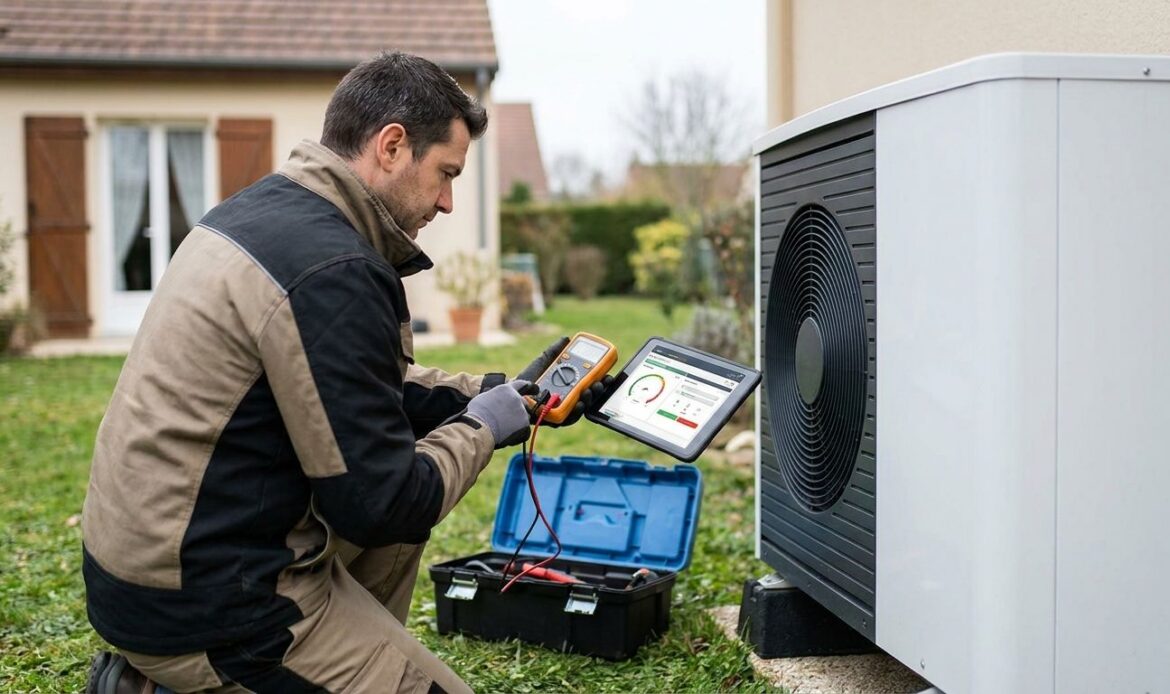
A heat pump that runs constantly but never actually warms the house usually comes down to one of five fixable causes — not a dead compressor. This guide walks through the exact checks a technician runs before calling for heat pump repair, so you know what's normal, what's a quick fix, and what needs a professional in 2026.
- Air below 85°F at the supply vent after 15 minutes of runtime signals a real heat pump not heating problem, not a slow warm-up.
- Thermostat stuck on ‘Aux Heat’ or ‘Emergency Heat’ means the heat pump cycle already gave up — check that first.
- Ice past 1/4 inch on the outdoor coil during a cold snap needs a defrost cycle, not a service call.
- If breaker resets and filter changes don’t fix it, schedule heat pump repair before the compressor takes more damage.
Why this matters
A heat pump running non-stop without heating the house wastes electricity every hour it stays that way, and Bay Area winters bring enough 35-45°F nights that a stuck system turns into a real comfort problem fast. Most calls Comfort Factor gets for heat pump not heating complaints trace back to five causes homeowners can check themselves in under 20 minutes. The rest need a licensed technician, and knowing the difference saves a same-day trip charge for a problem you could've solved with a thermostat setting or a breaker reset.
If the checks below don't restore heat, heat pump repair in Sonoma County covers diagnosis and same-visit fixes for refrigerant, compressor, and reversing valve issues that homeowners can't safely touch.
What you'll need
- 15-30 minutes
- Access to the thermostat and the electrical panel or disconnect box
- A flashlight for the outdoor unit
- An instant-read or infrared thermometer (optional but useful for step 5)
- A notepad to track what you find at each vent or breaker
The steps
1. Confirm the thermostat is calling for heat pump heat, not aux heat
Most smart and programmable thermostats default to auxiliary or emergency heat when the system detects it can't hit the set temperature fast enough. That mode uses electric resistance heat strips instead of the heat pump's refrigerant cycle — it works, but it's expensive and it masks the real problem.
Pull up the thermostat's system status screen and look for "Aux Heat" or "Emergency Heat" running continuously rather than cycling in briefly during defrost. If it's stuck there, switch to "Heat" or "Auto" mode and see if the compressor kicks on outside. Expected outcome: the outdoor unit's fan and compressor should both be running within 60-90 seconds. Common mistake: leaving the thermostat in emergency heat mode for days because the house still feels warm, which hides a failing heat pump behind a costly workaround.
2. Check the air filter and supply vents
A clogged filter restricts airflow across the indoor coil, which drops the temperature rise and can trip the system into a protective shutdown. Replace or clean the filter if it hasn't been changed in 60-90 days, and confirm every supply vent in the house is open and unobstructed by furniture or rugs.
Expected outcome: airflow at the vents should feel steady, not weak or whistling. Common mistake: checking only the return filter and skipping vents closed off in unused rooms, which raises static pressure across the whole system.
3. Inspect the outdoor unit for ice, debris, or blocked airflow
Heat pumps pull heat from outside air even in cold weather, and the outdoor coil frosts over naturally during normal defrost cycles. A thin, even layer of frost that clears within 30-90 minutes is normal; a solid sheet of ice thicker than 1/4 inch across the coil is not.
Clear leaves, mulch, or fence panels within 24 inches of the unit, since restricted airflow forces the coil to run colder and ice up faster. Expected outcome: the coil should be visibly clear or lightly frosted, with the fan spinning freely. Common mistake: hosing off heavy ice with warm water, which can crack the coil fins — let it defrost naturally or call for service.
4. Power-cycle the system correctly
A heat pump that won't respond to the thermostat at all sometimes just needs a full reset, especially after a PG&E outage or voltage dip. Flip the thermostat to "Off," switch off the breaker or outdoor disconnect for 60 seconds, then restore power and wait a full 5 minutes before turning the system back on.
This reset clears a locked-out control board without needing a technician visit. If the system won't hold power or the breaker trips again immediately, stop here — that's an electrical fault, not a settings issue. For the full sequence, see how to reset your HVAC system after a power outage. Expected outcome: compressor and fan both start within 5 minutes of power restoration. Common mistake: cycling power repeatedly within seconds, which can damage the compressor's start components.
5. Measure the temperature rise at the supply vent
Hold a thermometer at the nearest supply vent for 15 minutes after the system starts, then compare that reading to the return air temperature. A healthy heat pump in heating mode produces a 25-30°F temperature rise — supply air noticeably warmer than the air going back into the return.
If the rise is under 15°F, or the air feels barely warm at all, that points to low refrigerant charge, a failing compressor, or a stuck reversing valve. Expected outcome: a clear, measurable temperature difference between supply and return within 15 minutes. Common mistake: judging heat pump output by hand alone — supply air from a heat pump runs cooler than a furnace's, typically 90-105°F, so it can feel less dramatic even when it's working correctly.
6. Rule out refrigerant-related symptoms
Refrigerant leaks show up as hissing sounds near the lines, oily residue at connection points, or ice forming somewhere other than the normal defrost pattern. None of these are DIY fixes — refrigerant work requires EPA certification and the right equipment to charge the system correctly.
If you spot any of these signs, stop troubleshooting and schedule a technician visit. See how to tell if your AC refrigerant is low for the same symptoms applied to cooling mode, since the refrigerant circuit is shared. Expected outcome: no hissing, oil residue, or abnormal ice. Common mistake: adding refrigerant without checking for a leak first, which just delays the real fix and wastes the refrigerant charge.
Still not heating right?
Get a same-week diagnosis from a licensed Bay Area technician.
Troubleshooting
System runs constantly but the house stays cold. Check the temperature rise from step 5 first — under 15°F usually means restricted airflow or low refrigerant, not a thermostat problem. A dirty filter is the most common and cheapest fix.
Outdoor unit coated in thick ice. Turn the system off and let it defrost naturally for 2-3 hours rather than chipping at the ice. If it re-ices within a day of clearing, the defrost control board or a low refrigerant charge is the likely cause.
Thermostat shows "Aux Heat" nonstop, even on mild days. This means the heat pump compressor isn't engaging at all. Confirm the outdoor unit's fan and compressor are both running when the thermostat calls for heat — if neither responds, that's a control board or capacitor failure.
Air from vents feels cool rather than warm. Remember heat pump supply air runs 90-105°F, cooler than a furnace's 120-140°F output, so "cool" is subjective. Use a thermometer per step 5 before assuming something's broken.
System short-cycles, turning on and off every few minutes. This points to a dirty outdoor coil, a failing capacitor, or a thermostat sensor reading incorrectly. Short cycling wears down the compressor faster than any other fault on this list, so don't wait past a day or two to get it checked.
Breaker trips every time the system starts. Stop resetting it repeatedly — this is almost always a compressor or capacitor drawing too much current on startup, and it needs a technician before the compressor takes permanent damage.
Tools and resources
- Instant-read or infrared thermometer for the temperature rise check
- A programmable or smart thermostat that shows system mode clearly — see best smart thermostats for heat pump systems in California for models that display aux heat status without digging through menus
- A basic multimeter if you're comfortable checking capacitor voltage (skip this if you're not — it's not worth the risk)
- A maintenance log or notes app to track filter changes and any icing patterns across the season
What to do next
If the six steps above didn't restore normal heating, the issue is inside the refrigerant circuit or the electrical components, and that's technician territory. Comfort Factor techs carry the gauges and parts to diagnose a heat pump not heating on the first visit for most Bay Area homes, rather than guessing across two appointments.
If you're weighing whether to repair an aging system or replace it outright, how to choose between a heat pump and a furnace in California breaks down the tradeoff by home age and existing ductwork.
FAQ
What’s the most common reason a heat pump isn’t heating?
A dirty air filter or a thermostat stuck in aux heat mode causes most heat pump not heating complaints in 2026. Both take under 10 minutes to check before assuming the compressor has failed.
Is it normal for a heat pump to blow cooler air than a furnace?
Yes, a heat pump’s supply air runs 90-105°F compared to a furnace’s 120-140°F, so it feels less intense even when working correctly. Measure the temperature rise against the return air rather than judging by hand.
How much ice on the outdoor unit is a problem?
A thin, even frost that clears within 30-90 minutes during a normal defrost cycle is fine. Ice thicker than 1/4 inch that doesn’t clear on its own points to a defrost control or refrigerant issue.
Should I use emergency heat while I troubleshoot?
Emergency heat keeps the house warm temporarily using electric resistance strips, but it runs at a much higher cost than the heat pump cycle. Use it only while waiting for a repair, not as a long-term fix.
Can a power outage cause a heat pump to stop heating?
Yes, a voltage dip or outage can lock out the control board even after power returns. A full reset — thermostat off, breaker off for 60 seconds, then power restored — clears most of these lockouts.
How do I know if it’s low refrigerant versus a compressor failure?
Low refrigerant usually shows hissing near the lines or oily residue at fittings, while a failed compressor produces no temperature rise at all even with normal airflow. Both require a licensed technician to confirm and fix.
Why does my heat pump run all the time in winter?
Heat pumps run longer cycles than furnaces by design, since they move heat gradually rather than blasting it. Constant running only signals a problem when it’s paired with a temperature rise under 15°F.
When should I stop troubleshooting and call for repair?
Stop and call a technician if the breaker trips repeatedly, you smell burning, or you spot refrigerant line frost, hissing, or oil residue. Those symptoms mean electrical or refrigerant work that isn’t safe to DIY.
One last thing
The balance point on most heat pumps sits around 35°F outdoor temperature — below that, the system leans harder on aux heat even when everything's working correctly, which is why a perfectly healthy heat pump can still feel underpowered on the coldest Bay Area mornings. Don't mistake normal cold-weather behavior for a failure; run the temperature rise check from step 5 before assuming something's broken.
Related guides