

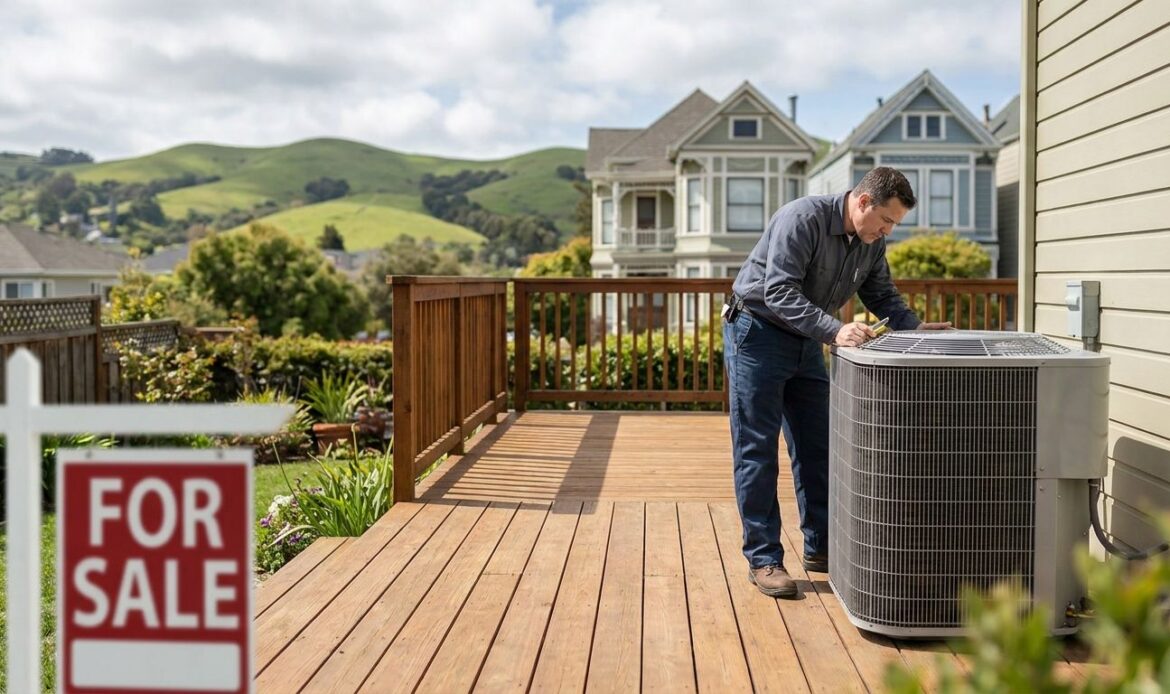
Selling a Bay Area home means buyers will ask about the HVAC system before they ask about the kitchen backsplash — this guide walks through exactly what to check, fix, and document so the system helps your sale instead of stalling it.
- A pre-listing HVAC inspection catches issues before a buyer’s inspector does — schedule it 30-60 days before listing.
- Systems over 12-15 years old raise buyer questions even when they still run fine.
- Clean filters, clear vents, and a documented service history cost little and reassure appraisers.
- Skip cosmetic patch jobs on a failing compressor or cracked heat exchanger — disclose instead.
Why this matters
A home inspector in Sonoma, Marin, Napa, Solano, or Contra Costa County will test the furnace, run the AC, and note the age stamped on the equipment. If that inspection turns up a dead capacitor or a 22-year-old furnace with no service records, it becomes a negotiating chip against you.
Buyers in 2026 are more HVAC-literate than they were five years ago — heat pump rebates, wildfire smoke filtration, and rising utility costs have made the system a real line item in offers, not an afterthought. A home with a documented, recently serviced HVAC system closes faster and with fewer repair credits written into the contract.
What you'll need
- Service records from the last 2-3 years, if you have them
- A working thermostat (smart or otherwise) with no error codes
- Access for an inspector to the attic, crawlspace, or closet where the unit sits
- A budget line for at least a $150-$400 tune-up, more if repairs surface
- Time: book the inspection 30-60 days before your target list date, not the week before
If you're not sure whether your current setup needs a professional look or a full second opinion, how to choose an HVAC contractor in the Bay Area walks through what separates a rushed quote from a real inspection.
The steps
1. Get a pre-listing inspection, not just a filter change
A pre-listing HVAC inspection means a technician tests the compressor, checks refrigerant pressure, inspects the heat exchanger for cracks, and confirms the thermostat communicates correctly with the unit. This is different from a basic tune-up — it's designed to surface exactly what a buyer's inspector will find.
Schedule this 30-60 days out so you have time to act on findings. Common mistake: waiting until an offer is already in hand, which forces rushed repairs at a premium and gives you no leverage in negotiations.
2. Decide whether to repair, tune up, or replace
A system running fine at 8 years old just needs a tune-up. A system past 15 years, especially one still on R-22 refrigerant, is a different conversation — buyers will ask about replacement cost regardless of how it's currently performing. How to know when to replace your HVAC system breaks down the signs that push a system from "fine for now" into "replace before you list."
If replacement isn't in the budget, a documented repair with a clear invoice is the next best thing — it shows the buyer you addressed a known issue rather than hoping it wouldn't come up.
3. Service the system properly, not cosmetically
Replace filters, clear debris from the outdoor condenser, straighten bent fins, and clean the indoor coil. A dusty, neglected-looking unit signals neglect even when it's mechanically sound — and inspectors and buyers both notice visible grime before they notice performance.
A seasonal tune-up plan handles this without you tracking it manually. HVAC maintenance plans for Bay Area homeowners cover the filter changes, coil cleaning, and refrigerant checks that a listing photo won't show but an inspection report will.
4. Fix the small stuff that spooks buyers
A squealing blower motor, a thermostat that won't hold temperature, or a musty smell from the vents each cost little to fix but read as major red flags to a buyer touring the house. These are the details that turn a confident offer into a lowball with repair credits attached.
Expected outcome: a technician can usually clear these in a single visit, often the same day as the pre-listing inspection.
5. Gather documentation before you list
Collect service invoices, the equipment's age and model number, and any warranty paperwork still active. Appraisers and buyers' agents both weigh a documented history — it's the difference between "the seller says it's fine" and proof.
Common mistake: assuming verbal reassurance during a showing carries the same weight as a paper trail. It doesn't, and agents know it.
6. Time the work around your listing calendar
Don't schedule a full system replacement the week photos are shot — dust, cut drywall, and construction debris don't photograph well. Build in a buffer of at least 5-7 business days between any major HVAC work and your listing photos or open house.
7. Set the disclosure straight
If you know the system is aging or has a known issue you didn't fix, disclose it. California disclosure law puts the burden on the seller to reveal known material defects, and an undisclosed HVAC problem discovered after close is a far more expensive conversation than one addressed upfront.
Get a pre-listing HVAC inspection
A documented tune-up now beats a surprise repair credit at closing.
Troubleshooting
- Musty smell from the vents: usually a dirty evaporator coil or a clogged condensate drain — both clear in a single service call and matter a lot during a showing.
- Uneven temperatures room to room: often a duct leak or an undersized system for the square footage. Flag it before listing rather than letting a buyer's inspector find it first.
- Thermostat won't hold a setting: a wiring issue or a dying thermostat battery — cheap to fix, but it reads as a bigger problem to a buyer standing in your living room.
- Noisy outdoor unit: loose panels, worn fan blades, or debris caught in the condenser. This is a same-visit fix in most cases.
- Mismatched or DIY-looking ductwork: a red flag for both inspectors and appraisers. If you added ductless zones without permits, get that documented now, not during escrow.
- System still under warranty but no paperwork: contact the original installer or manufacturer before listing — a transferable warranty is a selling point, but only if you can prove it.
Tools and resources
- A recent HVAC service invoice or inspection report
- Equipment age, model number, and any remaining warranty documentation
- A working thermostat with no error codes
- Budget clarity on repair versus replacement costs — how much does AC installation cost in the Bay Area gives a realistic range if replacement turns out to be the right call before you list
What to do next
If the pre-listing inspection turns up a system that's past its useful life, don't assume replacement is out of reach before closing — financing options exist that can get the work done without draining your moving budget. Review the details before you decide to disclose-and-discount instead of fix-and-list.
FAQ
Do I need to replace my HVAC system before selling my Bay Area home?
No, replacement isn’t required in most cases — a documented tune-up and clean inspection report satisfy most buyers in 2026. Replacement only becomes the better move when the system is past 15 years old or has a major failing component like a cracked heat exchanger.
How much does a pre-listing HVAC inspection cost?
A standard tune-up and inspection typically runs $150-$400 depending on the system size and access. Additional repairs found during the inspection are priced separately once the technician identifies the issue.
Will an old HVAC system kill my home sale in the Bay Area?
An old system alone rarely kills a sale, but an undocumented one raises buyer suspicion during negotiations. Service records and a recent tune-up turn an aging system from a red flag into a manageable line item.
Should I disclose HVAC problems before listing my home?
Yes — California law requires sellers to disclose known material defects, and an HVAC issue discovered after close is more expensive to resolve than one addressed in the listing. Disclosure paired with a clear repair plan or price adjustment protects you from post-sale disputes.
How long before listing should I service my HVAC system?
Schedule a pre-listing inspection 30-60 days before your target list date. That window gives you time to act on any findings without rushing repairs the week before photos or showings.
Do buyers care about heat pumps versus furnaces when buying a home in 2026?
Increasingly, yes — rebate programs and rising utility costs have made heating type a real question during showings. A documented, working system matters more to most buyers than which technology it uses.
Can I sell my home with a broken AC in the Bay Area?
Yes, but expect the buyer to request a repair credit or price reduction once it’s found during inspection. Fixing it beforehand, even a basic repair, usually costs less than the credit a buyer will negotiate for it.
One last thing
A buyer's inspector will find the age stamp on your equipment regardless of how well it runs — a 2011 furnace with three years of documented tune-ups reads completely differently than the same furnace with no paper trail at all.
“A documented HVAC history turns an aging system from a red flag into a manageable line item.”
Related guides