

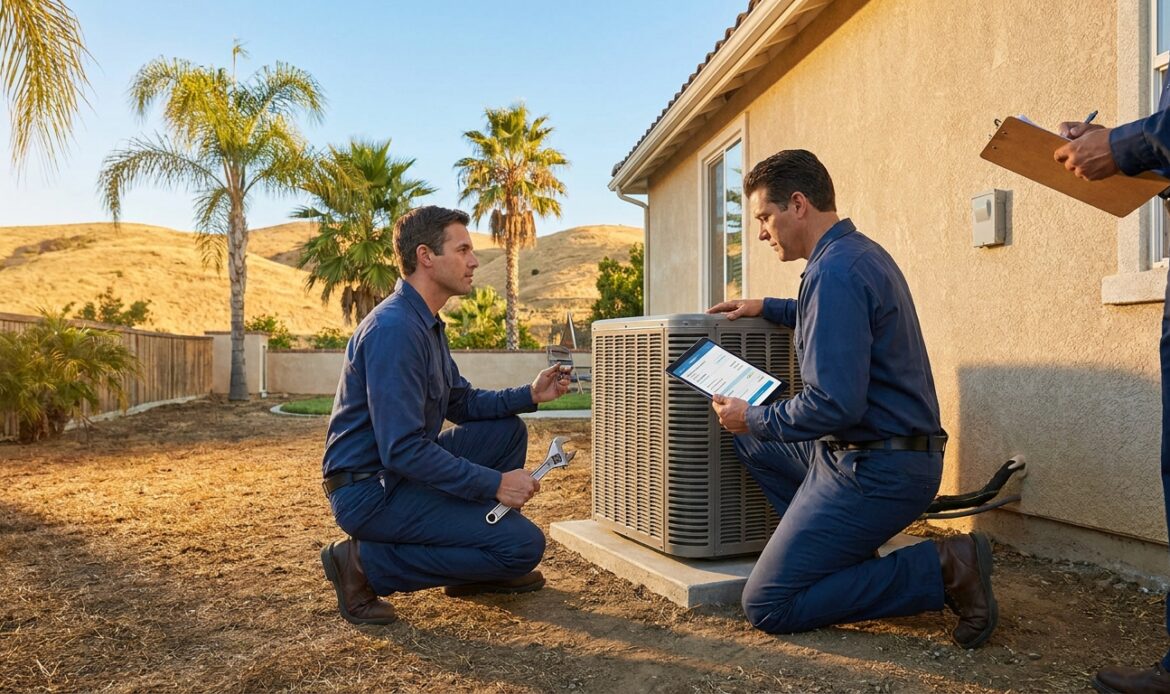
Heat pump installation in California runs $8,000 to $20,000 for a full ducted system and $4,000 to $12,000 for a ductless mini-split, depending on home size, existing ductwork, and which rebates you qualify for in 2026.
TL;DR
Heat pump installation cost in California typically lands between $8,000 and $20,000 for whole-home ducted systems, with ductless mini-splits running $4,000 to $12,000 per zone setup. TECH Clean California rebates and the federal 25C tax credit (up to $2,000) can cut that by $2,000 to $5,000 in 2026. Verdict: a mid-tier ducted heat pump around $12,000-$14,000 before incentives is the sweet spot for most Bay Area homes — cheaper units skip the SEER2 and HSPF2 ratings that make the math work in coastal climates. Comfort Factor handles heat pump installation across Marin, Sonoma, Napa, Solano, and Contra Costa counties, and heat pump installation in Marin County is one of the more common jobs quoted this year.
Why this matters
A heat pump quote that's off by $5,000 usually comes down to one of three things: wrong equipment size, missed rebate paperwork, or a contractor pricing ductwork changes as an afterthought. California's rebate landscape shifted again in 2026, and homeowners who don't check current eligibility before signing a contract leave real money on the table.
The other reason this matters: heat pumps aren't priced like furnaces. A furnace replacement is close to plug-and-play. A heat pump install often means resizing ductwork, checking electrical panel capacity, and picking between single-zone and multi-zone configurations — each of those changes the number by thousands.
What you'll need before you get quotes
- Your current system type (gas furnace + AC, electric resistance, or existing heat pump) — this changes both cost and rebate eligibility
- Square footage and number of zones/rooms you want conditioned
- A recent utility bill (contractors use this to size the system, not guess)
- Panel capacity info — most homes need 100-200 amp service for a heat pump plus other electric loads
- 2-3 written quotes, not phone estimates
- Knowledge of whether ductwork exists and its condition (leaky or undersized ducts add $1,500-$4,000 to the project)
The steps to nailing down your real cost
1. Get your home's heating and cooling load calculated
A proper Manual J load calculation tells the contractor exactly how many BTUs your home needs — skip this and you risk an oversized system that short-cycles or an undersized one that can't handle a 100-degree Sonoma County afternoon. This step is free with most quotes but often skipped by lower-bid contractors trying to close fast.
Common mistake: accepting a quote based on square footage alone. A 1,800 sq ft home with poor insulation needs a different system than a 1,800 sq ft home built in 2015.
2. Decide between ducted and ductless
If you already have functioning ductwork, a ducted heat pump typically costs $8,000-$16,000 installed. If you don't — or you're conditioning an addition, garage conversion, or ADU — a ductless mini-split runs $4,000-$7,000 for a single zone and scales up from there for multi-zone setups. Ductless mini-split installation in Sonoma County is worth checking if your home falls into that second category.
Expected outcome: a clear yes/no on whether ductwork modification is part of your project scope, since that's the single biggest cost swing.
3. Check your panel and electrical capacity
Heat pumps run on electricity, and older Bay Area homes — especially anything built before 1990 — sometimes have 60-100 amp panels that can't support a heat pump plus existing loads like an EV charger or induction range. A panel upgrade adds $2,000-$4,500 in 2026 labor and material pricing.
Common mistake: finding out about panel limitations after signing a contract. Ask this question before you get a bid, not after.
4. Confirm rebate and tax credit eligibility
TECH Clean California offers point-of-sale rebates for qualifying heat pump installs, and the federal 25C tax credit covers 30% of costs up to $2,000 for qualifying equipment through 2026. Combined, these can reduce your out-of-pocket cost by $2,000-$5,000. Rebate amounts and qualifying equipment lists change yearly — confirm current numbers with your contractor before signing, not after.
Expected outcome: a written breakdown showing gross cost, rebate amount, and net cost — if a contractor won't give you this in writing, treat it as a red flag.
5. Compare SEER2 and HSPF2 ratings, not just price
A cheap heat pump with a SEER2 rating of 13 will cost more to run over 10 years than a $2,000-more-expensive unit rated SEER2 16-18, especially in inland areas like Napa where summer cooling load is heavier than coastal Marin. HSPF2 (heating efficiency) matters more in colder Sonoma County valleys.
Common mistake: comparing two quotes on sticker price alone when one quote is a 13-SEER2 unit and the other is 17-SEER2 — that's not an apples-to-apples comparison.
6. Get the labor and permit line items separately
California requires permits for HVAC replacement, and permit fees vary by county — typically $150-$500. Labor for a straightforward ducted swap runs 1-2 days; a full ductless multi-zone install with electrical work can run 3-5 days. Any quote that bundles labor, equipment, and permits into one number without a breakdown makes it harder to compare bids.
7. Ask about maintenance requirements up front
Heat pumps need annual tune-ups to hold their efficiency rating and keep manufacturer warranties valid — factor $150-$300/year into your real cost of ownership. A maintenance plan bundled at installation is often cheaper than paying per-visit later. HVAC maintenance plans for Bay Area homeowners covers what's typically included.
Troubleshooting common cost surprises
- Quote came in $3,000-$5,000 higher than expected mid-project: usually undisclosed ductwork issues or electrical panel work discovered after demo starts. Get this checked during the initial site visit, not after equipment is removed.
- Contractor won't itemize rebate amounts: ask for the TECH Clean California rebate documentation directly — a legitimate installer will have this paperwork ready.
- Two quotes for the "same" system differ by $4,000+: compare SEER2/HSPF2 ratings and warranty length line by line — they're rarely actually the same equipment.
- System quoted feels oversized for your home: ask to see the Manual J load calculation. If they can't produce one, that's your answer.
- Rebate eligibility unclear for your income bracket: TECH Clean California has tiered rebates based on income — confirm your tier before assuming the maximum applies.
- Existing ductwork wasn't mentioned in the quote at all: that's a scope gap, not a cost savings — get it added in writing before signing.
Tools and resources
- Manual J load calculation (ask your contractor to run this, don't estimate it yourself)
- Current TECH Clean California rebate portal for eligibility and amounts
- Federal 25C tax credit documentation (keep receipts and equipment spec sheets for tax filing)
- Best heat pump installers in Sonoma County if you're comparing local contractors
- Heat pump installation in Contra Costa County for pricing specific to that county's housing stock
What to do next
Get a load calculation and a written, itemized quote before you compare any numbers you've seen online — every home's real cost depends on ductwork condition, panel capacity, and square footage, not a generic average. If your existing system is a furnace-and-AC combo nearing the end of its life, understanding what keeps a new heat pump running efficiently for the next decade is the right next move.
FAQ
What's the average heat pump installation cost in California in 2026?
Most ducted whole-home installs run $8,000-$20,000 before rebates, and ductless mini-split setups run $4,000-$12,000 depending on zone count. Actual cost depends heavily on ductwork condition and electrical panel capacity.
Is a heat pump cheaper than a furnace and AC replacement?
Upfront, heat pumps often cost more than a like-for-like furnace-plus-AC replacement, but they replace two systems with one and typically cost less to run over 10 years, especially with 2026 electricity and gas rate trends.
How much do California rebates reduce heat pump cost?
TECH Clean California rebates plus the federal 25C tax credit (up to $2,000) can reduce net cost by $2,000-$5,000 combined, depending on income tier and equipment efficiency rating.
Do I need to replace my ductwork to install a heat pump?
Not always — if your existing ducts are properly sized and sealed, they can often be reused. Leaky or undersized ductwork adds $1,500-$4,000 to a project.
How long does heat pump installation take?
A straightforward ducted swap typically takes 1-2 days; a ductless multi-zone install with electrical upgrades can take 3-5 days.
What size heat pump do I need for a 2,000 sq ft home?
There's no fixed answer without a Manual J load calculation — insulation quality, window count, and climate zone all change the required BTU output more than square footage alone does.
Does my electrical panel need an upgrade for a heat pump?
Homes with panels under 100 amps often need an upgrade, adding $2,000-$4,500. Homes with 200-amp service usually don't.
Is heat pump installation worth it in coastal Bay Area climates like Marin?
Yes, for most homes — coastal climates have moderate heating and cooling loads that heat pumps handle efficiently, and HSPF2-rated units perform well in Marin's mild winters.
One last thing
The number that trips up most homeowners isn't the equipment cost — it's the electrical panel check. Skip that question during your first site visit and you risk a mid-project change order that adds thousands after demo has already started. Ask about panel capacity before you ask about equipment brand.