

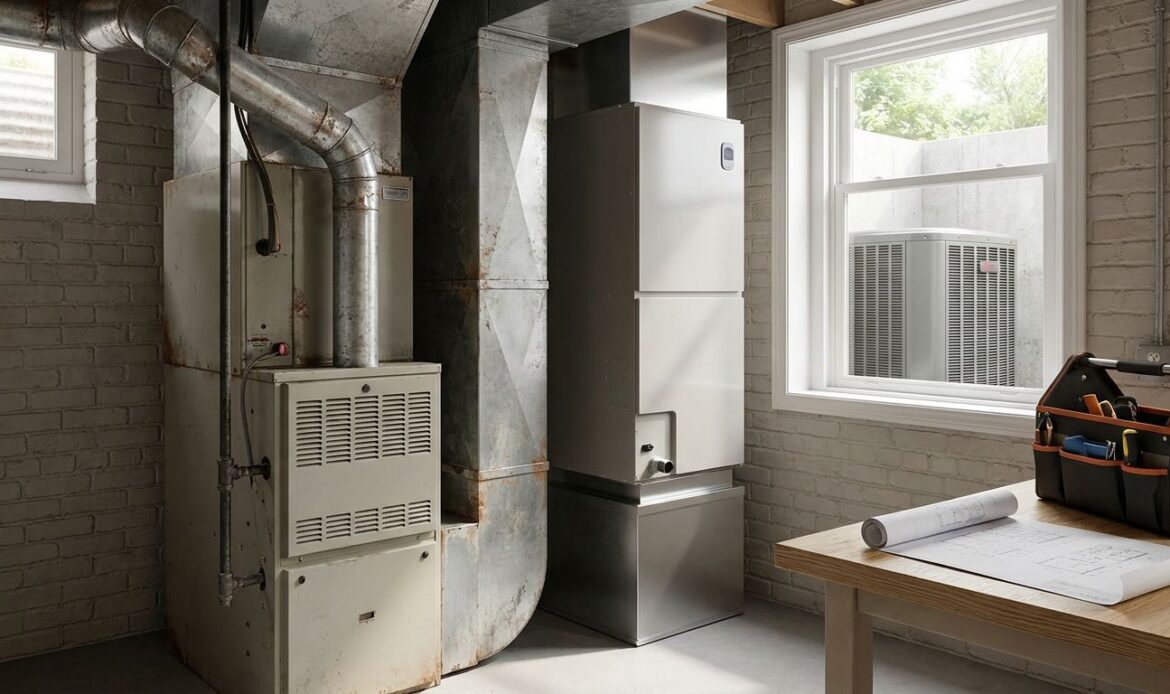
Swapping a gas furnace for a heat pump in a house that already has ductwork and an existing electrical panel is one of the most common upgrade requests Comfort Factor handles across Sonoma, Marin, Napa, Solano, and Contra Costa counties in 2026 — and it's rarely a simple one-for-one box swap.
- Converting a furnace to a heat pump in an existing home works with most Bay Area duct systems — get a load calculation first, never a same-size swap.
- ENERGY STAR cold-climate heat pumps hold rated capacity down to 5°F, so full furnace backup usually isn’t needed in coastal Bay Area climates.
- A 200-amp panel is the common requirement for whole-home heat pump conversions on pre-1990 houses — verify capacity before signing anything.
- Comfort Factor’s verdict: convert now if your furnace is past 15 years old and ducts are sealed; hold off if ducts are undersized or leaking.
- California and Bay Area rebate programs can offset heat pump installation costs in 2026, but paperwork usually has to be filed before install, not after.
Why this matters
A furnace pushes hot, low-volume air through ducts designed around gas combustion. A heat pump moves larger volumes of air at a lower temperature, and it also runs in reverse for cooling — which means it puts different demands on your ducts, your panel, and your thermostat than the system it's replacing.
Homes built before double-pane windows and modern attic insulation were standard need extra attention before conversion, which is why heat pump installation for older Bay Area homes usually starts with an envelope check, not a sales pitch. Get this step wrong and you end up with a heat pump that runs constantly and never quite catches up on a 38-degree Sonoma County morning in 2026.
The upside is real: gas furnace replacement with a heat pump means one system handles heating and cooling year-round, and it does it without a gas line. Done right, it's a straightforward project. Done as a rushed swap, it's the most common source of comfort complaints Comfort Factor sees on service calls.
What you'll need
- A Manual J load calculation (not a guess based on your old furnace's BTU rating)
- A ductwork inspection — sizing, sealing, and insulation condition
- An electrical panel capacity check (100-amp vs. 200-amp service)
- County permit paperwork specific to your jurisdiction
- A heat-pump-compatible thermostat, ideally a smart model
- A written quote covering furnace removal, disposal, and heat pump install
- One to two days on-site for a straightforward single-family conversion once permits are in hand
The steps
1. Inspect your ductwork and home envelope first
Ducts sized for a gas furnace's short, hot air bursts often can't move the higher air volume a heat pump needs at lower supply temperatures. Leaky or undersized ducts are the number one reason heat pump conversions underperform. Walk the attic and crawlspace, check for disconnected joints, crushed flex duct, and missing insulation before anyone talks about equipment. Expected outcome: a clear list of duct repairs, or confirmation your ducts are ready as-is.
Common mistake: assuming ducts that worked fine for a furnace will automatically work fine for a heat pump.
2. Run a proper load calculation, not a BTU match
Matching the old furnace's BTU output to a new heat pump's capacity ignores how differently the two systems produce heat. A correct heat pump sizing calculation for a California home accounts for your home's square footage, insulation, window count, and local climate zone — not the equipment you're removing. Why it matters: an oversized heat pump short-cycles and wears out faster; an undersized one runs constantly and struggles on the coldest nights of the year.
Expected outcome: a specific tonnage and capacity recommendation in writing before you buy anything.
3. Check your electrical panel and circuit capacity
Heat pumps run on electricity full-time, including backup resistance heat strips if your system uses them. Many Bay Area homes built before 1990 have 100-amp panels that can't support a heat pump plus existing electrical loads without an upgrade to 200 amps. Common mistake: skipping the panel check and discovering the shortfall on install day, which delays the project and adds cost.
Expected outcome: confirmation your panel can handle the new load, or a quote for the upgrade folded into your install timeline.
4. Decide between a ducted heat pump and a ductless add-on
If your ducts are in good shape, a ducted heat pump usually reuses the existing distribution system with modifications. If parts of the house — a converted garage, an addition, a room over the garage — were never well-served by the furnace, a ductless mini-split zone can solve that without tearing into walls. Either path replaces the furnace as the primary heat source. Verdict: ducted for whole-home comfort with existing infrastructure, ductless zones for problem rooms the old system never handled well.
5. Line up permits and rebate paperwork before demo day
Most Bay Area counties require a permit for heat pump installation, and Bay Area heat pump rebates in 2026 generally need to be applied for before the equipment goes in, not after. Filing late is the single most common reason homeowners miss out on available rebate dollars. Expected outcome: approved permit and rebate pre-approval in hand before the furnace comes out.
6. Schedule the furnace removal and heat pump installation
This is the physical work: disconnecting and removing the gas furnace, capping the gas line if it's no longer needed elsewhere, setting the outdoor heat pump unit, connecting refrigerant lines, and tying into your ductwork or new ductless zones. A single-family conversion typically runs one to two days on-site once permits and equipment are ready. Common mistake: scheduling demo before the new equipment has actually arrived, leaving the house without heat for days.
7. Commission the system and set the balance point
Commissioning means checking refrigerant charge, airflow, and the temperature at which backup heat (if installed) kicks in — the balance point. A properly commissioned system in most Bay Area microclimates rarely needs backup heat given the region's mild winter lows. Expected outcome: verified airflow at every register and a documented balance point setting.
Common mistake: skipping commissioning entirely, which is how "it's not heating right" service calls start.
8. Program a heat-pump-compatible thermostat
Standard furnace thermostats often mismanage heat pump staging, causing the system to lean on expensive backup heat more than it should. A heat pump thermostat manages compressor staging correctly and can flag when backup heat is running unnecessarily. Expected outcome: a thermostat set up to favor efficient compressor operation over resistance backup.
Ready to plan your conversion?
Get a load calculation and an on-site quote before you buy equipment.
Troubleshooting
- Heat pump runs nonstop during a cold snap. Check the balance point setting first — if backup heat isn't engaging when it should, the thermostat configuration is likely wrong, not the equipment.
- Rooms far from the air handler stay chilly. This usually points back to duct sizing or leakage that wasn't addressed in step one — a duct pressure test will confirm it.
- A breaker trips after the conversion. This is a panel capacity issue. Don't reset and ignore it; get the panel re-evaluated before it becomes a safety problem.
- Thermostat shows "aux heat" or "emergency heat" constantly. The system is defaulting to backup resistance heat instead of the compressor, which usually means a commissioning or wiring error, not an undersized heat pump.
- Rebate application gets rejected. Missing pre-approval or filing after installation are the two most common reasons — always confirm rebate program rules before the furnace comes out.
- System short-cycles, turning on and off rapidly. This is a classic oversizing symptom from skipping a proper load calculation.
Tools and resources
- Manual J load calculation software or a contractor who runs one on-site
- Duct pressure testing equipment for leak detection
- Panel capacity assessment from a licensed electrician
- A written rebate checklist matched to your county's 2026 program rules
- On-site evaluation from a licensed Bay Area HVAC contractor
What to do next
Before committing to a full conversion, it's worth confirming a heat pump is actually the right call for your specific house, budget, and climate zone versus keeping a furnace and adding cooling separately. That comparison — cost, performance, and California-specific rules for both paths — is where to look next.
FAQ
What does it cost to convert a furnace to a heat pump in an existing home in 2026?
Total cost depends heavily on whether ductwork or the electrical panel need upgrades, so there’s no single number that applies to every house. Get a load calculation and an on-site quote to see the real figure for your ductwork condition, panel capacity, and chosen equipment.
Can a heat pump use my existing furnace ductwork?
In many cases yes, but the ducts need to be checked for size and sealing since heat pumps move more air at lower temperatures than furnaces. A duct inspection before install prevents weak airflow and cold rooms after conversion.
Do I need a bigger electrical panel for a heat pump conversion?
Many homes built before 1990 with 100-amp panels need an upgrade to 200 amps to support a heat pump reliably. A licensed electrician can confirm your panel’s actual capacity before you commit to equipment.
Is a heat pump better than a furnace for Bay Area winters?
ENERGY STAR-certified cold-climate heat pumps maintain rated heating capacity down to 5°F, which covers nearly all Bay Area winter lows without relying on backup heat. For most homes in Sonoma, Marin, Napa, Solano, and Contra Costa counties, a properly sized heat pump handles winter heating on its own.
How long does a furnace-to-heat-pump conversion take?
A straightforward single-family conversion typically takes one to two days on-site once permits and equipment are ready. Ductwork repairs or a panel upgrade can add additional days to the timeline.
Are there rebates for converting to a heat pump in California in 2026?
Rebate programs exist at the state and utility level in 2026, but most require pre-approval filed before installation, not after. Confirm your specific program’s rules early so paperwork doesn’t hold up the project or cost you the rebate.
Will I need to keep a furnace for backup heat after converting?
Most Bay Area homes don’t need a gas furnace as backup once a correctly sized, cold-climate heat pump is installed, since local winter lows rarely drop below the equipment’s rated capacity threshold. Some households still opt for electric resistance backup strips as a redundancy, not a necessity.
What size heat pump do I need to replace my furnace?
Heat pump size should come from a Manual J load calculation based on your home’s square footage, insulation, and windows — not your old furnace’s BTU rating. Matching BTUs between the two systems is the most common sizing mistake in furnace-to-heat-pump conversions.
One last thing
The detail most homeowners miss: the furnace removal itself is the easy part of this project. The ductwork and panel checks determine whether the new heat pump performs the way it's supposed to, and skipping either one is why some conversions end up needing a callback within the first winter. Get both checked before equipment gets ordered, not after.
Related guides
- Heat pump options for homes without existing ductwork
- How to choose between a heat pump and a furnace in California
- Heat pump installation for older Bay Area homes