

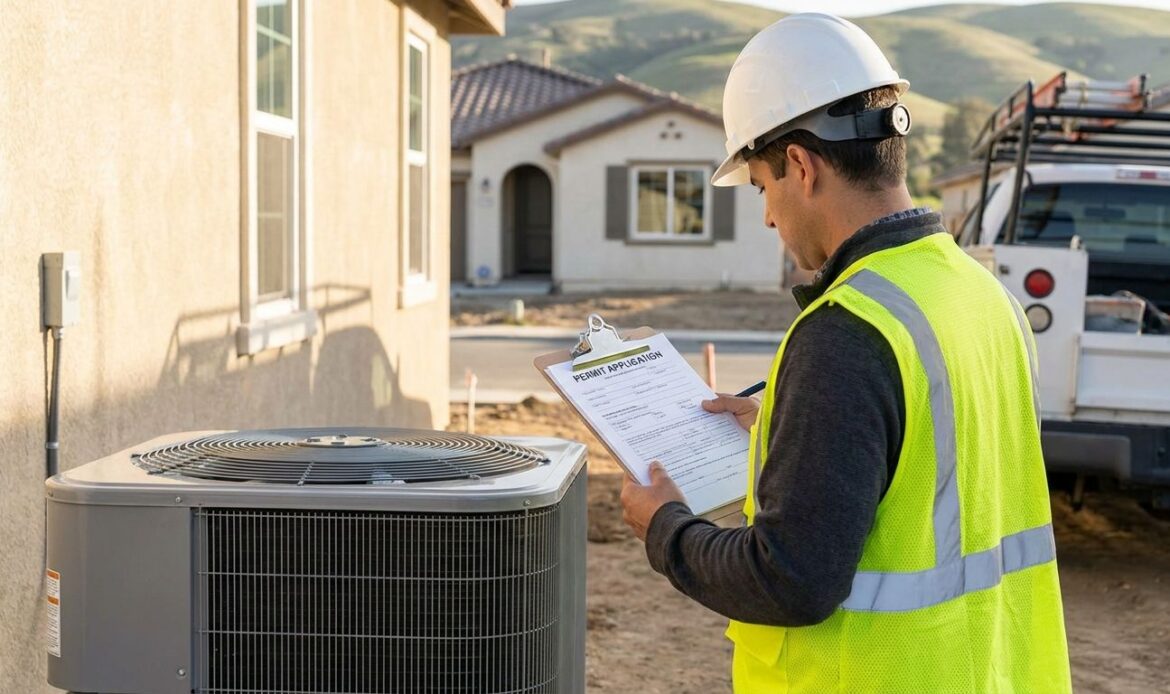
Pulling an HVAC installation permit in California is not optional paperwork you can skip to save time — skip it and you risk failed home inspections, voided manufacturer warranties, and fines from your local building department. This guide walks through the exact process for a residential HVAC permit in 2026, county by county nuances included.
- An hvac installation permit california requires a licensed C-20 contractor, a Title 24 energy compliance form, and a local building department application before work starts.
- Comfort Factor pulls permits as a standard part of every heat pump and AC installation across Sonoma, Marin, Napa, Solano, and Contra Costa counties.
- Skipping the permit voids most manufacturer warranties and creates problems when you sell the home — get it right in 2026, not after the fact.
- Rough-in and final inspections are both required; budget extra time if ductwork or electrical panel changes are involved.
Why this matters
Every county in the Bay Area enforces the California Mechanical Code and Title 24 energy standards on HVAC replacements, not just new construction. A permit confirms the installer used a licensed contractor, sized the equipment correctly, and met current energy code — three things that protect you long after the crew leaves in 2026.
Skip the permit and the risk shows up later: a home inspector flags unpermitted HVAC work during a sale, your insurer denies a claim tied to the system, or the manufacturer refuses warranty coverage on a heat pump or furnace installed without inspection sign-off. None of that is worth the shortcut.
What you'll need
- A licensed C-20 HVAC contractor (or a general contractor with HVAC subcontracted) — confirm the contractor's license status before signing anything
- Equipment specs: model numbers, SEER2/HSPF2 ratings, and BTU capacity for the unit being installed
- A completed Title 24 energy compliance form (CF1R) for the equipment change
- Site plan or equipment location diagram for the building department
- Proof of property ownership or authorization if you're not the owner
- Time: most Bay Area jurisdictions process straightforward HVAC permits in 1 to 3 weeks in 2026, longer if ductwork or panel upgrades are involved
The steps
1. Confirm your contractor holds a C-20 license
California requires a C-20 Warm-Air Heating, Ventilating and Air-Conditioning license to install, replace, or repair HVAC systems. This isn't a formality — an unlicensed installer can't legally pull the permit, and the building department will reject the application on submission.
Verify the license number through the Contractors State License Board before signing a contract. Comfort Factor handles this step automatically as part of every HVAC installation quote, so it's never left to the homeowner to chase down.
2. Get the equipment specs finalized
The building department needs exact model numbers, capacity (tonnage or BTUs), and efficiency ratings before it can review the permit. Guessing here delays approval — a mismatched or incomplete spec sheet is the single most common reason permit applications bounce back.
This step also determines your Title 24 compliance path. A heat pump swap and a straight AC replacement trigger different energy forms, so lock the equipment choice before filing anything.
3. Complete the Title 24 energy compliance form
California's Title 24 energy code applies to HVAC replacements, not just new builds. The CF1R form documents that the new equipment meets current efficiency standards for your climate zone — Bay Area counties span several zones, so the requirements shift by city.
Most contractors generate this form directly through compliance software tied to the equipment specs from step 2. Expect this to take a day or two once the equipment is finalized.
4. File the permit application with your local building department
Each county and city runs its own permitting office — Sonoma County, Napa County, Marin County, Solano County, and Contra Costa County all have separate portals, fee schedules, and turnaround times. Some cities within these counties (Petaluma, Napa, Walnut Creek, Vallejo) run their own building departments independent of the county office.
Submit the license verification, equipment specs, Title 24 form, and site plan together. Fees vary by jurisdiction — check the specific building department's current fee schedule rather than relying on a flat number, since 2026 fee schedules differ city to city.
5. Schedule the rough-in inspection
If the installation involves new ductwork, refrigerant line changes, or electrical work beyond a simple swap, a rough-in inspection happens before everything gets closed up. The inspector checks line sizing, duct connections, and electrical disconnects at this stage.
Missing this inspection window means tearing out finished work later — schedule it as soon as the rough work is complete, not after the crew has moved on to finishing touches.
6. Complete the installation and request the final inspection
Once the unit is set, wired, and running, the final inspection confirms the system matches the approved permit: correct equipment, correct refrigerant charge, correct electrical disconnect, and functioning safety controls.
Get your HVAC permit handled correctly
Comfort Factor pulls and manages permits on every Bay Area installation.
7. Keep the finalized permit on file
After the final inspection passes, the building department closes the permit and issues a record. Keep a copy — buyers, appraisers, and insurers will ask for it during any future home sale or claim tied to the HVAC system.
This is also the paperwork that protects your manufacturer warranty on a heat pump or furnace, since most warranties require proof of licensed, permitted installation.
Troubleshooting
Permit application rejected for incomplete equipment specs. Resubmit with exact model numbers and efficiency ratings pulled directly from the equipment nameplate, not the sales brochure.
Contractor won't pull a permit. That's a red flag, not a convenience. A legitimate C-20 contractor pulls permits as standard practice — learn how to spot unlicensed HVAC contractors before signing a contract with anyone who resists.
Inspection fails on refrigerant line sizing. This usually means the line set wasn't matched to the new equipment's tonnage. The contractor corrects the line set and reschedules the inspection — expect a short delay, not a full restart.
Title 24 form rejected for wrong climate zone. Bay Area counties span multiple climate zones even within the same county. Confirm the zone tied to the property address, not the county default, before resubmitting.
Permit sits pending for weeks with no update. Some city building departments run behind during peak season (spring and early summer in 2026). Call the department directly — a phone follow-up moves applications faster than waiting on the portal.
Homeowner discovers a prior installation was never permitted. This comes up often during resale prep. A licensed contractor can file a retroactive permit application, though it typically requires an inspection of the existing equipment first.
Tools and resources
- Your county or city building department portal (search "[your city] building permit HVAC")
- California Contractors State License Board license lookup
- How to choose an HVAC contractor in the Bay Area — vetting criteria beyond just licensing
- How much does heat pump installation cost in California — budget context before you file
- Title 24 compliance software (typically handled by your contractor, not the homeowner)
What to do next
If your current system is old enough that a permit question is really a replacement question, start there. Check the signs it's time to replace your HVAC system before committing to a permit application for a repair that won't hold up long-term.
FAQ
Do I need a permit for HVAC installation in California?
Yes, California requires a permit for HVAC installation and most replacements under the Mechanical Code and Title 24 energy standards. Skipping it risks fines, voided warranties, and problems at resale.
Who pulls the HVAC installation permit, me or the contractor?
A licensed C-20 contractor typically pulls the permit as part of the installation contract. Comfort Factor handles permit filing directly on every Bay Area installation in 2026.
How long does an HVAC permit take to get approved in California?
Most Bay Area jurisdictions process straightforward HVAC permits in 1 to 3 weeks in 2026. Projects involving ductwork or electrical panel upgrades take longer.
What happens if HVAC work was done without a permit?
Unpermitted HVAC work can be flagged during a home sale inspection or insurance claim. A licensed contractor can often file a retroactive permit, but it usually requires inspecting the existing equipment first.
Is a Title 24 form required for a simple AC replacement?
Yes, California’s Title 24 energy code applies to most HVAC replacements, not just new construction. The exact form and requirements depend on your climate zone within the Bay Area.
Does every Bay Area city have its own building department?
Some cities like Petaluma, Napa, and Walnut Creek run independent building departments separate from the county office. Confirm which department has jurisdiction over your address before filing.
Can I install my own HVAC system without a contractor in California?
Homeowners can sometimes pull owner-builder permits, but most building departments still require licensed inspection sign-off on refrigerant and electrical work. Using a licensed C-20 contractor avoids this complication entirely.
Does a permit affect my HVAC warranty?
Most manufacturer warranties require proof of licensed, permitted installation to remain valid. Keeping the finalized permit on file protects that coverage.
One last thing
The detail homeowners miss most in 2026: a passed final inspection isn't the end of the paperwork trail — it's the record a future buyer's inspector will ask for by name. Keep the permit closeout document with your home files, not just in the contractor's records, because contractors change and portals get archived.
Related guides
- How to check if an HVAC contractor is licensed in California
- How to choose an HVAC contractor in the Bay Area
- How to spot HVAC scams from unlicensed contractors in California
- How to know when to replace your HVAC system
- How much does heat pump installation cost in California