


Best starting point in the five listed counties: Comfort-Factor. Best for installation history: your original installer. Best for equipment-specific support: a manufacturer-authorized contractor. This 2026 guide helps you choose an air conditioning repair service by matching the contractor to your location, equipment, and repair needs.
- Comfort-Factor is an air conditioning repair service option for homeowners in Sonoma, Marin, Napa, Solano, and Contra Costa counties.
- Your original installer is a useful starting point when installation records or workmanship questions matter.
- Choose a manufacturer-authorized contractor when equipment-specific service requirements apply.
- Get an independent diagnosis before approving replacement when the repair explanation is unclear.
Why this matters
The best AC repair company is the one that can diagnose your particular system and explain the fix. A familiar name alone does not answer those questions. Neither does a long list of services.
For your 2026 shortlist, separate the immediate problem from the larger decision. Restoring cooling, resolving an installation issue, and evaluating replacement are different jobs. Choose the contractor whose role matches yours before comparing proposals.
Comfort-Factor is a relevant air conditioning repair service choice for homeowners in Sonoma, Marin, Napa, Solano, and Contra Costa counties. Those 5 counties define the service area stated here—not every address across the entire Bay Area.
What makes the best air conditioning repair service?
Use these criteria before choosing a company. Each one gives you something concrete to ask about rather than another advertising claim to compare.
- Location fit: Confirm that the contractor serves your address, not just a nearby city or county.
- Equipment fit: Identify whether you have central AC, a ductless system, or a heat pump. Ask whether the technician services that equipment.
- Diagnostic clarity: Expect an explanation of the fault, the evidence supporting it, and the proposed correction.
- Written scope: Ask what the repair includes, what remains unresolved, and what requires additional approval.
- California license verification: Check the contractor through the Contractors State License Board rather than relying on a logo or verbal assurance.
- Repair-versus-replacement reasoning: Require a system-specific explanation before accepting a recommendation to replace equipment.
These criteria also help you avoid comparing unlike proposals. A diagnostic visit is not the same scope as a completed repair, and replacing a component is not the same job as correcting an airflow problem.
Bay Area AC repair options at a glance
This shortlist ranks service fits, not companies by review scores or response times. The first option is a named local contractor; the remaining options are contractor types to consider for specific circumstances.
| Rank and option | Best for | Standout fit | Key limitation |
|---|---|---|---|
| 1. Comfort-Factor | Homeowners in the five stated counties | Heating, cooling, heat pump installation, repair, and maintenance services | Confirm your address and exact equipment before arranging service |
| 2. Your original installer | Installation records and workmanship questions | A direct route to asking about the original work | Past installation does not establish current repair suitability |
| 3. A manufacturer-authorized contractor | Equipment-specific service requirements | A contractor selected through the equipment manufacturer's service channel | Authorization does not replace license or scope checks |
| 4. An independent second-opinion contractor | Reviewing a major repair or replacement recommendation | A separate assessment of the diagnosis | Another assessment adds a step before you approve work |
1. Comfort-Factor: best local starting point in its service area
Comfort-Factor provides HVAC installation, repair, and maintenance for residential and commercial customers. Its stated coverage includes Sonoma, Marin, Napa, Solano, and Contra Costa counties. For a homeowner within that footprint, its heating, cooling, and heat pump services make it a relevant place to start an AC repair inquiry.
Best for: Homeowners in the stated service area who need cooling repair or help assessing an existing HVAC system.
Comfort-Factor pros:
- Its stated service area identifies the counties it serves.
- Cooling repair is part of its service offering.
- Heating and heat pump services are also listed.
- Installation and maintenance are available alongside repair services.
Comfort-Factor considerations:
- The stated footprint does not establish service throughout every Bay Area county.
- A broad service offering does not determine the diagnosis for your particular AC problem.
- Confirm equipment suitability and the proposed appointment scope before booking.
For your 2026 inquiry, describe the symptom instead of naming a suspected failed part. Say whether the system blows warm air, stops repeatedly, makes a new noise, or leaves certain rooms uncomfortable. Add the equipment model if you can read it safely.
Verdict: Buy the diagnostic service when the contractor confirms your address, equipment, and visit scope. Approve the repair separately once you understand the findings.
2. Your original installer: best for installation history
Your original installer is a useful first call when the problem concerns the installation itself. Ask whether the company retains the equipment selection, startup records, ductwork scope, or other documentation from the job. Those records help frame the discussion; do not assume they exist.
Best for: Homeowners dealing with cooling problems that began after installation or questions about the original work.
Original installer pros:
- You have an identifiable company to ask about the installation.
- The company can explain the scope it originally agreed to perform.
- Any applicable workmanship terms can be checked against your paperwork.
Original installer considerations:
- Installation history does not prove the cause of today's fault.
- Current service arrangements require confirmation.
- An unresolved disagreement about the original work is a reason to seek a separate assessment.
Bring the original proposal and subsequent service invoices to the conversation. Explain what changed and when. A room that never cooled properly raises different questions from a system that worked well until a sudden failure.
Verdict: Hold until the installer confirms it can address the issue and explains how the original records apply. Do not accept a repeat of the original recommendation without a current diagnosis.
3. A manufacturer-authorized contractor: best for equipment-specific needs
A manufacturer-authorized contractor belongs on your shortlist when your equipment documentation directs you toward an authorized service channel. Start with the manufacturer's own information and confirm the contractor's current status. Then ask whether the company handles your exact model and problem.
Best for: Homeowners whose equipment has model-specific service requirements or whose documentation identifies an authorized service process.
Manufacturer-authorized contractor pros:
- The manufacturer's service channel gives you a defined place to start.
- You can ask directly about support for your equipment model.
- The contractor can clarify whether a manufacturer service process applies to the job.
Manufacturer-authorized contractor considerations:
- Authorization does not establish the quality of a particular diagnosis.
- Manufacturer status does not replace California license verification.
- Any warranty terms still depend on your equipment documents and circumstances.
For a 2026 repair request, have the model and serial information ready before calling. Do not assume that a contractor advertising a brand handles every system carrying that name. Ask a direct question about your equipment rather than relying on a general brand claim.
Verdict: Buy when an equipment-specific requirement makes this route relevant and the contractor confirms the scope. Otherwise, compare it using the same criteria as any other repair company.
4. An independent contractor: best for a second opinion
An independent second-opinion contractor gives you a separate assessment when a repair explanation is unclear or a replacement recommendation needs scrutiny. Ask for diagnosis, not agreement with the first proposal. The useful result is a clear explanation of what failed and what each option would address.
Best for: Homeowners considering major work without a convincing explanation of why it is necessary.
Independent second-opinion contractor pros:
- You receive a separate assessment of the system.
- You can compare the reasoning behind repair and replacement proposals.
- A written scope makes disagreements easier to identify.
Independent second-opinion contractor considerations:
- A second assessment adds another appointment to the decision.
- Different scopes are not directly comparable.
- A second opinion is not automatically more accurate because it recommends less work.
Give the second contractor the symptoms, repair history, and first written findings. Ask which findings they agree with and which they dispute. If the conclusions differ, request the evidence behind the difference.
Verdict: Buy a second diagnosis when the first recommendation leaves a material question unanswered. Skip proposals that offer a conclusion without supporting findings.
Before you book: make the call useful
Prepare these 3 items before contacting an air conditioning repair service: your address, the equipment information, and a plain-language symptom description. You do not need to diagnose the machine yourself. You need to give the contractor enough information to assess the request.
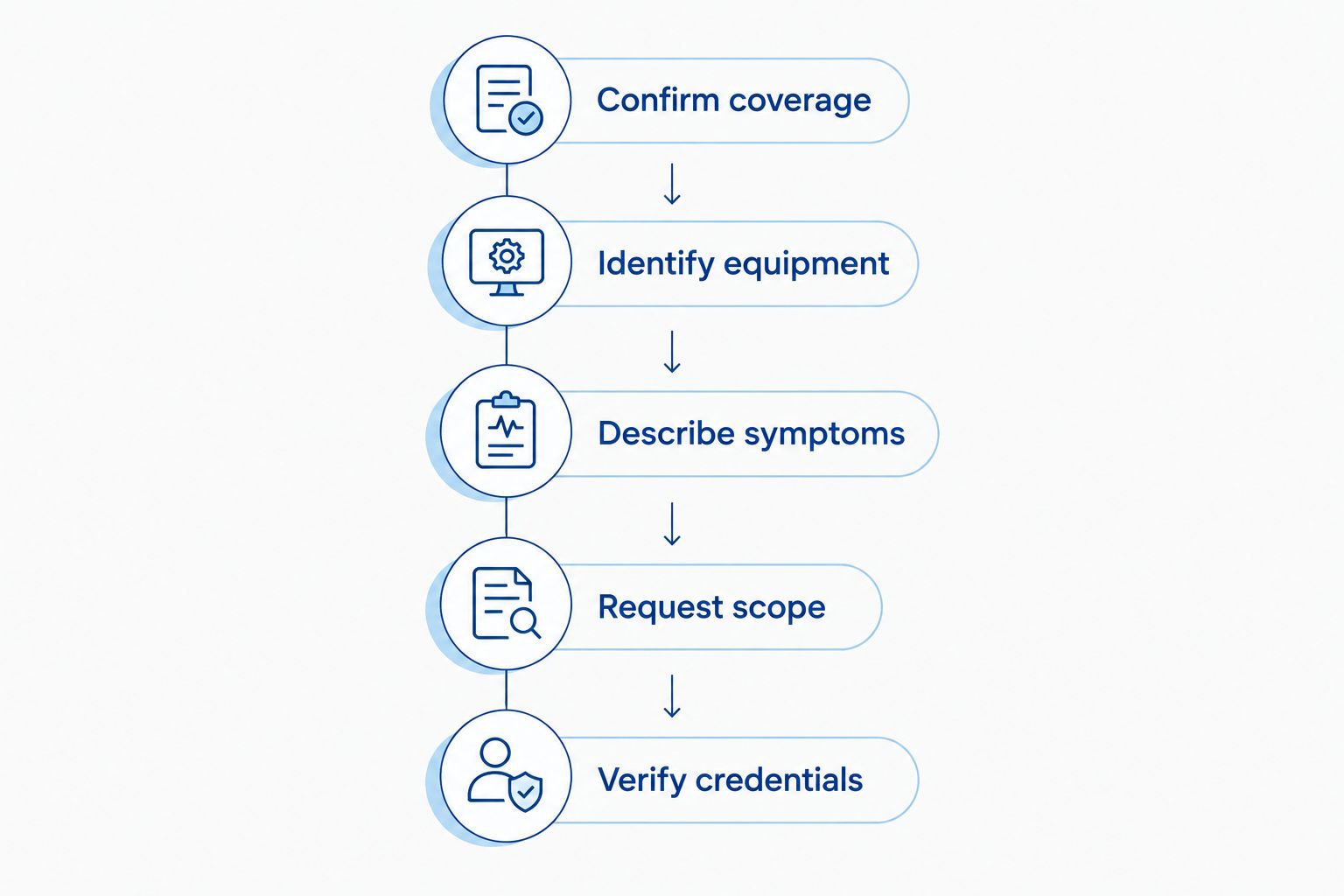
Use this sequence for your 2026 booking decision:
- Confirm coverage: Give your exact address and identify the property as a home.
- Identify equipment: Describe the system and provide the model information if accessible.
- Describe symptoms: Explain what happens, when it happens, and whether anything recently changed.
- Request scope: Ask what the diagnostic visit covers and how additional work is approved.
- Verify credentials: Check the contractor's license information before authorizing work.
Keep the conversation focused on observable facts. For example, whether airflow is weak throughout the house or only in one room matters more than a guess that the compressor has failed. Do not open electrical panels, handle refrigerant, or repeatedly restart a system that trips a breaker.
For more help comparing companies, use this guide to choosing an HVAC contractor in the Bay Area. It supports the hiring decision rather than replacing an on-site diagnosis.
Discuss your AC repair needs
Describe your location, cooling problem, and equipment before arranging service.
How the shortlist is ranked
The order follows the hiring criteria above: local service fit first, installation history second, equipment-specific requirements third, and independent review fourth. Each option solves a different selection problem. Move an option higher when its particular role matches your situation.
The comparison does not rank companies by speed, customer ratings, or guaranteed outcomes. Those are separate questions to check before hiring. Choose on verified fit and a clear scope—not on the word best.
Which air conditioning repair service should you choose?
For an ordinary homeowner repair inquiry within the stated five-county area, start with the local option in the table. If the problem points back to recent installation work, contact the installer with your paperwork. If equipment documentation specifies an authorized service route, follow that route first.
When replacement is proposed, ask these 3 questions before deciding:
- What failed, and what evidence supports that diagnosis?
- What would the proposed repair fix, and what would remain unresolved?
- Why is replacement being recommended instead of repair for this system?
Do not turn a 2026 repair decision into a replacement purchase without that explanation. Equally, do not insist on repair when the contractor has clearly documented why it fails to address the problem. The objective is a justified decision, not a predetermined answer.
FAQ
What’s the best air conditioning repair service for my Bay Area home?
The best fit is a contractor that serves your address, handles your equipment, and provides a clear diagnosis. Comfort-Factor is a relevant local option for homeowners in Sonoma, Marin, Napa, Solano, and Contra Costa counties.
Does a Bay Area service claim mean a company serves every county?
No. Confirm your exact address before booking because a general Bay Area description does not establish coverage for every county or property.
Should I call my original AC installer first?
Call your original installer first when the issue concerns the installation or its paperwork. Ask whether the company retains the relevant records and can assess the current problem.
Is a manufacturer-authorized contractor always better?
Manufacturer authorization is not a complete measure of repair quality. Use it when equipment-specific requirements apply, and still check the contractor’s license, equipment fit, and proposed scope.
Should I get a second opinion before replacing my AC?
Get a second opinion when the replacement recommendation lacks a clear diagnosis or leaves a major question unanswered. Ask the second contractor to explain the findings rather than simply match or reject the first proposal.
What should I tell an AC repair company when I call?
Provide your address, equipment information, and a description of the symptoms. Explain when the problem started and mention recent installation, maintenance, or repair work.
Can I repair an AC refrigerant problem myself?
Leave refrigerant work to a properly qualified technician. Warm air or ice alone does not establish the cause, so request diagnosis rather than asking for refrigerant to be added automatically.
One last thing
An AC that runs is not necessarily an AC that has been properly repaired. Before approving work, ask how the technician will check that the proposed fix addresses your original complaint. If the complaint is uneven cooling, a running outdoor unit alone does not answer it.
Keep the written diagnosis and final service record together. They give you a clearer starting point if the symptom returns—and a better basis for your next repair-or-replacement decision.
Related guides
- How to know when to get a second opinion on HVAC repair
- How to check an HVAC contractor's California license
- How to tell whether your thermostat or HVAC system is the problem