

A heat pump is worth considering for a Bay Area home in 2026 when you need to replace aging heating equipment, add air conditioning, or move away from gas heating. It is not an automatic bill-saving upgrade: your electricity rate, existing system, ductwork, and installation requirements determine the financial result. Compare a complete heat pump proposal with the work your home actually needs, not with keeping an old system indefinitely.
- Is a heat pump worth it? Yes when heating replacement and air conditioning needs align; bill savings require a home-specific comparison.
- A ducted heat pump suits usable ductwork; a ductless heat pump suits homes without ducts or rooms needing separate control.
- Comfort Factor provides Bay Area heat pump installation, repair, and maintenance; evaluate the proposed scope before choosing.
- Compare electricity rates, heating demand, electrical work, and duct condition before approving a furnace replacement.
Is a heat pump worth it in the Bay Area in 2026?
The strongest case is replacing equipment you already need to replace while gaining both heating and cooling. The weakest case is removing a dependable system solely because someone promises lower bills without reviewing your home and utility rates.
Use this comparison to identify the right starting point. For help evaluating the installation proposal itself, read how to choose an HVAC contractor in the Bay Area.
| Option | Best for | Main advantage | Main drawback |
|---|---|---|---|
| Ducted heat pump | Homes with suitable existing ducts that need heating and cooling | Uses a central distribution system for both functions | Poor ducts or inadequate airflow need correction |
| Ductless heat pump | Homes without ducts, additions, or rooms needing separate control | Delivers heating and cooling without a central duct network | Indoor equipment placement and room coverage need careful planning |
| Dual-fuel system | Homes where retaining gas backup is a deliberate priority | Combines heat pump heating with furnace backup | Keeps gas equipment and adds control and maintenance complexity |
| Keep the existing system | Homes with dependable equipment and no pressing comfort problem | Avoids replacing equipment before replacement is necessary | Does not resolve missing cooling or existing comfort limitations |
These are starting points, not equipment recommendations. A room-by-room assessment determines which configuration fits your home; a brand name or efficiency label cannot make that decision.
Why this matters
A heating replacement changes more than the appliance. It affects how you heat and cool individual rooms, where equipment sits, and how much electricity your home uses during different seasons.
Bay Area homes do not share one heating and cooling requirement. Coastal exposure, inland summer heat, insulation, windows, and the condition of existing ducts all affect the design. Your address matters, but your home's construction matters too.
For a 2026 replacement decision, start with your reason for changing systems. Adding cooling to a home without it is a different purchase from trying to reduce heating expenses in a home with a working furnace.
Ducted heat pumps: best for homes with usable ducts
A ducted heat pump uses an indoor air handler and duct network to distribute conditioned air. Its 2 operating modes—heating and cooling—serve different seasonal needs through the same distribution system.
The main advantage is whole-home heating and cooling through existing vents. The main constraint is that the ducts must suit the new equipment; their presence alone does not prove they are suitable.
Ask the contractor to inspect duct leakage, return-air paths, and airflow restrictions. A room that is uncomfortable today needs an explanation before you approve new equipment. Replacing the unit without addressing a distribution problem leaves that problem in place.
Choose a ducted heat pump when the ducts pass inspection and central heating and cooling match how you use the home. Hold the decision when the proposal leaves necessary duct repairs undefined.
Ductless heat pumps: best for homes without ducts
A ductless heat pump connects an outdoor unit to indoor units that serve selected spaces. It avoids installing a central duct network, making it a practical configuration to evaluate in homes without existing ducts.
The advantage is flexibility in where heating and cooling are delivered. The trade-off is that you must plan indoor unit placement, refrigerant piping, drainage, and coverage of rooms separated by doors.
Do not assume a unit in a hallway will condition every bedroom effectively. Ask how each occupied room receives heating and cooling when doors are closed, and how you will control temperatures in separate spaces.
Choose ductless equipment when the room layout supports the proposed coverage. Hold a proposal that names equipment but does not explain which rooms it serves.
Dual-fuel systems: best for homeowners retaining gas backup
A dual-fuel system pairs a heat pump with a gas furnace. Controls determine when the heat pump operates and when the furnace supplies heat.
The advantage is retaining a separate heating source rather than committing to heat pump-only operation. The drawback is maintaining both technologies and making sure their controls work together correctly.
Ask why the contractor recommends furnace backup for your home. The answer should address heating demand, equipment performance, operating rates, or an existing furnace worth retaining—not a blanket claim that every Bay Area heat pump needs gas backup.
Choose dual fuel only when the backup has a clear purpose. It is not the simplest route if your main goal is removing gas space heating.
Why the value of a heat pump varies
The same equipment can produce different results in different homes. These factors explain why a general savings promise is not enough:
- Existing equipment: Replacing a failing furnace and adding cooling creates a different comparison from removing dependable equipment early.
- Utility rates: Electricity and gas rates determine operating expenses; equipment efficiency does not settle the comparison by itself.
- Heating and cooling demand: Your insulation, windows, air leakage, and temperature preferences affect how much conditioning the home needs.
- Duct condition: Leakage and airflow restrictions affect a ducted installation's comfort and performance.
- Electrical readiness: The proposed equipment needs an appropriate circuit and a review of available electrical capacity.
- Installation design: Equipment sizing, outdoor placement, indoor coverage, and controls affect daily operation.
Treat these as proposal requirements, not optional details. A useful estimate explains which conditions were checked and what corrective work is included.
How do you decide whether a heat pump is worth it for your home?
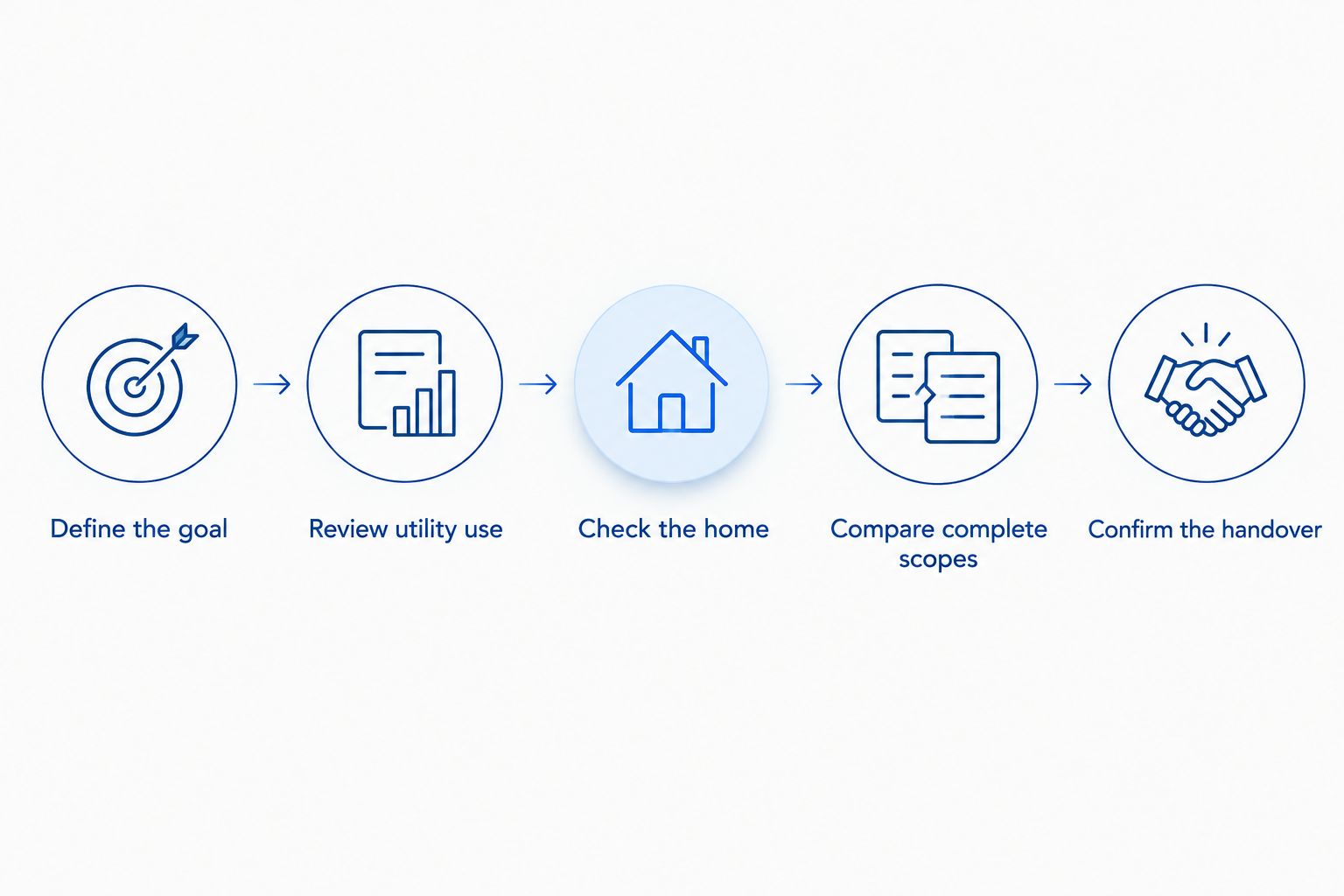
Use a consistent process so you compare the same work across proposals. Make the contractor explain the design before you compare equipment labels.
- Define the goal. Write down whether you need heating replacement, new cooling, better room comfort, or reduced dependence on gas.
- Review utility use. Gather 12 months of utility bills so the comparison includes both heating and cooling seasons. Separate space-heating assumptions from gas used for water heating or cooking.
- Check the home. Request a heating and cooling load calculation, along with an inspection of ducts, electrical capacity, and equipment locations.
- Compare complete scopes. Check whether each proposal includes the necessary electrical work, duct changes, controls, permits, and removal of old equipment.
- Confirm the handover. Ask what startup checks, operating instructions, maintenance requirements, and written warranty documents you will receive.
A load calculation estimates what your home needs based on its construction and local design conditions. It is more useful than simply matching the size of the old appliance; see how to size a heat pump for a California home.
For a 2026 proposal, also request written confirmation of any incentive eligibility before including it in your decision. Check the current program terms, equipment requirements, application timing, and whether your specific project qualifies.
Will a heat pump lower your energy bills?
A heat pump's efficiency does not guarantee a lower utility bill. The result depends on how much electricity it uses, when it operates, and what heating system it replaces.
Electric resistance heating converts approximately 1 kWh of electricity into 1 kWh of heat at the heater. A heat pump transfers heat rather than producing all its heat through resistance, which is why its heating efficiency can exceed that relationship. Performance still changes with outdoor conditions and system operation.
For a gas-to-electric comparison, ask for the utility rates, heating demand, and equipment performance assumptions behind the estimate. A projection that ignores rate schedules or assumes the same efficiency throughout every operating condition is not a sound basis for your decision.
Also separate heating expenses from added cooling. If your home did not previously have air conditioning, using the new cooling function adds electricity use while providing a service you did not have before.
Should you replace a working furnace with a heat pump?
A working furnace does not need replacement just because a heat pump is available. Replacement makes more sense when you also need cooling, face a documented equipment problem, or have a clear electrification goal.
Ask for a repair assessment before treating replacement as the only option. If the furnace meets your needs and you rarely need cooling, keeping it is a valid choice rather than a failed upgrade opportunity.
If you are planning a 2026 remodel, coordinate the heating decision with insulation, window, and electrical work. Those changes affect the system requirements, so the replacement design should reflect the planned home rather than only its current condition.
Is a heat pump worth it in an older Bay Area home?
An older home's condition matters more than its age alone. A heat pump installation needs a clear plan for heat loss, electrical capacity, and room-by-room air delivery.
Start with the problems you already notice: cold bedrooms, drafty rooms, uneven temperatures, or noisy airflow. Ask which problems the equipment replacement addresses and which require separate building or duct improvements.
Ductless equipment deserves consideration when there is no usable duct network. A ducted installation deserves consideration when the existing distribution system can support the design. Neither configuration fixes every building problem automatically.
Where Comfort Factor fits
Comfort Factor is a fit for Bay Area homeowners seeking local heat pump installation, repair, and maintenance. The contractor serves Sonoma, Marin, Napa, Solano, and Contra Costa counties.
The practical benefit is access to those HVAC services from a local contractor. The decision still needs a home-specific proposal: Comfort Factor's service coverage does not establish your projected bill savings, electrical requirements, or best equipment configuration.
Discuss your heating and cooling needs
Review Comfort Factor’s HVAC services before planning your home heat pump project.
FAQ
Is a heat pump worth it in the Bay Area in 2026?
A heat pump is worth considering when you need heating replacement, cooling, or a move away from gas heating. Compare the complete installation scope and operating assumptions before deciding; lower bills are not automatic.
Is a heat pump better than a furnace for my home?
A heat pump is a better fit when you want the same system to provide heating and cooling. Keeping a dependable furnace is a valid choice when it meets your needs and replacement has no clear benefit.
Can I install a heat pump if my house has no ducts?
Yes, a ductless heat pump provides heating and cooling without a central duct network. The proposal must explain indoor unit placement and how occupied rooms receive conditioned air.
Will I need an electrical panel upgrade for a heat pump?
An electrical panel upgrade is not automatic. A qualified assessment must check the proposed equipment’s circuit requirements and the home’s available electrical capacity.
Will a heat pump work during a power outage?
A heat pump needs electricity and does not operate through an outage without a suitable backup power supply. A gas furnace also normally needs electricity for its controls and blower.
Should I count rebates when deciding in 2026?
Count an incentive only after confirming that your project meets the current program requirements. Verify eligibility, application timing, and written terms rather than assuming every installation qualifies.
Does Comfort Factor handle heat pump repair as well as installation?
Comfort Factor provides heat pump installation, repair, and maintenance. Its service area includes Sonoma, Marin, Napa, Solano, and Contra Costa counties.
One last thing
Ask what stays on gas after the heat pump installation. Replacing gas space heating does not remove gas use from a water heater, range, or other appliance that remains in place.
That distinction matters when you evaluate electrification and utility expenses. Your best decision is the one that meets your comfort goals with a clearly defined installation—not the one attached to the biggest savings promise.
Related guides
- Heat pump for homes without existing ductwork in the Bay Area
- Duct sealing for Bay Area homes
- How to convert from a furnace to a heat pump in an existing home