

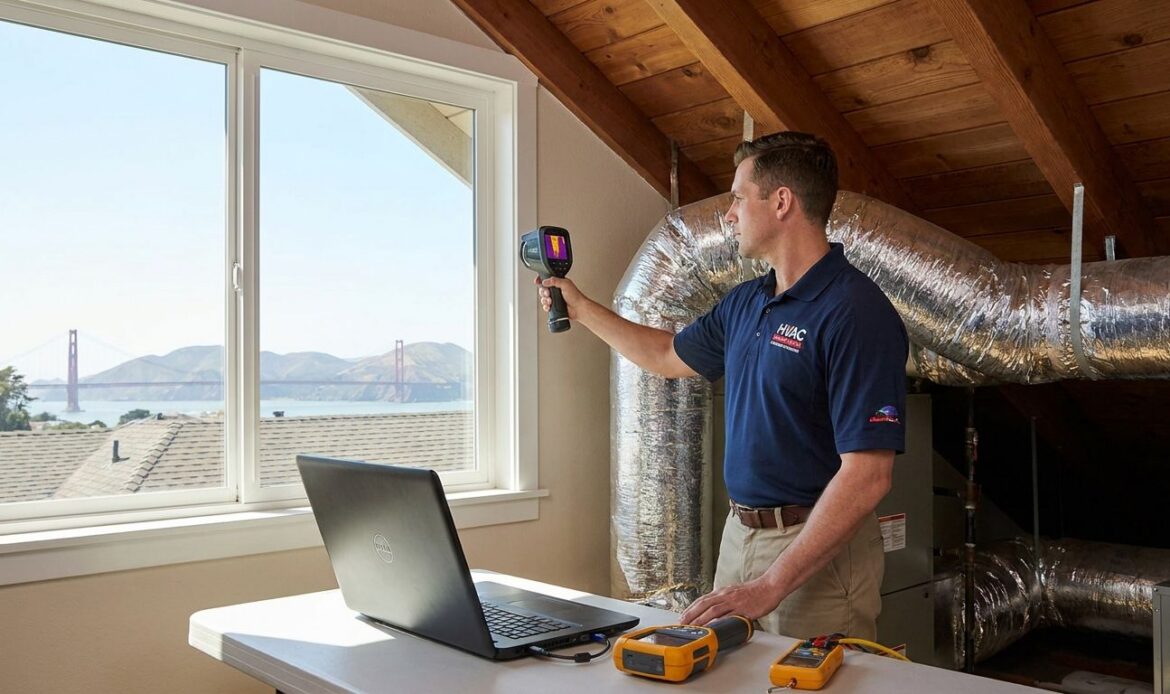
A Bay Area HVAC energy audit tells you exactly where a home or building is losing heat, wasting cooling, or burning through utility bills — and which fix actually pays off first. This guide ranks the audit types worth paying for in 2026, from a full contractor assessment to utility-sponsored walk-throughs, so you don't spend money diagnosing a problem you could have fixed outright.
- A whole-home HVAC energy audit from a licensed Bay Area contractor is the strongest starting point for 2026 — Buy.
- Duct diagnostic and sealing audits catch the single most common efficiency loss in older Bay Area homes.
- Utility-sponsored audits (like PG&E’s) are a good add-on but shouldn’t replace a contractor-led HVAC assessment.
- Commercial building audits need different scoping than residential ones — don’t use a homeowner checklist on an office or retail space.
- DIY smart-thermostat data logging is useful context, not a substitute for a real hvac energy audit in the Bay Area.
Why this matters
Most Bay Area homes and small commercial buildings were built before current Title 24 energy code standards existed, and HVAC systems installed a decade or two ago rarely match a property's actual heating and cooling load. An energy audit finds the gap between what your system is doing and what it should be doing — leaky ducts, undersized returns, a mismatched thermostat, or insulation that's letting conditioned air escape before it ever reaches a vent.
Skip the audit and you're guessing at upgrades. Homeowners who jump straight to choosing a Bay Area HVAC contractor for a new system installation, without first auditing the ductwork and building envelope, often end up oversizing equipment to compensate for leaks that a $200 duct-sealing job would have solved. In 2026, with Title 24 code updates tightening efficiency requirements on new installs, an audit before you buy is cheaper than an audit after.
How this list is ranked
Each audit type below is ranked on three factors: how much diagnostic depth it actually delivers, how well it applies to Bay Area housing stock and climate (fog-belt humidity in Marin and Sonoma, dry heat in Napa and Solano, wildfire smoke season across the region), and whether the findings lead to an action you can actually take. Utility programs and DIY tools are included because homeowners ask about them constantly — not because they replace a contractor-led assessment.
The ranked list
1. Whole-home HVAC energy assessment — the safe pick
A licensed contractor walks the property, inspects the system's age and condition, checks duct integrity, tests airflow at the registers, and reviews insulation and window performance against the home's square footage. This is the only audit type on this list that ends with a specific, actionable recommendation tied to your actual equipment.
Comfort Factor's approach to this assessment covers heating, cooling, and ductwork in one visit rather than splitting the diagnosis across separate contractors. For a Bay Area home built before 2000, this is where an energy audit should start in 2026.
Verdict: Buy.
2. Duct diagnostic and sealing audit — the biggest bang for the buck
This audit isolates one thing: how much conditioned air your ductwork is losing before it reaches a room. ENERGY STAR guidance flags duct leakage above 15% of total system airflow as a repair priority, and that threshold shows up constantly in older Bay Area attics and crawlspaces where ducts were never sealed to current standards.
If your energy bills climbed without a system change, this is usually the culprit. Duct sealing for Bay Area homes is one of the few HVAC fixes that pays for itself inside a single cooling season.
Verdict: Buy.
3. Blower door and building envelope audit — the deep-dive pick
A blower door test depressurizes the house and measures exactly how much outside air is getting in, which tells you whether your HVAC system is fighting a leaky envelope rather than an undersized unit. This is more invasive and takes longer than a duct-only check, and it's overkill for a newer, tightly built home.
It earns its place for pre-1980 housing stock across Sonoma and Marin counties, where wall and attic insulation was never designed for today's efficiency expectations.
Verdict: Consider for homes built before 1990; skip it if your building envelope was updated in the last decade.
4. Indoor air quality audit — the wildfire-season pick
This audit measures particulate infiltration and filtration performance rather than raw energy loss, which makes it a different tool than the others on this list. It matters more in the Bay Area than most regions because wildfire smoke season now overlaps directly with peak HVAC runtime.
An IAQ audit tells you whether your current filter rating and duct sealing are actually keeping smoke out during a bad air week, not just whether the system is efficient on a clear day.
Verdict: Buy if you're in Sonoma, Napa, or the hills above Contra Costa County; Hold elsewhere unless you have respiratory concerns in the household.
5. Utility-sponsored home energy audit — the free add-on
Utility programs (PG&E offers one across its Bay Area service territory) typically send an assessor to review general household energy use, not HVAC-specific diagnostics. It's a reasonable free starting point, but it won't test duct leakage or inspect equipment condition the way a contractor audit does.
Treat this as a complement to a contractor assessment, not a replacement for one — the findings are broad, not HVAC-specific.
Verdict: Consider as a free supplement; Skip if you're relying on it alone before an HVAC decision.
6. Commercial building HVAC energy audit — the wildcard
Offices, retail spaces, and multi-tenant buildings have load patterns residential audits don't account for — occupancy schedules, zoned usage, and equipment that runs on a completely different maintenance cycle. Commercial HVAC audits also factor into commercial HVAC maintenance plans for Bay Area buildings, since a maintenance contract without a baseline audit is just guessing at service intervals.
A property manager running a homeowner-style checklist on a commercial building in Contra Costa or Solano County will miss the ventilation and zoning issues that actually drive commercial energy costs.
Verdict: Buy for any commercial property owner who hasn't had one in the past three years.
7. DIY smart-thermostat and app-based audit — the wait pick
Smart thermostat data logs and home energy monitoring apps show runtime and temperature trends, which is useful context but not a diagnosis. They can tell you the system is running longer than expected; they can't tell you why.
Use this data to decide whether a real audit is worth scheduling, not as a substitute for one.
Verdict: Wait — useful supporting data, not a stand-alone audit.
Comparison table
| Audit type | Best for | What it measures | 2026 verdict |
|---|---|---|---|
| Whole-home HVAC assessment | Homes over 15 years old | System condition, airflow, duct integrity | Buy |
| Duct diagnostic and sealing | Rising utility bills, uneven rooms | Airflow loss, leakage percentage | Buy |
| Blower door / envelope audit | Pre-1990 housing stock | Air infiltration, insulation gaps | Consider |
| Indoor air quality audit | Wildfire-season counties | Particulate filtration, duct sealing | Buy (fire-prone areas) |
| Utility-sponsored audit | Free first step | General household energy use | Consider (supplement) |
| Commercial building audit | Offices, retail, multi-tenant | Zoning, occupancy load, ventilation | Buy |
| DIY smart-thermostat audit | Pre-audit research | Runtime trends, temperature logs | Wait |
Get a real HVAC energy audit in 2026
Free quote and a second opinion before you spend on new equipment.
Where to book an HVAC energy audit
- Start with a licensed HVAC contractor, not a general home inspector. A general inspector notes visible damage; an HVAC contractor tests airflow and duct performance directly.
- Ask what the audit actually measures before booking. "Energy audit" gets used loosely — confirm whether duct leakage testing, blower door testing, or both are included.
- Pair a free utility audit with a paid contractor assessment, not instead of one. The utility visit is a good starting data point; it won't diagnose your specific HVAC system.
FAQ
What does an HVAC energy audit in the Bay Area actually check?
A Bay Area HVAC energy audit checks duct leakage, system airflow, equipment age and condition, and how well the building envelope holds conditioned air. A full assessment also compares your current system’s output against the home’s real heating and cooling load.
How much does a home energy audit cost in California?
Costs vary by scope — a duct-only diagnostic runs less than a full blower door and envelope audit. Get a specific quote based on your home’s size and system age rather than relying on a flat statewide number.
Is a utility-sponsored energy audit as thorough as a contractor audit?
No, a utility-sponsored audit like PG&E’s covers general household energy use, not HVAC-specific diagnostics such as duct leakage or system airflow. Use it as a free starting point, then follow up with a contractor assessment for anything HVAC-related.
Do commercial buildings need a different energy audit than homes?
Yes, commercial HVAC audits account for occupancy schedules, zoning, and ventilation loads that residential audits don’t measure. An office, retail space, or multi-tenant building needs a commercial-scoped audit, not a homeowner checklist.
Can an energy audit help with 2026 heat pump rebates?
An audit’s findings can support a rebate application by documenting your home’s current system condition and efficiency gaps. Check current Bay Area heat pump rebate program requirements before scheduling, since documentation rules change year to year.
What’s the biggest energy loss an audit usually finds in Bay Area homes?
Duct leakage is the most common finding, often exceeding the 15% airflow loss threshold ENERGY STAR flags as a repair priority. Older homes across Sonoma, Marin, and Solano counties are especially prone to this because ducts were rarely sealed to current standards.
Should I get an energy audit before installing a new HVAC system?
Yes, an audit before installation prevents oversizing a new system to compensate for duct leaks or insulation gaps that could be fixed directly. It’s cheaper to seal ducts first than to buy bigger equipment to cover for them.
Does wildfire smoke affect what an HVAC energy audit should include?
In wildfire-prone Bay Area counties, an audit should include an indoor air quality check alongside standard duct and system testing. Filtration performance during smoke season matters as much as efficiency during a normal week.
One last thing
The audit that gets skipped most often is the cheapest one: duct sealing. It's less dramatic than a full system replacement, but ENERGY STAR's 15% leakage threshold shows up in a large share of pre-2000 Bay Area homes, and sealing that leak often changes the outcome of every other audit finding on the list. Get the ducts checked before you sign off on new equipment in 2026 — not after.
Related guides
- Indoor air quality testing for Bay Area homes
- Best HVAC maintenance plans for Bay Area commercial buildings
- How to qualify for Bay Area heat pump rebates in 2026