

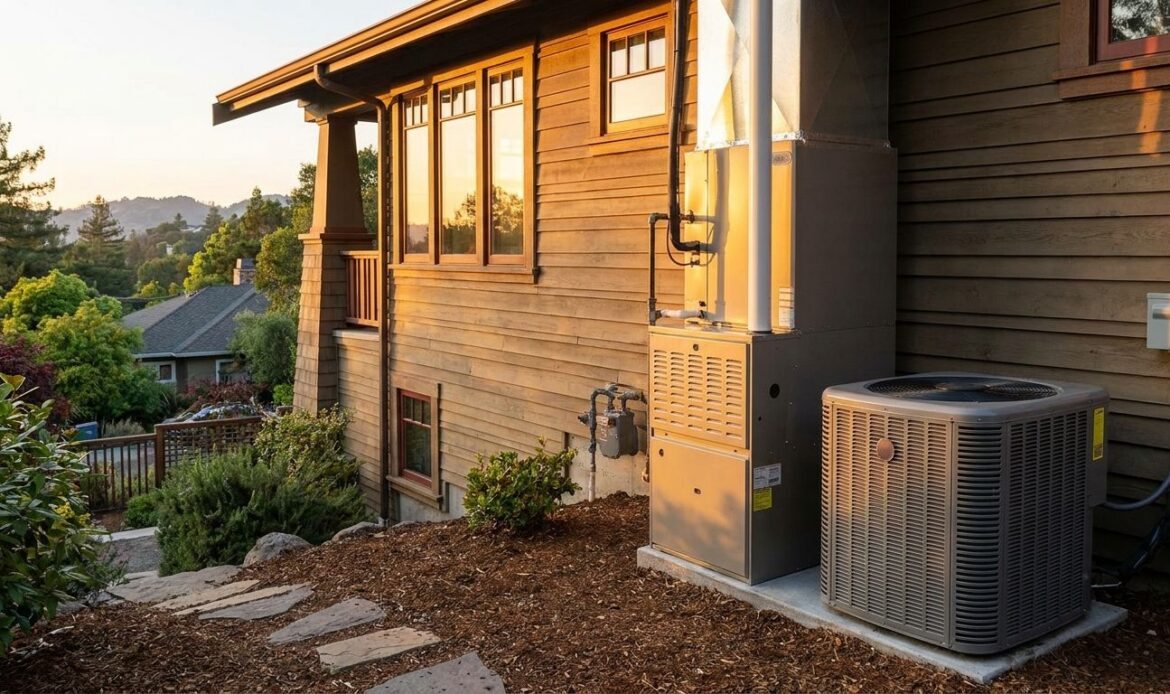
Dual fuel heating pairs a heat pump with a gas furnace so your system automatically switches fuel sources based on outdoor temperature, giving Bay Area homeowners lower utility bills most of the year and reliable backup heat when a cold snap or PG&E outage hits.
- A dual fuel heating system pairs a heat pump with a gas furnace for automatic fuel switching. Buy for most Bay Area retrofits.
- Furnace-to-heat-pump conversion is the safe pick when ductwork and furnace condition are solid.
- Skip pairing a new heat pump with a furnace older than 15 years. The mismatch shortens both units’ lifespan.
- 2026 California heat pump rebates can offset dual fuel conversion costs for qualifying Bay Area homes.
Why this matters
Bay Area winters rarely produce hard freezes, but Sonoma, Napa, Marin, Solano, and Contra Costa counties still see enough cold, damp nights each year that an all-electric heat pump alone can strain during the coldest stretches. A dual fuel heating system solves that by running the heat pump as the primary source and letting the furnace take over only when outdoor temperatures drop below the system's balance point. Homeowners who install one in 2026 get the efficiency of a heat pump for most of the heating season without giving up the furnace as a fallback.
Who this is for
This guide is for Bay Area homeowners who already have a gas furnace and ductwork in place and want to add heat pump efficiency without ripping out what works. It's also for anyone deciding between a heat pump and a furnace in California and landing on why not both. If you're in a fog-belt neighborhood in Marin or an inland valley in Napa or Solano County where winter nights swing colder, dual fuel is worth a serious look before you commit to one system alone.
What to look for in a dual fuel heating system for Bay Area homes
Balance point and switchover logic
The balance point is the outdoor temperature where the system hands off from heat pump to furnace, and getting it wrong either wastes gas or overworks the compressor. A properly set balance point keeps the heat pump running through most Bay Area winter nights and reserves the furnace for the rare hard cold spell.
Existing ductwork and furnace condition
Dual fuel only pencils out if your ductwork is sealed and sized correctly and your furnace still has useful life left. Pairing a new heat pump with a furnace nearing the end of its service life just delays a second replacement a year or two later.
Climate zone across Bay Area counties
Sonoma and Marin coastal areas see more fog and damp cold than inland Napa, Solano, and Contra Costa County valleys, which swing warmer by day and colder at night. The right balance point and equipment sizing depend on which side of that divide your home sits on.
Rebate and incentive eligibility in 2026
California and Bay Area utility rebate programs change year to year, and dual fuel conversions sometimes qualify differently than full heat pump replacements. Confirming eligibility before you sign a contract avoids losing money you were counting on.
Sizing accuracy
An oversized heat pump short-cycles and an undersized one leans on the furnace too often, which defeats the purpose of going dual fuel in the first place. A room-by-room load calculation, not a rule-of-thumb tonnage guess, should drive the equipment selection.
Smart thermostat control
The thermostat is what actually executes the fuel switchover, so a unit that can't manage dual fuel logic turns a well-designed system into a guessing game. Look for a thermostat built to handle heat pump and furnace staging together, not one bolted on as an afterthought.
Not sure if dual fuel fits your home?
Get a free quote and a second opinion on heat pump vs. furnace vs. dual fuel.
Top picks for Bay Area dual fuel setups
The safe pick: furnace-to-heat-pump conversion
If your existing furnace is under 15 years old and your ductwork checks out, converting it into the backup fuel source for a new heat pump is the lowest-risk path to dual fuel heating. The heat pump handles the bulk of the season and the furnace only fires on the coldest nights, which keeps gas usage low without an all-or-nothing switch. Verdict: Buy if your furnace and ducts pass inspection. See how the furnace-to-heat-pump conversion process works for existing Bay Area homes.
The wildcard: dual fuel without existing ductwork
Homes without ducts can still run dual fuel by pairing ductless heat pump heads for primary heating with a small gas furnace or wall unit as backup for the coldest rooms. It's a more involved installation than a straight conversion, and it only makes sense if the alternative is running electric resistance backup, which costs more to operate. Verdict: Consider for older homes or additions that never had central ductwork.
The value pick: dual fuel retrofit for older Bay Area homes
Older homes in Napa, Sonoma, and Marin County often have furnaces that were oversized decades ago for houses that have since been re-insulated, which means the heat pump side of a dual fuel retrofit can be right-sized properly even if the furnace stays as-is. This pairing tends to deliver the fastest payback because the heat pump displaces the most gas usage relative to installation cost. Verdict: Buy for pre-1990s Bay Area housing stock with a serviceable furnace. Details on heat pump installation for older Bay Area homes cover what changes in these retrofits.
The premium pick: zoned dual fuel for multi-story homes
Larger, multi-story Bay Area homes benefit from zoning the heat pump and furnace together so upstairs and downstairs run independent schedules instead of fighting one thermostat. It costs more upfront in dampers and zone controllers, but it eliminates the classic problem of a downstairs zone overheating while the upstairs stays cold. Verdict: Consider for homes over 2,500 square feet with multiple stories.
What to avoid
- A heat pump with electric strip heat instead of a real furnace backup. Strip heat is expensive to run and isn't true dual fuel. If your backup source isn't gas, you're not getting the cost benefit dual fuel is built for.
- Pairing new equipment with an old furnace just to save money upfront. A furnace with a few years left in it will fail mid-cycle and force a second project sooner than expected.
- Skipping the thermostat lockout settings. Without a correctly configured balance point, the system can run both fuels more than necessary, which shows up as a higher bill instead of the savings dual fuel is supposed to deliver.
Dual fuel configuration comparison
| Configuration | Best for | Backup reliability | Typical fit | Verdict |
|---|---|---|---|---|
| Furnace-to-heat-pump conversion | Homes with good ducts, newer furnace | High | Sonoma, Napa, Contra Costa retrofits | Buy |
| Ductless dual fuel (no ducts) | Additions, older homes without central air | Medium | Marin hillside homes, ADUs | Consider |
| Value retrofit for older homes | Pre-1990s housing stock | High | Bay Area homes needing re-insulation credit | Buy |
| Zoned multi-story dual fuel | Homes over 2,500 sq ft | High | Multi-story Contra Costa and Marin homes | Consider |
FAQ
What is a dual fuel heating system?
A dual fuel heating system pairs a heat pump with a gas furnace so the thermostat automatically switches between them based on outdoor temperature. The heat pump runs most of the season for efficiency, and the furnace kicks in only when temperatures drop below the system’s balance point.
Is a dual fuel heating system worth it in the Bay Area?
For most Bay Area homes with existing ductwork and a furnace under 15 years old, dual fuel is worth it because winters rarely require the furnace to run more than a handful of nights a season. Homes without existing ducts or with an aging furnace should weigh a full heat pump conversion instead.
How much does a dual fuel heating system cost in California?
Cost varies by home size, existing ductwork condition, and whether the furnace needs replacement alongside the new heat pump. Getting a home-specific quote is the only reliable way to know the number for your address in 2026.
Can I convert my existing furnace to dual fuel instead of replacing it?
Yes, if the furnace and ductwork are in good condition, adding a heat pump alongside the existing furnace is the most common dual fuel conversion path in the Bay Area. The furnace stays in place as backup rather than being replaced.
Do dual fuel systems qualify for California heat pump rebates in 2026?
Some dual fuel conversions qualify for California and Bay Area utility rebate programs, though eligibility rules differ from full heat pump replacements. Confirm current program requirements before signing a contract, since rebate terms change year to year.
What temperature does a dual fuel system switch from heat pump to furnace?
The switchover point, called the balance point, is set based on your home’s heat loss and the specific heat pump’s performance curve. A correctly configured balance point keeps the heat pump running through most Bay Area winter nights and reserves the furnace for the coldest snaps.
Is dual fuel better than a heat pump alone for Bay Area homes?
Dual fuel makes sense when you already have a functioning furnace and want backup certainty during cold snaps or power interruptions. A heat pump alone is often the better call for newer homes or full system replacements where the furnace would need replacing anyway.
How long does a dual fuel heating installation take?
A straightforward furnace-to-heat-pump conversion with existing ductwork typically takes one to two days, while ductless dual fuel setups or zoning additions take longer depending on the number of zones and any electrical upgrades needed.
One last thing
The most overlooked part of a dual fuel system isn't the equipment. It's the thermostat's lockout temperature setting. Get that number wrong and you'll either burn more gas than necessary or push the heat pump to run in conditions it wasn't sized for, and most homeowners never think to ask their installer what balance point was actually programmed after the job is done. Ask for that number in writing before the crew leaves.
Related guides