

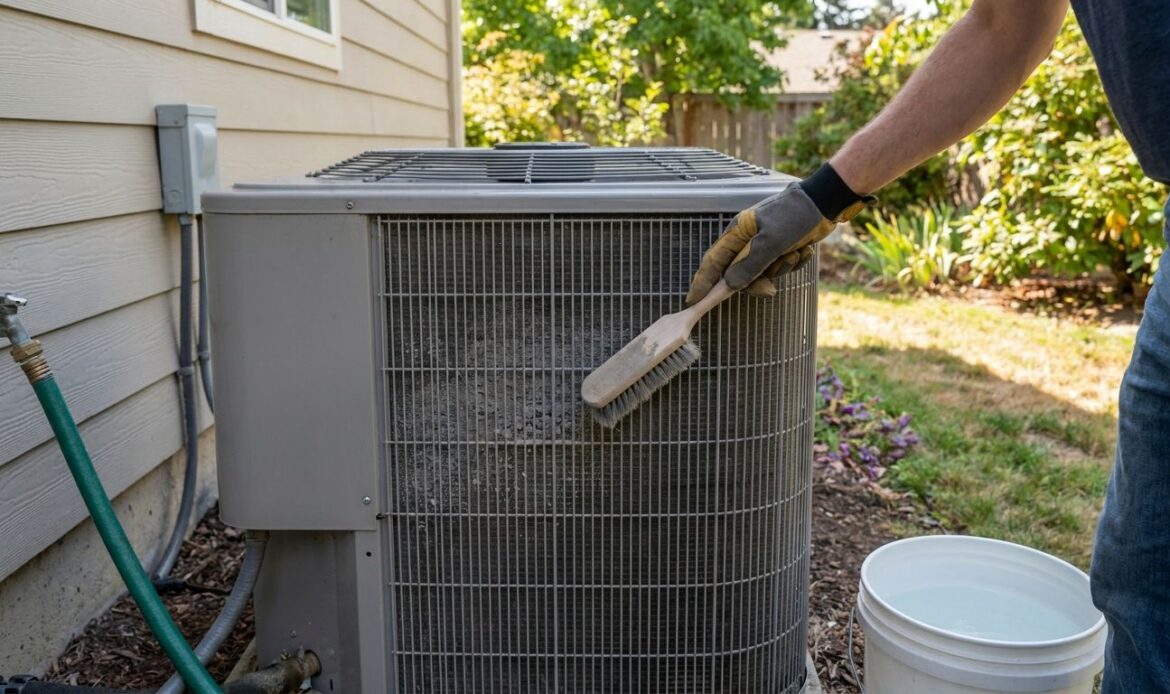
Wildfire ash coats everything within miles of a burn zone, and your heat pump's outdoor unit is one of the first things to choke on it. Fine ash clogs the condenser coil fins, restricts airflow, and forces the compressor to work harder — sometimes hard enough to trip a breaker or shorten the system's life. Here's how to clean it off safely without voiding a warranty or bending the fins.
- Cut power at the disconnect before you touch anything — ash conducts moisture and can short a live unit.
- Rinse coils from the inside out with a garden hose; a pressure washer bends fins and cuts cooling capacity.
- Heavy 2026 wildfire-season ash buildup on Sonoma and Napa County units often needs a professional coil cleaning, not just a hose-down.
- Skip cleaning during an active burn if the county air quality index is still hazardous — wait for it to clear.
Why this matters
A heat pump moves heat by pushing air across the outdoor coil, and ash sitting on those fins acts like a blanket. Airflow restriction from ash and soot buildup makes the compressor run longer to hit the same setpoint, and that extra runtime shows up on your utility bill before it shows up as a failure.
Bay Area wildfire seasons now stretch from late summer into November most years, and homeowners in Sonoma, Napa, Marin, Solano, and Contra Costa counties deal with recurring ash events, not one-off storms. If your system sits within a mile or two of a burn scar, plan on cleaning the outdoor unit multiple times per season. Comfort Factor's guide to prepping HVAC systems before Sonoma County wildfire season covers what to do before smoke rolls in — this guide picks up after the ash has already landed.
What you'll need
- Garden hose with a spray nozzle (no pressure washer)
- Soft-bristle brush or a fin comb
- Work gloves and an N95 or better mask
- Coil cleaner spray rated for aluminum fins (optional, for heavy soot)
- A shop vac with a brush attachment (for dry debris before wetting)
- 15-20 minutes for a light cleaning, up to an hour for heavy ash
If your home also runs a whole-house filtration setup, check whether it's still rated for the smoke load; wildfire smoke filtration systems built for California conditions handle particulate that a standard MERV 8 filter lets through.
The steps
1. Kill power at the disconnect
Find the gray disconnect box mounted on the wall near the outdoor unit and pull the lever or breaker before doing anything else. Ash mixed with morning dew or hose water conducts electricity, and a live unit with wet ash on the coil is a shock risk. Confirm the fan isn't spinning before you touch the cabinet.
2. Vacuum loose ash first
Run a shop vac with a soft brush attachment over the top grille and coil face to pull off dry, loose ash before you introduce water. Wetting dry ash first turns it into a paste that's harder to rinse out and can pack into the fins. This step alone often removes most of the visible surface buildup.
3. Rinse the coil from the inside out
Remove the top fan grille if your model allows easy access, and spray the coil from the inside facing outward — this pushes debris out the way it came in instead of driving it deeper. Use a fan-pattern nozzle, not a jet, and keep the hose 12-18 inches from the fins. A pressure washer or a direct jet stream bends aluminum fins, and bent fins choke airflow permanently.
4. Comb bent fins back into place
Any fins that got flattened during a storm or a rough cleaning pass need straightening with a fin comb sized to match the fin spacing on your unit. Bent fins block airflow the same way ash does, just permanently instead of temporarily. Work slowly in one direction — forcing the comb the wrong way tears fins instead of straightening them.
5. Clear the base pan and surrounding ground
Ash collects in the unit's base pan and in the mulch or gravel around it, and every gust kicks more of it back onto a freshly cleaned coil. Sweep or vacuum a 2-foot radius around the unit and clear the base pan of standing ash and debris. Comfort Factor techs routinely find units in Napa and Sonoma County with base pans packed solid after a single red-flag wind event.
6. Let it dry, then restore power
Give the unit 15-20 minutes to air-dry before flipping the disconnect back on — this prevents any residual moisture from arcing when the compressor kicks in. Listen for the compressor starting cleanly and check that the fan spins without wobble or scraping. If it sounds off, cut power again and call a technician instead of running it.
Troubleshooting
Unit won't restart after cleaning. Check the disconnect is fully seated and the breaker hasn't tripped; if power is confirmed and it still won't start, moisture likely got into the control board and it needs a technician.
Fan runs but the house isn't cooling or heating. The coil may still be partially blocked, or ash worked its way into the fins during rinsing; a second, slower rinse pass usually clears it.
Ash keeps returning within a day of cleaning. Active fire nearby means cleaning is temporary maintenance, not a fix — check the county air quality index before scheduling another cleaning cycle.
Fins look crushed even after combing. Heavily bent fins from repeated ash storms sometimes need professional replacement rather than a comb, especially if airflow is still weak after straightening.
Compressor sounds louder than usual after restart. Residual ash inside the fins raises head pressure and makes the compressor work harder; if the sound persists after a thorough second cleaning, it's time for a coil inspection.
Musty or burnt smell on startup. This is usually just ash burning off warm components on first run and clears in a few minutes — if it persists past 10 minutes, shut the unit off and call for service.
Not sure the ash damage stops at the coil?
Comfort Factor techs check compressor load and refrigerant pressure after heavy ash events.
Tools and resources
- Garden hose with fan nozzle, soft-bristle brush, fin comb, N95 mask
- HVAC maintenance plans for Bay Area homeowners if you want coil cleaning bundled into a seasonal visit instead of doing it solo every time ash falls
- A home air quality monitor to track when it's actually safe to be outside cleaning at all
- Manufacturer manual for your specific outdoor unit, since fin spacing and access panels vary by model
What to do next
If the unit is more than 10-12 years old and this isn't the first ash season it's fought through, cleaning might be buying time on a system that's already losing efficiency. Comfort Factor's guide on knowing when to replace your HVAC system walks through the signs that a repair-and-clean cycle has run its course.
FAQ
Can I use a pressure washer to clean wildfire ash off my heat pump?
No, a pressure washer bends the aluminum coil fins and permanently restricts airflow. Use a garden hose with a fan nozzle instead, held 12-18 inches from the coil.
How often should I clean ash off my outdoor unit during wildfire season?
Clean it after every visible ash event, which in heavy 2026 fire years can mean several times per month in Sonoma and Napa counties. Check the base pan and coil face weekly during active fire conditions nearby.
Is it safe to clean my heat pump while air quality is hazardous?
No, wait until the county air quality index drops out of the hazardous range before doing outdoor cleaning work. Ash particulate in hazardous air settles right back onto a freshly cleaned coil anyway.
Does ash buildup void my heat pump warranty?
Ash itself doesn’t void a warranty, but damage from improper cleaning, like bent fins from a pressure washer, often does. Stick to manufacturer-approved cleaning methods and keep the unit’s power disconnected while working.
What’s the difference between cleaning ash and cleaning normal dust or pollen?
Ash is finer and denser than typical dust, so it packs into coil fins faster and holds moisture longer. That combination raises the risk of corrosion if ash sits on the coil for weeks without cleaning.
Should I hire a professional or clean the outdoor unit myself?
Light surface ash is fine to clean yourself with a hose and soft brush. Heavy soot buildup, bent fins, or any electrical concerns call for a licensed HVAC technician.
Will ash damage cause my heat pump to run less efficiently?
Yes, ash-coated coils force the compressor to run longer to hit the same temperature, which raises energy use before any part actually fails. Regular cleaning during fire season keeps runtime and utility bills closer to normal.
Can ash exposure shorten my heat pump’s lifespan?
Repeated ash exposure without cleaning accelerates coil corrosion and adds compressor strain year after year. Bay Area homes near burn scars that skip post-fire cleaning tend to see coil issues show up years earlier than homes that clean regularly.
One last thing
Most homeowners clean the coil and stop there, but the base pan underneath collects just as much ash and gets ignored because it's out of sight. A clogged base pan traps moisture against the compressor housing, and that's where corrosion actually starts — not on the visible fins everyone focuses on.
Related guides