

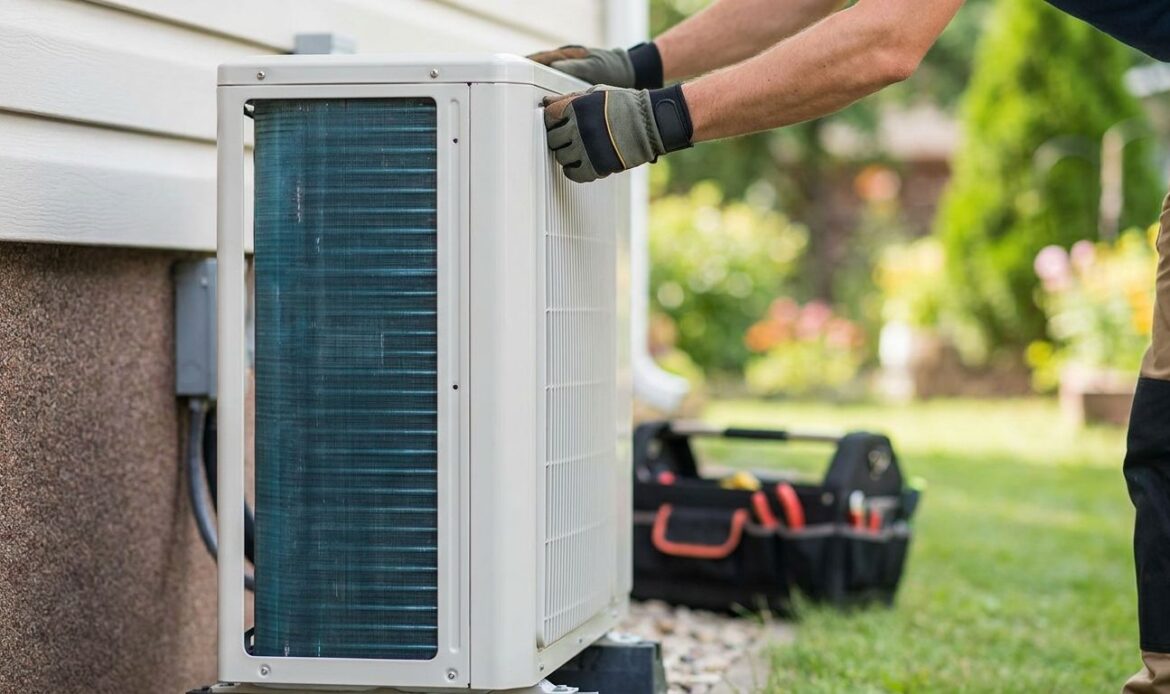
Short cycling means your heat pump's compressor kicks on, runs for a few minutes, then shuts off — over and over — instead of completing a full heating or cooling cycle. It wastes energy, stresses the compressor, and leaves Bay Area homes uneven and drafty through 2026's swing seasons. Fixing it starts with finding which of five common causes is behind your system's behavior.
- Prevent heat pump short cycling by ruling out oversizing, dirty filters, bad thermostat placement, and low refrigerant in that order.
- A heat pump cycling more than 3-4 times an hour in 2026 points to oversizing or airflow trouble, not normal wear.
- Swapping a clogged filter and relocating a poorly placed thermostat solves short cycling in many Bay Area homes at no cost.
- Refrigerant charge and control board issues need a Comfort Factor heat pump repair technician — not a DIY filter change.
Why this matters
A heat pump that short cycles never reaches steady-state efficiency. Every restart draws a surge of power to get the compressor spinning again, and that surge is where the wear happens — bearings, start capacitors, and contactors all take the hit first.
Industry guidance from groups like ACCA generally treats 10-15 minute run cycles, occurring two to three times per hour, as normal for a properly sized system. Anything shorter and more frequent than that is short cycling, and it's rarely a sign your equipment is simply getting old. It's almost always a fixable mechanical or setup problem.
Left alone through a full Bay Area cooling season, short cycling can shorten compressor life and spike utility bills well before the unit is due for replacement. Catching it early in 2026 is cheaper than replacing a compressor in 2027.
What you'll need
- A clean or replacement air filter (check the size printed on the old one)
- A flashlight and screwdriver for the outdoor unit's access panel
- A garden hose for rinsing the outdoor coil (no pressure washer)
- Your thermostat's model and manual, or app access if it's a smart thermostat
- 20-30 minutes for the DIY checks; a technician visit if the cause turns out to be refrigerant or electrical
The steps
1. Replace the air filter first
A clogged filter is the single most common cause of short cycling, and it's the fastest to fix. Restricted airflow makes the indoor coil freeze or overheat, which trips a safety switch and shuts the compressor down early.
Pull the filter and hold it up to a light. If you can't see light through it, it's done — replace it with the same size and MERV rating. Bay Area homes near wildfire-prone areas often need filter changes every 30-45 days during smoke season rather than the standard 90-day interval. Run the system for 20 minutes after replacing it and watch whether the cycle length improves.
Common mistake: installing the filter backwards. Airflow direction arrows are printed on the frame — get them wrong and you choke the system just as badly as the dirty filter did.
2. Confirm the unit isn't oversized for the space
An oversized heat pump satisfies the thermostat's setpoint almost immediately, then shuts off before it finishes a full dehumidification or heating cycle — that's short cycling by design, not malfunction. This is a frequent issue in older Bay Area homes retrofitted with a heat pump sized for a bigger house or a different climate zone.
If your system was installed without a room-by-room load calculation, oversizing is a real possibility. The heat pump sizing guide for California homes walks through how a proper Manual J calculation accounts for insulation, window exposure, and square footage — the variables a generic size chart skips.
Common mistake: assuming bigger capacity means better performance. In heat pumps, oversizing is the opposite of an upgrade.
3. Clean the outdoor coil and clear its airflow path
A dirty or blocked outdoor coil can't reject heat efficiently, which raises head pressure and trips the compressor's high-pressure safety switch. That switch shutting off mid-cycle looks identical to short cycling from inside the house.
Rinse the coil fins gently with a garden hose from the inside out, and clear leaves, dust, or vegetation within 24 inches of the unit on all sides. Fall and early winter in Sonoma and Marin counties bring leaf litter that packs into coil fins fast — check monthly during that stretch.
Common mistake: using a pressure washer. It bends the delicate aluminum fins and makes airflow worse, not better.
4. Check thermostat placement and calibration
A thermostat mounted near a supply vent, in direct sun, or on an exterior wall reads the temperature wrong and tells the compressor to shut off before the rest of the house has caught up. This is a surprisingly common install error, especially in homes that added a heat pump without moving the original thermostat location.
Hold your hand near the thermostat during a heating cycle — if you feel a draft or warm air hitting it directly, relocation will likely solve the cycling on its own. Smart thermostats with adaptive recovery and multi-sensor support avoid this problem structurally; the smart thermostat picks built for heat pump systems cover which models handle staged and variable-speed compressors correctly.
Common mistake: cranking the setpoint down several degrees to "force" faster heating. It doesn't change cycle length — it just runs the compressor harder for the same short burst.
5. Rule out low refrigerant charge
Low refrigerant reduces the heat pump's capacity, so it satisfies the thermostat on a shorter cycle even though the house hasn't actually reached temperature. This is one you can suspect but not fix yourself — charging a heat pump requires refrigerant handling certification and gauges most homeowners don't own.
Signs pointing to a charge problem: ice forming on the outdoor unit's refrigerant lines, hissing sounds near the coil, or cycling that got noticeably worse after a service visit involving the refrigerant lines. If any of those apply, this step needs a technician, not a second filter change.
Common mistake: topping off refrigerant without finding the leak first. It buys a few weeks of normal operation, then the short cycling returns.
6. Inspect the control board and wiring
A failing contactor, a loose low-voltage wire, or a control board on the way out can send false signals that shut the compressor down mid-cycle. This shows up as short cycling that's inconsistent — sometimes fine, sometimes erratic — rather than a steady pattern tied to weather or time of day.
If you've worked through filter, sizing, coil, thermostat, and refrigerant checks and the cycling is still random, the control system is the remaining suspect. This is diagnostic work for a licensed technician with a multimeter and the unit's wiring schematic.
Common mistake: resetting the breaker repeatedly and hoping it clears. A control fault that keeps recurring after a reset needs a diagnosis, not a workaround.
Troubleshooting
- Cycling gets worse only on the hottest days: points to undersized ductwork or a coil that can't reject heat fast enough — have airflow tested, not just the outdoor unit.
- System short cycles in heating mode only: check for a stuck reversing valve or a defrost cycle that's triggering too often; this is a compressor-protection issue, not a thermostat setting.
- Ice builds up on the indoor coil: almost always airflow-related — filter, blower speed, or a dirty coil, in that order.
- Cycling started right after a filter change: confirm the new filter's MERV rating isn't higher than the system was designed for; an overly restrictive filter chokes airflow just like a dirty one.
- Thermostat display looks normal but cycles are still short: the thermostat's internal temperature sensor may be miscalibrated — a factory reset or professional recalibration usually resolves it.
- Cycling only happens during a Spare-the-Air or smoke-advisory day: high particulate load can clog filters within days; check and swap filters more often during those stretches in 2026's fire season.
If the pattern doesn't match anything above, or you've already run through steps 1-4 without a fix, the heat pump troubleshooting guide for systems that won't heat properly covers the diagnostic branches that go deeper into airflow and defrost-cycle failures.
Tools and resources
- Replacement filter matched to your system's specified size and MERV rating
- Garden hose and soft-bristle brush for coil cleaning
- A multimeter, for anyone comfortable checking low-voltage control wiring
- Comfort Factor's heat pump repair service in Sonoma County for refrigerant, control board, or compressor diagnostics beyond the DIY steps above
- Your system's install paperwork, if you have it — the original Manual J sizing calculation (if one exists) settles the oversizing question in minutes
Still short cycling after the checks?
Get a diagnostic from a Bay Area heat pump technician before it wears down the compressor.
FAQ
What causes a heat pump to short cycle?
The most common causes are a clogged air filter, an oversized unit, poor thermostat placement, low refrigerant charge, or a failing control board. Start with the filter and thermostat since those are free to check and fix.
How many times per hour should a heat pump cycle on and off?
A properly sized heat pump typically runs two to three complete cycles per hour, each lasting 10 to 15 minutes. More frequent, shorter cycles than that indicate short cycling and a problem worth diagnosing.
Is short cycling bad for a heat pump’s compressor?
Yes — every restart draws a power surge that stresses the compressor’s start components more than steady running does. Left unaddressed through a full season, it can shorten compressor life well before the unit’s expected lifespan.
Can a dirty air filter cause short cycling?
Yes, and it’s the single most common cause. A clogged filter restricts airflow, which can freeze or overheat the indoor coil and trip a safety switch that shuts the compressor down early.
Does an oversized heat pump short cycle more?
Yes. An oversized unit satisfies the thermostat almost immediately and shuts off before completing a full cycle, which is short cycling by design rather than a malfunction. A room-by-room Manual J load calculation prevents this at install time.
Should I fix heat pump short cycling myself or call a technician?
Filter replacement, coil cleaning, and thermostat relocation are safe DIY fixes. Refrigerant charge and control board issues require licensed diagnostic tools and should go to a technician rather than a homeowner attempt.
How much does it cost to fix a short cycling heat pump?
Cost depends entirely on the cause — a filter swap costs the price of the filter, while a refrigerant leak repair or control board replacement runs considerably higher. A technician diagnostic identifies which repair category you’re in before any work starts.
Can thermostat placement really cause short cycling?
Yes. A thermostat near a supply vent, in direct sunlight, or on an exterior wall reads temperature incorrectly and shuts the compressor off before the rest of the house has actually caught up. Relocating it or switching to a multi-sensor smart thermostat usually fixes it.
One last thing
Most homeowners jump straight to "the compressor is dying" when a heat pump starts short cycling, but in practice the filter and the thermostat location cause the majority of cases seen across Bay Area service calls in 2026 — both are checks you can do yourself in under 30 minutes before calling anyone. Rule those out first, and you'll save a diagnostic visit for the cases that actually need one.
Related guides