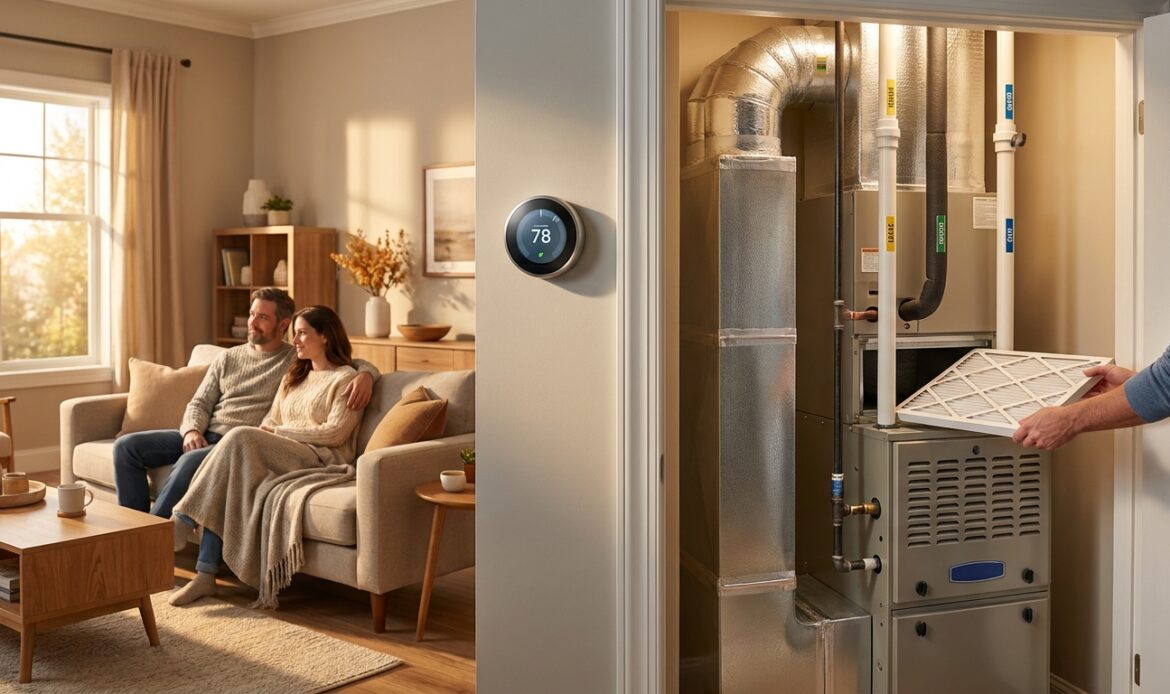
A furnace that keeps cycling on and off, an AC unit pushing 15 years old, and a utility bill that jumped 20% last summer all point to the same question: repair again or replace? This guide walks through the exact signs, numbers, and steps homeowners across Sonoma, Marin, Napa, Solano, and Contra Costa counties use to make that call in 2026.\n\n## TL;DR\n\nMost HVAC systems in the Bay Area last 12 to 15 years, and the tipping point for replacement usually shows up as the "50% rule": if a repair costs more than half the price of a new unit, replace it. A system older than 10 years running on R-22 refrigerant, needing its second major repair in two years, or driving energy bills up 20% or more is past the point where repair makes financial sense in 2026. Verdict: replace once age, repair cost, and efficiency loss line up together — patching one more part rarely buys more than a season or two. Comfort Factor walks Bay Area homeowners through that calculation daily, and the same math applies whether you're comparing central AC, a furnace, or a heat pump.\n\n## Why this matters\n\nHVAC systems don't fail all at once — they degrade for years before the final breakdown, and most of that degradation shows up on your energy bill before it shows up as a breakdown. A 15-year-old AC unit can run 30-40% less efficiently than a current model, according to Department of Energy efficiency benchmarks, which means you're paying a premium every single month just to keep an old compressor limping along.\n\nGetting the timing right matters more in the Bay Area than in milder climates, because Sonoma and Napa summers now regularly push past 95°F, and a system that's already struggling has less margin before it fails on the hottest day of the year. Waiting too long to replace costs you in energy bills; replacing too early wastes money on a system that had years left. The steps below help you land in between.\n\n## What you'll need\n\n- Your HVAC system's age (check the nameplate on the outdoor unit or furnace cabinet, or your install paperwork)\n- The last 12-24 months of energy bills for comparison\n- Any repair invoices from the past 2-3 years\n- 15-20 minutes to do a visual and sound inspection of the equipment\n- A quote from a licensed contractor if you're leaning toward replacement — choosing the right HVAC contractor in the Bay Area matters as much as the equipment decision itself\n\n## The steps\n\n### 1. Check the age against the 12-15 year benchmark\n\nMost central AC units and furnaces are built to last 12 to 15 years with regular maintenance; heat pumps run a similar range. Find the manufacture date on the nameplate — it's usually a sticker on the compressor unit or furnace cabinet, sometimes encoded in the serial number. A system past year 12 is in the replacement conversation regardless of how it's performing right now, because failure risk climbs sharply after that point. Common mistake: homeowners confuse the install date with the manufacture date, which can be off by a year or more if equipment sat in a warehouse before installation.\n\n### 2. Run the 50% repair-cost rule\n\nAdd up the current repair estimate and compare it to the cost of full replacement. If the repair quote is 50% or more of a new system's price, replacement wins on math alone — you're not just fixing today's problem, you're delaying tomorrow's. A new central AC installation in the region typically runs several thousand dollars depending on home size and ductwork condition; check current AC installation costs for the Bay Area before you commit to a big repair bill. Common mistake: treating each repair as an isolated decision instead of tracking cumulative repair spend over 24 months.\n\n### 3. Count the repairs in the last two years\n\nOne repair is normal wear. Two or more significant repairs in 24 months on the same unit is a pattern, not bad luck. Capacitors, contactors, and blower motors failing back-to-back usually means the whole system is under stress, not just one part. Two major repairs in two years is the point to stop repairing and start pricing replacement.\n\n### 4. Compare your last two summers' energy bills\n\nPull your utility bills from the same billing period a year apart. A 15-20% increase in cooling costs with no change in usage habits or utility rates signals declining efficiency — the compressor is working harder to deliver the same output. Common mistake: blaming rate hikes alone without checking your actual usage (kWh), which utilities list separately from the dollar total.\n\n### 5. Check the refrigerant type\n\nIf your AC or heat pump runs on R-22 refrigerant, replacement is close to mandatory economics — R-22 production was phased out under the Montreal Protocol schedule, and remaining supply has driven per-pound recharge costs up sharply. A single refrigerant leak repair on an R-22 system can now cost as much as a down payment toward a new R-410A or R-32 system. Any R-22 system with a leak in 2026 should be priced for replacement, not recharge.\n\n### 6. Listen and look for physical warning signs\n\nRust on the cabinet, visible corrosion on refrigerant lines, grinding or screeching on startup, and uneven temperatures room to room all point to a system nearing end of life. Short-cycling — the system turning on and off in under 10 minutes repeatedly — usually means a sizing problem or a failing component that's not worth chasing on an older unit. Expected outcome: a 10-minute walk-around plus a startup cycle tells you more than any single repair quote.\n\n### 7. Weigh comfort and noise, not just cost\n\nAn aging system that can't hold a consistent temperature, runs loud enough to hear from another room, or leaves humidity uncomfortably high even when it's running costs you in comfort even before it costs you in dollars. That's a legitimate factor in the replace-or-repair decision, especially in homes with bedrooms above or near the equipment.\n\n## Troubleshooting\n\nProblem: The system is only 6-8 years old but already needs a second repair.\nFix: Ask whether the original installation was sized correctly for the home — undersized or oversized equipment wears out faster regardless of brand. A load calculation from a licensed contractor settles this in one visit.\n\nProblem: Energy bills went up but the contractor says the unit is "fine."\nFix: Get a second opinion with actual efficiency testing (static pressure, refrigerant charge, airflow) rather than a visual check alone. A unit can pass a basic look-over and still be running 20-30% below rated efficiency.\n\nProblem: You can't tell if the noise is normal wear or a failure warning.\nFix: A grinding or metal-on-metal sound during startup is never normal — shut the system off and get it inspected within 24-48 hours rather than waiting for a scheduled tune-up.\n\nProblem: The home has hot and cold spots that got worse over the last year.\nFix: This is often ductwork or a failing blower motor rather than the whole system — worth a separate diagnosis before assuming full replacement is required.\n\nProblem: A recent repair fixed the immediate issue but the system still feels weaker overall.\nFix: Track energy bills for the next full billing cycle. If they don't return close to prior-year levels, the repair addressed a symptom, not the underlying decline.\n\n## Tools and resources\n\n- Your system's nameplate data (age, model, refrigerant type)\n- 24 months of energy bills and repair invoices\n- A licensed contractor visit for load calculation and efficiency testing\n- HVAC maintenance plans for Bay Area homeowners to slow future degradation on whichever system you keep or install\n- A basic multimeter or thermometer if you want to check room-to-room temperature variance yourself\n\n## What to do next\n\nIf the math points to replacement, the next decision is equipment type and whether rebates change the cost picture — heat pumps in particular carry incentive programs worth checking before you finalize a quote in 2026.\n\n## FAQ\n\nWhat's the average lifespan of an HVAC system in the Bay Area?\nMost central AC units and furnaces last 12 to 15 years with regular maintenance; heat pumps fall in a similar range. Coastal fog and salt air in parts of Marin and Sonoma can shorten that slightly for outdoor components.\n\nIs it cheaper to repair or replace an AC unit?\nRepair is cheaper if the cost is under 50% of a new system's price and the unit is under 10 years old. Past that threshold, repair costs compound faster than replacement costs over a 2-3 year window.\n\nHow much does a new HVAC system cost in California in 2026?\nCosts vary by home size, ductwork condition, and equipment type — central AC, furnace, and heat pump installations each carry different price ranges. Get a written, itemized quote rather than a phone estimate to compare accurately.\n\nWhat are the signs my furnace needs replacing?\nYellow or flickering pilot flame, rising carbon monoxide detector activity, uneven heating, and repair costs stacking up in the last 24 months all signal it's time to replace rather than repair again.\n\nDoes replacing an old HVAC system save money on energy bills?\nYes — a system over 12 years old commonly runs 30-40% less efficiently than a current model, so replacement typically shows up as a measurable drop in monthly energy costs within the first billing cycle.\n\nCan I get rebates for a new heat pump in 2026?\nCalifornia offers heat pump incentive programs that can offset installation costs, though eligibility depends on income, equipment specs, and utility territory. Check current program rules before finalizing equipment choice.\n\nHow long does HVAC replacement take?\nA straightforward central AC or furnace swap typically takes one day; jobs requiring ductwork changes or electrical upgrades can run two to three days.\n\nShould I repair my HVAC system if it uses R-22 refrigerant?\nGenerally no — R-22 supply constraints have pushed recharge and leak-repair costs high enough that replacement with an R-410A or R-32 system is usually the better financial move in 2026.\n\n## One last thing\n\nThe single biggest mistake homeowners make isn't waiting too long to replace — it's replacing during a breakdown instead of planning ahead. A system that fails on a 100°F day gets replaced under pressure, with less time to compare quotes or consider a heat pump upgrade. Running the age and repair-cost checks above in spring, before peak season hits, puts you in control of the decision instead of the other way around.\n\n## Related guides\n\n- How much does heat pump installation cost in California\n- How to qualify for California heat pump rebates