

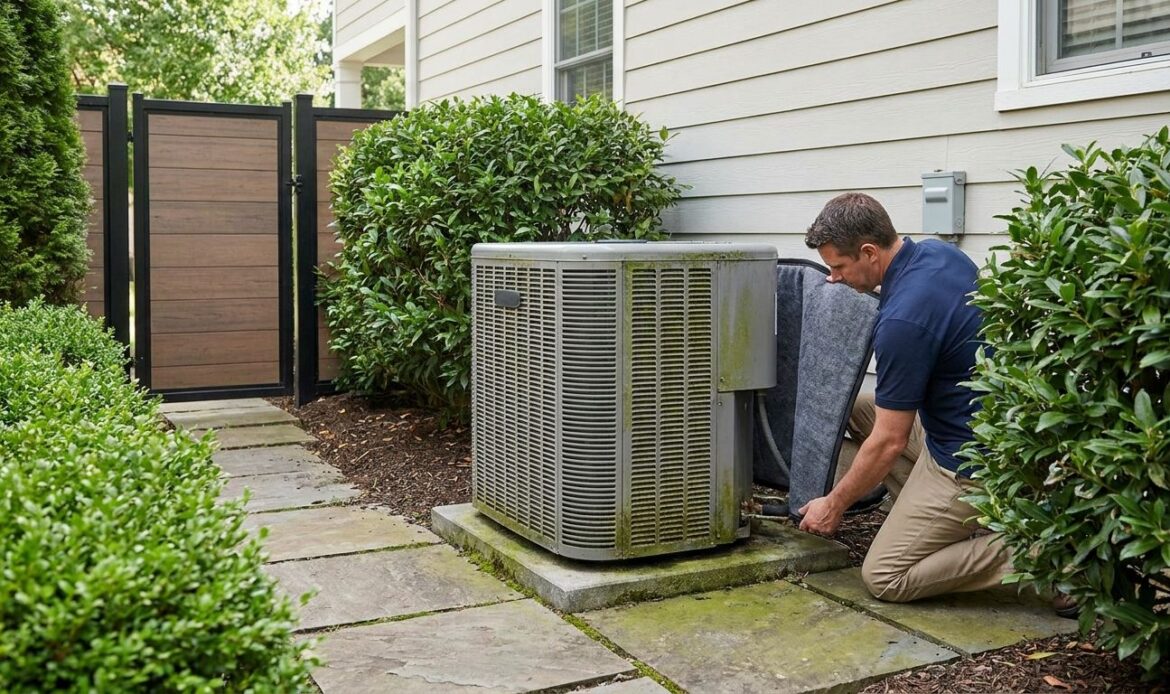
An outdoor HVAC unit that rattles, buzzes, or hums louder than usual is either dirty, unlevel, or failing — and each cause has a different fix. This guide walks through the exact steps to quiet a noisy condenser or heat pump before you call for hvac outdoor unit noise repair in 2026.
- Most hvac outdoor unit noise in 2026 comes from loose panels, dirty coils, or a failing fan motor, not a system that needs replacing.
- Clean coils and tightened panels fix roughly half of noise complaints Comfort Factor sees on Bay Area service calls.
- A grinding or screeching compressor is not a DIY fix — Skip the troubleshooting and call a licensed technician same day.
- Short cycling and rattling often show up together; fixing one usually quiets the other.
- A vibration pad under the unit cuts transmitted noise into a home’s walls without touching the equipment itself.
Why this matters
An outdoor condenser or heat pump running at normal volume sits around 50-60 decibels — about as loud as a dishwasher from across the kitchen. Anything louder than that, or any new rattle, buzz, or screech, is a signal the unit is working harder than it should. In Sonoma, Marin, Napa, Solano, and Contra Costa counties, units also sit closer to bedroom windows and shared property lines than in most suburbs, so a 10-decibel jump gets noticed fast by neighbors and homeowners alike.
Ignoring the noise rarely makes it go away. A loose fan blade or a failing motor bearing gets worse over weeks, not months, and a unit that's straining is also burning more electricity to move the same amount of air. Quieting it early is cheaper than replacing a seized compressor later.
What you'll need
- Phillips and flat-head screwdriver
- Garden hose with a spray nozzle (no pressure washer)
- Soft-bristle coil brush or fin comb
- Work gloves and safety glasses
- A torpedo level
- Rubber anti-vibration pads (sized to the unit's base)
- A flashlight for checking the fan and coil housing
- 20-30 minutes for a basic cleaning and inspection
If the unit is more than 10 years old or has needed repairs before, keep Comfort Factor's guide on when to replace your HVAC system open before you start — some noises point to a system near the end of its life rather than a quick fix.
The steps
1. Shut off power and inspect the panels
Flip the outdoor disconnect switch (usually a gray box mounted on the wall near the unit) before touching anything. This step matters because a running fan can pull in fingers or clothing in seconds.
With power off, check every access panel for loose screws — a panel vibrating against the cabinet is one of the most common sources of rattling in units installed before 2020. Tighten each screw by hand; over-tightening can strip the housing. Expect the rattle to stop immediately if a loose panel was the cause.
Common mistake: skipping the disconnect switch because the thermostat is already off. The outdoor unit can still cycle on remotely.
2. Clean the condenser coils
Dirty coils force the compressor and fan to work harder, which raises both noise and energy use. Rinse the coil fins from the inside out with a garden hose on a gentle spray setting — never a pressure washer, which bends the fins and creates new noise sources.
Use a soft coil brush to clear debris caught between fins, working top to bottom. In wildfire-prone counties like Sonoma and Napa, ash buildup from fire season is a frequent culprit; see how to clean wildfire ash off a heat pump's outdoor unit for a more detailed rinse pattern. Let the unit dry for 15-20 minutes before restoring power.
3. Clear debris from the base and fan cage
Leaves, acorns, and small branches around the base restrict airflow and can hit the fan blade, causing a clicking or knocking sound. Clear a 2-foot radius around the unit and remove anything caught in the top fan grille.
Spin the fan blade by hand (power still off) to check for obstructions or bent blades. A blade that wobbles instead of spinning true needs replacement, not just cleaning — that's a job for a technician.
4. Check the unit's level
Set a torpedo level across the top of the pad or slab the unit sits on. Units installed before 2022 on unreinforced concrete are especially prone to settling, and even a quarter-inch tilt makes the compressor and fan work at an angle, producing a low hum or buzz.
If the unit isn't level, wedge composite shims (never wood, which rots) under the low corners until the bubble centers. This alone resolves persistent humming in a large share of the noise calls Comfort Factor handles across Contra Costa and Solano counties.
5. Install anti-vibration pads
Rubber isolation pads under the unit's feet absorb vibration before it transfers into the concrete pad and, from there, into a home's foundation or an adjacent wall. This step matters most for units mounted close to a bedroom or a shared fence line with a neighbor.
Lift the unit slightly with a pry bar (or two people, carefully) and slide a pad under each corner. Expect a noticeable drop in transmitted buzzing within the same day.
6. Check for refrigerant line contact
Copper refrigerant lines that touch the cabinet, a wall, or each other buzz at the compressor's running frequency. Trace the line set from the unit to the wall penetration and look for any point of metal-on-metal or metal-on-wood contact.
Wrap contact points with foam pipe insulation, sold at any hardware store, and re-secure the lines with new clips at 3-foot intervals. This is a five-minute fix that often gets misdiagnosed as a failing compressor.
7. Listen for short-cycling patterns
If the unit turns on and off every few minutes instead of running a full cycle, the noise you're hearing includes extra startup bangs and clicks each time the compressor kicks on. Short cycling stresses every moving part in the system and is worth fixing on its own; Comfort Factor's guide to preventing short cycling in a heat pump covers the thermostat and refrigerant checks that usually resolve it.
Verdict on DIY steps 1-6: most homeowners can complete these in under an hour with basic tools. Buy the time to do this before assuming the unit needs replacing.
Still hearing noise after cleaning?
Get a technician out to diagnose grinding, screeching, or buzzing that won’t quit.
Troubleshooting
- Grinding or screeching metal sound: Almost always a failing fan motor bearing or a bent blade hitting the housing. Skip DIY here — a technician needs to inspect it before the motor seizes completely.
- Loud buzzing that gets worse over days: Points to a failing capacitor or a contactor sticking. This is an electrical issue, not a cleaning issue, and worsens quickly.
- Clicking every few seconds: Usually debris in the fan blade path or a loose fan blade set screw. Recheck step 3 with the unit powered off.
- Humming that starts only in hot weather: The compressor may be struggling under high refrigerant pressure, common when coils are dirty or refrigerant is low — see how to tell if your AC refrigerant is low.
- Rattling that returns within a week of tightening panels: The cabinet itself may be corroding or warped, which is more common on units installed before 2015 in coastal Marin and Sonoma air.
- New noise right after a power outage: The compressor may not have reset properly; see how to reset your HVAC system after a power outage before assuming a mechanical fault.
Tools and resources
- Torpedo level, coil brush, and rubber isolation pads — available at any hardware store for under a typical service call cost
- Comfort Factor's guide on how ductless mini-splits work in older Bay Area homes if the noisy unit is a mini-split condenser rather than a central system
- A licensed technician for any electrical, refrigerant, or motor-bearing diagnosis — Comfort Factor covers Sonoma, Marin, Napa, Solano, and Contra Costa counties
- An annual maintenance plan to catch loose panels and dirty coils before they turn into noise complaints; see HVAC maintenance plans for Bay Area homeowners
What to do next
If cleaning, leveling, and vibration pads don't quiet the unit within a day or two, the noise is mechanical or electrical, not cosmetic. Book a diagnostic visit through Comfort Factor's guide to choosing an HVAC contractor in the Bay Area to make sure whoever inspects it is licensed and familiar with 2026 refrigerant and safety codes.
FAQ
What’s the best way to reduce hvac outdoor unit noise?
Clean the condenser coils, tighten loose access panels, and confirm the unit is level — these three steps resolve most hvac outdoor unit noise complaints in 2026. If the sound is grinding or screeching, stop and call a technician instead of continuing to run the system.
Is a buzzing outdoor AC unit dangerous?
A buzzing sound usually means a failing capacitor or a loose electrical contactor, which can strain the compressor if left unaddressed. It is not an immediate safety hazard, but it should be checked within a few days before the part fails completely.
How much does it cost to fix a noisy HVAC unit?
A cleaning and leveling job costs nothing beyond basic tools you likely already own. A technician visit for a motor, capacitor, or refrigerant issue runs into a standard diagnostic and repair service call, which varies by the part needed.
Can a dirty condenser coil cause loud noise?
Yes, a dirty coil forces the compressor and fan to work harder, which raises both the volume and pitch of normal operating sound. Rinsing the coil with a garden hose on a gentle setting is the first fix to try.
Why is my heat pump louder in winter than summer?
Heat pumps run their defrost cycle more often in cold, damp weather, which briefly reverses the system and can sound like a whoosh or click. This is normal operation, not a fault, unless it’s accompanied by grinding or screeching.
Should I put anti-vibration pads under my outdoor unit?
Yes, rubber isolation pads reduce the amount of vibration that transfers from the unit into a concrete pad, foundation, or nearby wall. They’re a low-cost fix, especially for units mounted close to a bedroom or shared property line.
How do I know if my outdoor unit needs to be replaced instead of repaired?
If the unit is more than 10-12 years old and the noise returns after cleaning and leveling, the compressor or motor is likely failing and replacement is usually more cost-effective than repeated repairs. Check current refrigerant type compatibility too, since older R-22 systems are increasingly expensive to service in 2026.
Can short cycling cause a heat pump to be noisy?
Yes, a unit that short cycles adds extra startup bangs and clicks every few minutes instead of running one smooth cycle. Fixing the short-cycling cause, often a thermostat or refrigerant issue, usually quiets the unit as a side effect.
One last thing
The fix homeowners skip most often is the cheapest one: anti-vibration pads. A $15-20 set of rubber isolation pads under a unit's feet stops sound from traveling into a wall or foundation even when the equipment itself is running exactly as designed — worth doing during any routine cleaning in 2026, not just when something's already rattling.
Related guides
- How to prevent short cycling in a heat pump
- How to troubleshoot a heat pump that's not heating properly
- How to know when to replace your HVAC system
- HVAC maintenance plans for Bay Area homeowners
- How to choose an HVAC contractor in the Bay Area